
How Much Does Horse Teeth Floating Cost?
Teeth floating refers to the process where the enamel points (sharp edges) on the surface of the horse’s tooth are removed. The reason that this is referred to as “floating” is that the file used to smooth out the edges is known as a “float.”
When the enamel points of the teeth are left untreated, this can cause pain during intake and performances. These sharp points will make it hard for the horse to eat and hold a bit in its mouth. In addition, these points can cause discomfort for the horse.
Research reveals that regular dental care and floating can increase the digestible energy by 20%.

How much does horse teeth floating cost?
On average, horse teeth floating is going to cost anywhere from $80 to $220 per horse. If sedation is required, add another $10 to $30 for the entire procedure.
According to Equusite.com, a 20 to 40-minute dental exam alone often costs between $30 and $70. This wouldn’t include the floating procedure.
On a forum thread on MyHorseForum.com, members said you should be prepared to spend anywhere from $80 to $180. However, extras, as we mentioned below, can be an additional cost. This can include extractions, etc.
GoodEquineDentalServices.com, another horse veterinarian, charges $60 for horses older than four, and if the horse needs sedation, the process will cost $70.
The Horse Daily polled horse owners, and with hundreds of responses, owners had paid anywhere from $75 to $200 for an annual float.
Factors that affect the price
Type of dental work
The total amount of the dental service depends on the type of work the equine dentist will perform on the horse. Advanced dentistry procedures, such as extractions, can call for higher costs.
Location
Floating fees may vary from state to state as with any professional services. Also, the distance of the farm from where the equine dental technician is located plays a factor in the cost of the services.
Experience
Some equine dentists demand higher rates basing on their reputation, demand and extensive experience.
Additional expenses
Several equine dentists factor in added expenses including the cost of a vehicle to visit their patients, the cost of fuel, as well as the purchase and repair of their equipment, which can cost thousands of dollars.
Horse teeth floating overview
When performing the floating process, the equine dental technician typically observes the body condition of the horse. He or she will then check its head for any signs of TMJ and will evaluate the condition of the incisors. Using a full mouth speculum to check the mouth interior and examine the molars, the sharp teeth are filed down.
Two pieces of equipment are commonly used when floating: the equine dental wedge and the equine dental speculum. The equine dental wedge will be placed between the back teeth of the upper and lower jaw and will be used to keep the mouth open during the process. The equine dental speculum will use metal plates that fit over the upper and lower incisor teeth. A ratchet mechanism will spread these plates apartment, providing an unobstructed view of the mouth, when compared to the prior method.
What are the extra costs?
Some equine dental services charge a first-time floating fee for horses who have never been floated before.
Many equine dental services charge farm call fees (traveling fees) to reach a farm. Some do not charge farm fees if they are in a “loop of travel.”
Sedatives may be required in some cases. This will be in addition to the extra charge for sedation that has already been added. As mentioned, this could be an additional $20 to $40.
Charges beyond a routine float may also require additional fees. This can include medication, extractions and/or wolf teeth removal.
Floating should be done at least once per year, so plan on budgeting accordingly for preventative maintenance. Regardless of the age, the teeth should be examined.
Tips to know:
After the initial dental visit, it is advisable that two visits a year be scheduled until the horse reaches five years of age when its permanent teeth have come in. Afterward, dental visits may be performed out once or twice a year, depending on the horse.
Find a certified equine dentist who holds memberships in recognized equine dentistry organizations.
There are signs that your horse’s teeth need to be floated. The first one is weight loss, which is a result of the horse eating less because of the discomfort. Another sign is the horse tossing its head side to side while opening its mouth.
Floating your horses’ teeth will not hurt since there are no nerves present at the surface of the tooth where the procedure is being performed.
How can I save money?
Rates vary from one equine dentist to another. Compare rates offered by those in close proximity to your farm.
If you have several horses, take advantage of discounts offered to group discounts.
If you have any other dental work or services that need to be done, try to get it all done at once. For example, horse owners often combine vaccinations, a Coggins test and/or extractions to save on fees. By combining procedures, you will be able to save the most money, especially if the dentist charges for farm calls.
How Much Does a Following Closely Ticket Cost?
A following too closely ticket, also known as tailgating to most, is one of the most common causes of traffic accidents.
In New York, for example, it violates section 1129(a) of the Vehicle and Traffic Law, which states that a “vehicle shall not follow another vehicle more closely than is reasonable and prudent, having due regard for the speed of such vehicles and the traffic upon and the condition of the highway.”
According to the law, a driver following another vehicle has a duty to keep a safe distance. As a general rule, this reasonable distance is measured at two car lengths.
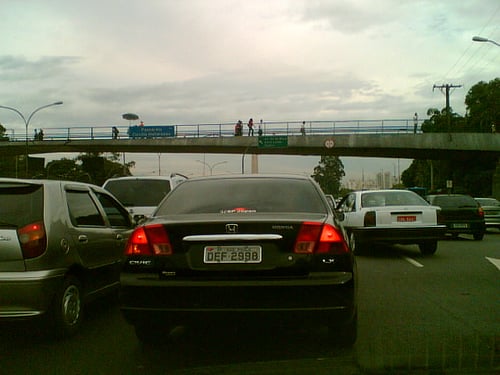
How much does a following too closely ticket cost?
On the average, the first offense of a “following too closely” traffic violation will be around $85 to $300 depending on the state you received the ticket, your driving record, and the trial judge. If it were a second or even third offense, then the costs could increase to as high as $90 to more than $500. With so many factors that can affect the costs, it can be hard to give an exact estimate.
According to this forum thread on Reddit.com, they claimed a following too closely ticket in South Georgia will be about $125. Another person, who was located in Fulton County, said they had to pay $250.
On this Avvo.com thread, someone asked about this type of ticket and said they had to pay $120.
On the official website of Fairfax County, it says that when a motor vehicle is following another vehicle more closely than is reasonable or prudent, it is considered a “following too closely” violation and the fine for a first offense will be $92. $30 is for the basic fine and $62 is for the processing fee.
In Clay County, Missouri, the total fine is $95.
The City of New Orleans says a following too closely ticket will fall into the same category as the following violations: following too closely, improper starting/ backing, no registration, red light, stop sign, title transfer and no title, driving against traffic, failure to obey officer’s signal, and failure to yield. Each of these violations will impose a traffic violation fee of $212.
What are the extra costs?
Aside from the assessed fine, there are processing fees and court surcharges and costs for traffic violations, as permitted by laws of the state.
Getting multiple traffic violation tickets over a short period will shoot up ticket prices, even if each ticket is given for a different offense.
In New Orleans, violations that fall under a State Statute cost $20 more. These types of hidden fees may be charged in other states as well.
As stated above, if the ticket follows through and you’re found guilty, then your insurance premiums will more than likely go up.
Dismissing a ticket can be a challenge, and in some circumstances, especially if you have multiple violations on your record and can’t afford more points, then you may want to hire a traffic violation lawyer to help you fight a ticket. In this scenario, a good lawyer could cost $200 to $500 to help you work with the courts; however, a good lawyer will be able to help you receive the fewest points possible on your record.
Tips to know:
Any driver convicted of this traffic violation law will have this on his or her driver’s record if convicted. In some circumstances, you can also serve jail time, but this is rarely pursued, especially for first-time offenders. Depending on the state you received your violation, a points system may be used, and this type of ticket will usually be one or two points on a driving record.
It is best to keep in mind to be at least one car lengths behind the car in front of you, except in select situations when this is not possible.
There are circumstances wherein the traffic charges can be dismissed if the officer did not file the ticket within five business days from when it occurred. If the affidavit is defective and the officer only based it on hearsay, meaning he was not able to witness it for himself, you could have a better chance of getting the ticket waived.
If there are procedural lapses on the part of the officer and you have a clean driving record, the court may dismiss the charge without a hearing.
If you area able, try to get a court hearing rather than just paying the ticket through the mail or over the phone. If you appear before a judge and give an explanation of what happened, many positive things can happen. The officer may not show up at the court hearing, which means the ticket is thrown out completely. If the officer does show up, you can fight the ticket by trying to get out of it completely; if you succeed, the ticket will be thrown out. Lastly, you can simply admit the fault of the ticket and ask for no points to be put on your record. This means that you will have to pay the full amount for the ticket, but your driving record will not show any offenses. This means that your insurance company will not increase your premiums. Even if you go and end up paying and having your driving record marred, you will not lose anything by trying.
How can I save money?
Try to have your citation dismissed through procedural errors on the part of the prosecuting office if there are any committed. ExpertLaw.com has a guide on how to successfully fight a ticket like this one.
How Much Does Honey Cost?
Honey is made up of different components of a bees’ saliva, namely, the nectar, propolis and enzymes.
Honey, as you may know, is commonly used as a sweetener for drinks, sandwiches, snacks and even for baking. Honey is also known for its medicinal and nutritional qualities. Being made up of simple sugars, it is easily absorbed and used by the body. Honey can also be used in many different recipes and dishes, making it a vital ingredient to many people.
Being made up of simple sugars, it is easily absorbed and used by the body. Honey can also be used in many different recipes and dishes, making it a vital ingredient to many people.

How much does honey cost?
The price of honey will depend on the type, quantity, brand and where you purchase it. A smaller 12-ounce container, often seen in a “teddy bear” container at the local grocery store can cost $3 to $5, whereas organic raw honey can cost $4 to $6 per 12-ounce container.
If buying by the pound at a local farmers market, then the costs could be within the $3 to $6 per pound range for the raw variety. If you were to convert the pounds of honey into gallons, each gallon would equal 12 pounds. By the quart, at least according to our research, the costs could be anywhere from $15 to $30. Like any commodity, keep in mind that these costs could greatly vary depending on the demand and seasonal effects on the crops. This highly rated Amazon five-pound honey jar, for instance, retails for close to $50+.
Really Raw Honey, a popular honey brand, retails for close to $14 per pound, for instance.
For larger purchases, by the gallon, the costs could be closer to $25 to $35, depending on where you purchase it from.
The National Honey Board lists the average wholesale prices month by month, and at the time of this writing, the average price, per pound, was in the mid $5 range for most of 2017. Again, this was the wholesale price.
At Walmart, for example, a 16-ounce bottle of Walmart’s Great Value organic honey brand retails for $5.
On Mothering.com, forum members talked about the costs of honey in their neck of the woods, and according to the multiple replies, the costs ranged anywhere from $15 to $25 per quart to $3.50 per pound for raw honey at a local farmers market.
Honey overview
Honey is full of antioxidants, important enzymes, vitamins, and a rich source of other nutrients that give beneficial attributes. Honey also has medicinal properties that strengthen the immune system and energize the body. These benefits of honey have been recognized since the ancient years.
There are more than 300 varieties of honey across the country, with colors ranging from a light texture, which is slightly mild in flavor, to a darker color, which can taste a bit stronger. On store shelves, you can find common varieties, which includes gluten-free, organic, kosher, natural and fat-free. You can find honey inside the same aisle as peanut butter and jelly.
Honey, when sold at a local market, is sold according to whether it is prepared as raw, liquid or crystallized. Raw is exactly the literal meaning of it, which is honey that has not passed any heating or filtering processes and is taken straight from the honeycomb without any modifications. The liquid type is extracted honey from the honeycomb, and the crystallized honey results from the process of changing the honey from a liquid to a solidified form.
Most of the honey available commercially available at your local grocery store, such as Walmart, has passed through heating and filtering to prevent crystallization, even when displayed for long periods of time on supermarket shelves.
Tips to know:
Store honey in an airtight container at room temperature so that it does not absorb moisture from the outside. This will help to lengthen shelf life.
Colder temperatures can cause the honey to thicken, while higher temperature alters its flavor and darkens its color.
Crystallized honey can be re-liquefied by placing its container in hot water for about 15 to 20 minutes.
If honey is in its liquid form, it will not stick as much to spoons and measuring cups.
How can I save money?
Buying in bulk or larger volumes can result in big savings as compared to buying in lesser quantities. Others even buy in bulk and repack and resell it to others who want smaller quantities. Remember that honey never goes bad.
There are many people who decide to make their own honey. If you are interested in enough honey for yourself and your household, this can be a fairly easy process and many guides online can show you how it’s done. Once you spend the money to get things started, you can have fresh honey year-round straight from the honeycomb for no cost at all. This is not only cheaper in the long run, but it can also provide even more health benefits and can provide an enjoyable hobby as well. Making your own honey can even potentially make you money.
Honey is honey, and if you don’t mind skipping the name brands, a store brand can be up to 40 percent cheaper.
How Much Does a Forensic Accountant Cost?
A forensic accountant will attempt to unveil the truth and will assist you in a financial investigation that is vital in court or mediation.
For example, forensic accountants may be used for a divorce where money matters are in question. If there is a court case regarding fraud, a forensic accountant may be asked to investigate the situation and then present the findings to the court. Forensic accountants could also be hired by large companies if it is believed that someone in the company is stealing money.

How much does a forensic accountant cost?
On an hourly basis, most forensic accountants are going to charge anywhere from $300 to $500 per hour. For something common such as a divorce, the entire process can well exceed the $3,000 price tag.
On the other hand, basic data entry and admin work can be as little as $50 to $100 per hour. Many law offices may have a minimum retainer, which can start at $5,000, so be sure to ask about this before committing.
An article on Rushmore Forensic claims that a forensic accountant could vary anywhere from a few thousand dollars to more than $20,000 once everything is said and done.
Lawyers on Avvo.com said the price of a forensic accountant could start at $300 per hour and go up from there, depending on complexity and the nature of the work.
Factors that affect the price
Educational Background
Forensic accountants with a more intensive education from Ivy League schools are better compared to those from smaller or community colleges. After all, Ivy League schools have a reputation to uphold and only allow the students with the most promise.
Work Experience
The number of years of work experience of a forensic accountant has is directly proportional to the number of cases with which they have dealt. Hence, an accountant is capable of handling any case if he has worked for more than 5 years as a forensic accountant. The more experience the accountant has, the more he is able to charge. However, this experience also means a better chance of success.
Work Involved
As mentioned, a forensic accountant can work with so many cases, and just like a civil or criminal court case, the hours they have to put in will greatly vary. A simple divorce case could take as little as a few hours of their time, while others may involve hundreds of hours. As with most lawyers, plan on paying for every hour they work on your case.
Forensic accountant overview
There are so many services a forensic accountant could offer. For instance, he or she could help you with commercial damages. They can also provide you with expert witness opinions when it comes to your lost profits. He or she can help you out with certain disputes such as a breach of contract, fraud, product liability, construction claims and/or intellectual property infringement.
In addition, you could also ask a forensic accountant to help you in your personal injury claims. The role of a forensic accountant is to check the financial damages of the injured victim due to loss of earnings and the like. He or she, for example, could provide analysis brought about by medical malpractice and even wrongful death cases.
Furthermore, the services of a forensic accountant could extend to shareholders and partnership disputes, commercial insurance claims, matrimonial disputes and business/employee fraud investigations. They could also uncover fake debt, overpaying creditors, underreporting income and even transferring money to a dummy corporation.
Lastly, a forensic accountant can help with divorce matters. During this time, they can help search for hidden assets, look for inconsistencies and/or hidden income.
Basically, a forensic accountant is going to play the role of both an accountant and a lawyer. To read a thorough description of this profession, Nysscpa.org has a breakdown.
What are the extra costs?
The extra costs involved in hiring a forensic accountant may include the filing of a lawsuit. There may also be other court fees involved.
If you want more than one forensic accountant working on your case, it is going to cost more. However, if the amount of money involved is a large sum, the extra money spent may be well worth it.
Additional travel time outside of the offices may be billed by the mile.
The more complex your case, the more time your accountant will spend; therefore, the price you pay will increase.
Tips to know:
Hire a forensic accountant as early as possible. For all you know, the opposing party may have already hired one.
Find a forensic accountant who is well-versed in accounting and financial analysis. A good forensic account should be keen with details, curious and have a fair professional judgment. Needless to say, your forensic accountant must also have good communication skills.
How can I save money?
To prevent further losses from your company or put your company in a protective measure, be sure to talk with a handful of forensic accountants. To find one, companies such as LegalMatch.com can match you up with qualified individuals in your area. Shop around and be sure to get at least three to five quotes before proceeding.
Try to be as organized as possible. If you have all of your documents already organized, this can save hours of work for the accountant, which can save hundreds or thousands of dollars for you.
If your forensic accountant does his job, you may end up getting your money back and then some.
How Much Does a Four Wheeler Cost?
A four wheeler, which is part of the group ATV (all-terrain vehicle), is an off-road vehicle that is defined by the American National Standards Institute as “a vehicle that travels on low-pressure tires, with a seat that is straddled by the operator, along with handlebars for steering control.”
ATVs can come with three wheels or four wheels. A four wheeler is widely used by drivers who enjoy off-road driving on dirt trails, steep slopes, and even streams. Four wheelers are also used by extreme sports enthusiasts, who race and compete with these ATVs.

How much does a four wheeler cost?
On average, a four wheeler can cost anywhere from as little as $500 used to as much as $10,000 new. Most purchases, though, are going to be between the $2,000 and $5,000 price range.
A smaller child-sized four wheeler, for example, can cost $1,000 to $2,500, while an adult-sized model can cost upwards of $10,000.
ATVTraderOnline.com, a popular four wheeler classified ad-based website, has newer models from the current year starting at $5,000.
ArcheryTalk.com features a conversation about the four wheelers that people used when hunting, and most of them claimed that they paid anywhere from $2,000 to $8,000.
Refer to our table below to see what the average cost of popular four wheel brands. With so many models with each brand, we took the average new MSRP price.
| Brand | Average Cost (MSRP brand new) |
|---|---|
| Arctic Cat | $3,000 to $13,000 |
| Can-Am | $3,600 to $15,000 |
| Honda | $3,100 to $9,800 |
| Kawasaki | $2,000 to $10,000 |
| Kymco | $2,100 to $7,000 |
| Polaris | $3,800 to $9,700 |
| Suzuki | $2,000 to $6,500 |
| Yamaha | $2,500 to $9,000 |
What are the extra costs?
If you purchase a four wheeler online, especially if purchasing used, some may require a shipping and handling fee. You might also want to pay for insurance coverage when it’s being shipped.
Like a car, you’re going to want to have your four wheeler insured. Insurance rates will vary on your age, the four wheeler you’re driving, where you live and how much you plan on using it. Plan on budgeting about $200 a year.
If you want to tow your four wheeler, an additional trailer will be needed.
To customize your four wheeler, it’s going to cost you more. Your own choice of wheels could range anywhere from $800 to $1,000.
Plan on unnecessary repairs or maintenance down the road such as oil changes, etc.
Tips to know:
If you are purchasing a four wheeler for races and competitions, you will need to ensure that you specify this to the salesman as you need to buy one that is made for this purpose. For example, a four wheeler made for extreme sports will have a more complex shock system to absorb the shock when the ATV lands after a jump.
If you are purchasing a used four wheeler, ask the previous owner about the warranty. Some companies will allow the warranty to be transferred to the new owner.
Most new four wheelers will come with some type of limited warranty, and this will depend on the brand.
Questions to ask:
Does your company offer free maintenance?
Are there any free accessories included?
Does the company offer a warranty for the four wheeler?
How can I save money?
There are plenty of second-hand four wheelers on the market if you are on a tight budget. Like a car, you could save up to 50 percent.
Check out auctions. There are several four wheeler owners willing to auction off their four wheeler.
There are ATV clubs and organizations everywhere. Ask their opinion when it comes to buying a four wheeler. They are most likely to suggest an ATV worth your money.
Many dealers offer to finance. If you cannot afford the up front payments, consider seeing what options are available out there.
How Much Does a Car Hood Paint Job Cost?
Getting a car hood painted is sometimes necessary for a variety of reasons.
Whatever the reason may be, a car owner will likely be faced with at least two possibilities for repair: getting a complete paint job or going with what’s known as a spot painting technique.
Most car owners choose to have the entire car repainted to ensure that the paint matches the rest of the car. Spot painting, on the other hand, is a cheaper option, but it will only be painted in certain spots and may not match the car’s original paint color.

How much to paint a car hood?
The cost of a car hood paint job is going to be based on a few different factors. This can include the type of paint used, the make and model of the car, and the paint shop/professional performing the work. For smaller jobs, budget anywhere from $150 to $400, while larger jobs can cost upwards of $1,000 to $2,000.
Larger companies, such as MAACO, offer spot painting services along the lines of $100 to $250, while whole car painting services can cost $250 to $1,000. A standard but high-quality paint job can cost approximately $1,000 to $2,500.
According to CarsDirect, a car hood paint job can cost from $200 to $1,000.
At Fat Daddy Customs, a professional car painter we found online, stated they would charge $275 per panel when using the spot painting technique. These quoted prices do not include materials.
1 Day Paint and Body Centers, another collision shop we had looked at, offered various painting packages that ranged anywhere from $449 to $1,000.
Members on anandtech.com said you should be prepared to spend anywhere from $300 to $500 on painting just the hood. On that same thread, a member posted their bill they received from a local dealership, and according to the estimate, they were quoted $1,300 for a brand new car hood.
On e90post.com, a BMW message board, a few members talked about what they had paid to paint their car hood. One member claimed he was quoted $800 at a BMW certified collision center, whereas another said a simple detail shop would cost about $300.
Factors that affect the price
The cost of labor
This varies significantly in various locations and is often based on work quality. Quick hood paint jobs that cost less than $500 may not include preparation work and the paint application may look less than professional. In contrast, paint jobs with superior results command higher prices.
Materials
Paint jobs often require the owner to purchase or pick out the primer, paint and clear coatings. The prices of these materials vary and are based on the quality of the materials.
Paint brand
Like painting a home or room, there are different types of paints used on automobiles. Sherwin Williams and Trinity 1945 are mostly used for standard paint jobs, whereas DuPont, PPG or Diamont are often used for higher quality jobs.
Car hood painting overview
The first step will usually involve preparing the surface for the painting process. A typical paint job entails sanding the surface, repairing dents (if there are any), applying a primer, and then applying the matched paint. The entire process depends on the painter or auto shop. Some may run through the preparation phase fast, while others may spend time finishing the exhaustive work to ensure quality.
What are the extra costs?
There are auto shops that may charge extra for preparing the surface, with some charging around $75 per panel.
Dent and ding repair, if needed, may also require additional fees. Some shops/painters charge by the hour or dent for this particular service.
Paint upgrades, such as when choosing paint with a better quality or if extra layers of paint are needed, may increase the costs.
Tips to know:
Reputable body shops may not be upfront about other costs. Be sure to ask in advance if they charge extra for sanding, masking and baking procedures. A good shop should offer you an itemized bill showing you what your deposit will cover.
Be sure to inquire about the warranty. Bad paint jobs are known to last less than three years. Some offer a full warranty and will cover any defects within a certain time period, while others prorate theirs, which means that you will be required to pay a percentage of the whole to get a warranty.
Quality paint jobs are typically done in paint booths to ensure a clean and dust-free environment. Visit various body shops and ask to see recent paint jobs to inspect the outcome of their work.
Questions to ask:
How much is your labor rate per hour?
Do you offer free estimates? If not, how much does an estimate cost?
Do you charge extra for procedures required before painting the hood? If so, what are these procedures?
How long will it take you to finish the paint job? Will I need to leave my vehicle with you? If so, how many days?
Do you have paint booths and baking ovens?
If I am not satisfied with the paint job, will I need to go back to the body shop where I had it painted, or can I have it redone in your other locations?
How can I save money?
Consider doing the job on your own. If you buy paint touch-up supplies, you may spend less than $50 and a few hours for the entire job. Of course, all scenarios will vary, but a touch-up pen, for example, would be ideal for minor scratches on the surface. There are many videos online that can help you with the process.
Check for ongoing promotions. Some body shops offer bonuses for referrals while others offer as much as 50% discount on deductibles to customers who bring their insurance claim.
Shop around and compare quotes from different painters/body shops to get the best price. It’s always best to get at least three quotes before proceeding.
In some cases, it may be cheaper to purchase an aftermarket hood that matches your car’s current color. Consider checking out a few junk yards or talk with a collision shop to explore your options.
How Much Does a Floor Joist Repair Cost?
| Need a pro near you? Get multiple quotes for free online. Get your quote now >> |
Inside most homes, floor joists, which are the shafts that support the floors you walk on, often rot, sag, become bouncy or could be ruined by pests. If this were the case, then you will more than likely need a contractor to come in and fix the situation.

How much does floor joist repair cost?
The costs of repairing the floor joists will depend on the number of joists that need to be replaced, the situation, the contractor performing the job and where you live. If you only needed to repair a few rotted joints, a contractor will often use a process that’s known as “sistering,” a process which cleans away the rot and the affected timber is treated to prevent rot in the future. A new joist will then be attached to the rotted one and will be fastened to it. Depending on the damage and access to the joints, the sistering method can cost about $150 to $325 per joist. For the average room, if every joist needed to be sistered, you could be looking at a $1,250 to $3,500 bill.
If the joists have been heavily damaged, then a house may need to be jacked up in order to remove and replace all of the affected joists. If this were the case, the costs could easily be in the $15,000 to $35,000 range, again, depending on so many factors such as the contractor, the size of your home, the extent of the damage and the ease of access (basement or crawlspace). Since every job can be so unique, consider getting multiple quotes from local, licensed contractors for free at HomeAdvisor.com.
According to Angie’s List, repairing a floor joist, most of the time, will be fairly straightforward. During the inspection, a contractor will locate the broken joint and reinforce it by attaching a second joist next to it. This type of repair, according to the experts and the article, will be in the $250 to $300 range. However, if plumbing or electrical wire impede the repair, then the area could be reinforced with plywood, but it could come at a cost, often two times more than the prior mentioned method.
A structural engineer said you should be prepared to spend $7 to $10 per foot, depending on the working conditions and the amount of space the contractors have to work with.
What are the extra costs?
In some cases, floor joists can be damaged due to pests or water. If pests were to blame, then you may need to consider calling in a pest control specialist. On the other hand, if the damage were due to water, then you may need to call in a plumber or inspect to analyze the situation.
As mentioned, if there’s limited space, the subfloor will need to be replaced, which can increase the costs since the contractor will need to replace the subflooring. The cost of repairing the subflooring will depend on the extent of the damage and how much subflooring needs to be replaced. You will also need to consider the flooring once the subfloor is installed.
In rare circumstances, if the weight of the floor collapsed due to a heavy object, then you may need the assistance of a structural engineer to analyze the problem.
During the repair, as long as there’s access to a basement or crawl space, there won’t be significant damage done to your home. However, if the access is limited, the subfloor will have to be removed, which can increase the costs.
Tips to know:
The Family Handyman shows you how structural repairs are made by “sistering” the floor joists.
Usually, a floor joist will measure 2″x8″, 2″x10″ or 2″x12″, and the size will depend on the load they are designed to carry, building codes and length.
How can I save money?
Get several estimates, especially if it’s a large job. When requesting quotes, be sure to check reviews, references, insurance, licenses and be sure to receive an itemized quote. While you don’t want to choose the cheapest price, you will want to choose the most experienced with the best value.
How Much Does a Car Hood Replacement Cost?
The hood of the car can be damaged in many ways. For example, it could be hit by a rock or another foreign object from the road, or in a worst-case scenario, you could have been in an accident that bends the frame of the car, affecting the hood as well, forcing you to replace it.
Because the hood provides protection for the engine, it is extremely important that it gets replaced and that it fits properly. The car hood is comprised of an outer and inner panel, and while all hoods will have similar characteristics, each car make and model will have its own specifications.

How much does a car hood replacement cost?
On average, the price of a car hood only is going to be anywhere from $70 to as much as $500. Like any other car part, it will really come down to the make and model of your car and what kind of car part you want. An OEM part, which comes straight from the manufacturer, whereas an aftermarket part will be a bit cheaper, but it won’t be the “official” part. Lastly, if you were able to find a car hood at a local junkyard, then this would be your cheapest option, but it may not match the color of your car and it will be considered used. Again, this price is for the hood only and does not include labor expenses.
The Auto Parts Warehouse, for instance, has over 1,000 car hoods available in its database. Most of the car hoods we looked at ranged anywhere from $125 to $375.
If you are going to have the hood professionally replaced at a local dealer or collision shop, then the parts and labor will probably cost anywhere from $700 to $1,900.
On this The Globe and Mail article, a reader asked why the estimates he received from three body shops were so high. According to his quotes, the cost of a new hood for his family minivan was in the $800 to $2,000 range. The range, according to the expert answering, will be due to the replacement parts they are ordering and the local labor rates.
Car hood replacement overview
Generally, with a car hood, the most expensive option will be the original equipment from the manufacturer, and a local dealership will almost always go this route, hence, the higher prices. Now, if you were to use a local mom and pop mechanic, they could either purchase a car hood from a local salvage yard or an aftermarket hood. An aftermarket hood will be brand new; however, it won’t meet the same standards as the OEM part.
Car hoods, depending on the type you buy, will be mate from either steel, fiberglass or carbon fiber.
What are the extra costs?
If you purchase a used car hood, then you need to consider having it painted to match the color of your vehicle. Not only will they want to paint the entire hood, they will want to paint the fenders as well to make sure it blends. The additional paint job should be less than $200.
Tips to know:
The perfect time to replace your car hood is when your hood begins to rattle as you drive. Hinges may be rusty, bolts are lost or there is improper alignment. You may also feel a pull on the hood because of the wind.
Do not buy a hood from a store or company that could not fit the hood for you. Most of the times, these stores and companies do not accept returns.
Consider purchasing your car hood from your supplier. This will ensure a perfect finished fit.
Questions to ask a mechanic
Do you fit the hoods you supply?
Is it possible to come to your shop to have the car hood fitted?
How long does it take to get my car hood?
Do you repair car hoods?
Do you offer free maintenance on my car hood?
How can I save money?
If you do not need an exact match in terms of the color, consider a local junk yard. Here, there are hundreds of scrap parts that can be picked up for next to nothing. Even if you’re able to find a hood in okay condition, it could be a few hundred dollar cheaper than a new one.
Don’t forget to check with your auto insurance if the hood damage was due to an accident.
How Much Do Holland Lop Bunnies Cost?
Holland Lop bunnies are not your ordinary rabbits. They reportedly have the sweetest personality and the best temperaments, according to their owners. In fact, they are so personable and lovable that they even enjoy when you rub their bellies like a dog or cat.

How much do Holland Lop bunnies cost?
The cost of a Holland Lop bunny will depend on the quality, pedigree, age, colors, gender and who you’re purchasing it from. From most of the ads we looked, the prices for a non-show bunny were in the $35 to $100 range. Top show Holland Lops, though, can be in the $250 range or even more.
On Hoobly.com, at the time of this writing, there were about 60 active classified ads, with prices ranging anywhere from $45 to $100.
What is going to be included in the adoption fee?
Most reputable breeders will include up-to-date vaccinations, medical records, a health guarantee and a temporary cage. Some may also come with a start-up package including things such as food samples and toys.
What are the extra costs?
If you never owned a Holland Lop bunny before, then you need to factor in the startup costs such as the cage, bedding, food/water dishes, grooming supplies, cleaning supplies and toys. The cage, at a minimum, should be 24 inches by 24 inches in size, with bedding, such as straw, on the bottom. The cage should be made of a plastic wire and will need to be long enough for the rabbit to stretch out.
The recurring costs, as with any pets, need to be factored in such as the food, hay, vet visits and bedding. Plan on spending about $30 if your rabbit healthy. As for feed, a diet of pellets and timothy hay should be sufficient, and PetGuide.com recommends a 70 percent good-quality hay and the rest as a mixture of vegetables, pellets, leafy greens and fruits. You can also add green vegetables to its diet; however, do not do it too frequently as this may cause diarrhea. In addition, do not overfeed your rabbit. It could lead to serious health problems. Ask you vet to help you determine how much and how often your rabbit should eat every day.
If, by chance, you need to have your rabbit shipped via an airline, then this could be another $200 to $350, depending on the distance traveled.
Spaying or neutering is highly recommended at a young age. If your breeder doesn’t include this as part of the adoption process, then you will want to consider doing so at your local vet’s office.
Tips to know
A Holland Lop is small, capping at four pounds, but their bone structure makes them appear much larger. They are known for their wide, long floppy ears, which droop down near their cheeks.
The life span, when healthy, should be eight to 12 years.
Holland Lops can come in a variety of colors; however, the most common color you will see can include a fawn, white, black and white, fawn and white or tortoise.
Its coat is medium in length, is dense and will require a bi-weekly brushing to minimize its shedding.
Questions to ask the breeder
What is its breed history?
Do you also offer an indoor a cage?
What is the history of the parents?
What is going to be included in the sale?
Do you offer any sort of health guarantee?
How can I save money?
Shop around. The internet is a wonderful place to browse different breeders from around the globe. Since these types of bunnies are relatively common, it should not be hard to find one in your local area. Finding one in your area will help you save on transportation costs.
Rabbits can commonly be found at a local rescue group or at the Humane Society. Consider checking out a location see if you can offer a rabbit a forever home.
Check out Craigslist as you may find an owner who is looking to surrender their rabbit, along with the supplies. This is a great way to get a rabbit along with the necessary starter supplies.
How Much Does a Dogwood Tree Cost?
The dogwood tree is one of the most visually appealing flowering trees in the country. Best known for its spring blossoms, these trees are widely recognized for its attractive fall foliage. These trees are an ornamental favorite with homeowners as well as landscape professionals due to the multi-season appeal.

How much does a dogwood tree cost?
Since there are so many varieties, it will really come down to the type that you are looking to purchase. On average, be prepared to spend anywhere from $30 to $75 for a tree smaller than three feet tall. Refer to our table below to see what most popular dogwood species can cost.
For instance, the white and pink dogwood varieties can cost anywhere from $40 to $60, and the red ones can start at $100. The kousa class, being one of the highest priced, can cost $110 to $130 for a smaller 1 to 2-foot tree.
At Lowe’s, a 5.5-gallon pink flowering dogwood tree retails for about $60.
Nature Hills Nursery , for instance, offers a kousa dogwood and the white flowering dogwood varieties for $60 or. The prices for pink flowering dogwoods start at $65, while rates for a red flowering dogwood tree starts at $75.
| Variety | Average Price |
|---|---|
| Celestial Shadow | - $80 (three feet tall) - $100 (five feet tall) - $120 (six feet tall) |
| Cherokee Chief | - $85 (three feet tall) |
| Cloud 9 | - $60 (three feet tall) - $80 (five feet tall) |
| Pink Flowering | - $50 (three feet tall) - $120 (six feet tall) |
| Red Flowering | - $50 (three feet tall) - $120 (six feet tall) |
| Red Twig | $20 per quart |
| White | - $75 (three feet tall) - $100 (six feet tall) - $125 (seven feet tall) |
| White Kousa | - $60 (three feet tall) - $100 (six feet tall) |
Dogwood tree overview
Today, there are more than 30 species of dogwood trees, also known as Cornaceae, but there are two varieties: a flowering group, which will have smallish green flowers with the flower clusters surrounded by leaves, and the second group is referred to as a twig dogwood, which will usually have smaller, white flowers and is mostly considered a shrub since there are no bracts. These types can originate from China, Asia and North America.
Most species will produce a typical white petal-like flower and will flower in the early spring. The popular types of flowering dogwood trees include the white, pink, red, kousa, cherokee princess, Cherokee brave and cloud 9.
The average leaf on a dogwood tree can grow around five inches long and two inches wide.
Most dogwoods tend to be a low-branching tree and can grow as high as three to 40 feet, depending on the species. They will all have a very simple oval leaf that’s darker green in color, but some varieties, according to The Tree Center, may have red leaves with white edges. Also, with some types, the leaves may turn bright red or purple during the fall.
What are the extra costs?
Most commercial nurseries will deliver the plants for a slight fee. However, if you reach a minimum purchase, you may be able to bypass this fee. Most delivery fees will start at $25 to $50.
Some mail-order companies may require 20% handling charge due to plant preparation and shipping cost add-ons.
A landscaper, if you need a professional to plant a tree, may charge $25+, depending on the size of the tree.
Tips to know:
Bare-root Dogwood trees are usually less expensive and are easier to plant.
Some mail order sellers may not ship orders to a number of states due to zone restrictions. Be sure to check with them first before placing any order.
Most dogwoods can only grow in certain zones of the states, particularly five to nine. This means they can grow well just about anywhere, with the exception of the midwestern states and coastal California and Florida. Make sure that you know if your tree can grow in your state before ordering.
Experts advise against transporting dogwood trees from the wild. They can be diseased or contain bugs and allergens that can infest your yard and other plants.
While most trees, once properly planted, do not need much care, dogwood trees need to be watered if there is no rain for a few days. You should also cover the soil around the tree with organic mulch. This will not only look nice, but it will also help to lock in the moisture and nutrients found in the soil. Flowering varieties will do best in a fertile organic soil material.
The twig types will grow best along the banks of the ponds, rivers and streams, where they are often found in the wild.
If using as a hedge, be sure to space them three feet apart.
How can I save money?
Consider buying directly from a commercial grower to obtain the plants at considerably lower prices. Buying in bulk can also lead to discounts.
Look out for coupons and special deals from local nurseries. Some nurseries, for example, will have “end of the year” sales where you can save more than 40%.


