
How Much Does a John Deere Gator Cost?
The very first John Deere Gator utility vehicle came out in 1993, and since then, several models and variations have become available.
The John Deere Gator is a line of small all-terrain utility vehicles that are produced by the John Deere Corporation. Manufactured in a variety of configurations, this Gator family of utility vehicles are designed to be used on farms, ranches, and worksites rather than as pure off-road vehicles.

How much does a John Deere Gator cost?
The cost of the John Deere Gator will vary depending on the drive system preference (2WD, 6×4 or 4WD0, the cargo hauling needs, terrain capabilities, engine power, power type, seat capacity, if power steering is required and which attachments, if you choose to need them, are added. From our research, the most basic John Deere Gator vehicles, with no attachments, can start at $7,000 to $16,000+, but if you were to add attachments, it could easily increase the costs by more than 20 to 40 percent.
To make budgeting easier, we researched a few of the top-selling models and included our findings inside the table below:
| Gator Model | Starts at... |
|---|---|
| TS 4x2 | $7,039 |
| XUV560 | $8,139 |
| XUV560E | $8,139 |
| TX 4x2 | $8,279 |
| XUV560E S4 | $9,739 |
| XUV560 S4 | $9,739 |
| XUV590E | $9,999 |
| XUV590i | $9,999 |
| TH 6x4 Gas | $10,249 |
| HPX615E | $10,299 |
| XUV625i | $10,859 |
| XUV590M | $11,359 |
| HPX 4x4 Diesel | $11,379 |
| XUV590i S4 | $11,599 |
| XUV590E S4 | $11,599 |
| TE 4x2 Electric | $11,659 |
| HPX815E | $11,799 |
| XUV825i | $11,999 |
| XUV825E | $12,199 |
| RSX860i | $12,299 |
| XUV590M S4 | $12,959 |
| XUV825M | $13,359 |
| XUV855E | $13,399 |
| XUV855D | $13,399 |
| XUV855M | $14,499 |
| XUV825i S4 | $14,759 |
| XUV855D S4 | $16,099 |
| MY17 ProGator 2030A | $29,115 |
John Deere makes it easy for you to find the right Gator for your situation. To help you decide, they created a product list with questions you can answer, and with these answers, they will display the right series/model, along with the corresponding prices.
Types of Gators
John Deere offers five types of Gator vehicle options: the Work Series, Crossover Utility vehicles, High-Performance, Military and Turf Utility.
The Work Series (TS, TX, TH, HPX), known as the traditional utility vehicles, are easy to use, hard working and come in a variety of mid-range and full-sized options.
The Crossover Utility (XUV) vehicles, a newer line of utility vehicles, offer off-road performance with full-size and mid-sized models.
The High-Performance service, similar to the Crossover, are trail read and are capable of light hauling.
The Military Utility vehicles are designed for military operations.
Lastly, the Turf Utility vehicles are designed for larger jobs and heavier loads.
What are the extra costs?
Attachments, while optional, can be added to any Gator series. These popular attachments, all with varying costs, include roofs, lights, an AMS integration kit, winches, protection options, a windshield, lift kit, snow removal options, tool rack, utility cart, cab and more.
Taxes and delivery fees, when purchasing new, won’t be included in the estimates above.
How can I save money?
Special offers are often available. Refer to the official John Deere website before going to a local dealership to see which options are currently available.
Hundreds of used models in good working condition can be found eBay for less than 60 percent of the MSRP.
How Much Does a Lemur Cost?
The lemur, a primate that is native to the island of Madagascar, a large island off the southeast coast of Africa, are intelligent, playful, and cute. Lemurs are known for its long, bushy tail that they use for balance and to communicate with one other.

How much does a lemur cost?
Before considering a lemur, you must first check your local city/state laws to ensure that owning one is legal. If owning this exotic pet is, indeed, legal, then most lemurs from a reputable breeder will cost anywhere from $700 to $3,000 from the breeders we found. The costs will greatly depend on the lemur species, age, its health and the breeder.
A reputable USDA breeder should include the USDA paperwork, and in some cases, a few sample food bags, care sheet and diapers.
On multiple ads on ExoticAnimalsforSale.net, for example, listings ranged anywhere from $1,500 to as much as $3,000+. From the ads we looked at, many breeders would sell in pairs.
Lemur overview
Lemurs have furry, pointed ears and with long tails. Lemurs often compare to both monkeys and squirrels because their body is gray, with black muzzles. They also possess an opposable thumb and long toes for gripping tree branches.
There are around 100 species of lemurs, 33 of which are found on the island of Madagascar. Lemurs are classified on the basis of their size, with the tiny pygmy mouse lemur being the smallest one, and the Indri lemur being the largest one today and weighs around 15 pounds.
Among the most common lemur species found in Madagascar include the russet mouse lemur, the black and white ruffed lemur, the wooly lemur, the ringtail lemur and the aye-aye. The ring-tailed lemur is the most common type of lemur taken home as an exotic pet, however. The ring-tailed lemur has a grayish-brown body with black and white rings of fur on their tails. Unlike the other varieties, ring-tailed lemurs spend some significant amount of time on the ground. Adult ring-tailed lemurs can reach up to a length of about 17 to 22 inches long and weigh around five to eight pounds on average.
The average lifespan of a lemur is about 20 years.
What are the extra costs?
An indoor enclosure, which can be small at first, is required as you don’t want a lemur to roam like a dog or cat would. A good sized enclosure for an adult should cost about $500. An outdoor enclosure, while optional, can cost another $200 to $400 depending on the size and materials. Lemurs can do well inside of a main room with lots of activity; however, they will do best with an outdoor enclosure similar to a dog cage and indoor enclosure with some sunlight.
Fresh food, depending on your choices and local grocery store prices, can cost about $10 to $25 per week. In captivity, a lemur will eat on a variety of leafy greens, fruits and vegetables, according to TexasExoticAnimals.com. The breeder cited often feeds their lemurs carrots, bananas, melons, sweet potatoes and even non-toxic flowers.
Toys, blankets and hammocks, all accessories highly recommended for the enclosure, can cost another $50. As primates need enrichment for a healthy lifestyle, a lemur will need to keep its mind and body busy. Failing to do so can lead to stressful and aggressive situations.
Diapers, while optional, can cost about $8 to $10 per package. A lemur can’t be potty trained like a cat, but most owners choose to use diapers. If trained, however, they can use the same spot to use the bathroom.
If the lemur has to be shipped, which is often the case if purchasing online, additional shipping fees may apply.
Breeders highly recommend spaying when the lemur is six to eight months old to avoid aggression.
A special license, as mentioned, will be required. Depending on the state you live in, this can cost up to $200 for the year.
Tips to know:
Lemurs are primates native to Madagascar, off the coast of Africa and on the neighboring Comoros Islands. They are classified as prosimians, which differentiates them from anthropoid primates, a group to which both humans and monkeys belong.
Lemurs are well known for their big, round reflective eyes and for their wailing screams.
While lemurs can be wonderful pets for the right people, they can be unpredictable. Always look for a hand-raised lemur.
Lemurs must be neutered or spayed between six to 10 months old. If they are not neutered or spayed at an early age, they can become quite aggressive. While capturing wild lemurs in their native land of Madagascar island is prohibited, it is legal to keep a captive-bred lemur as a pet in most U.S. states. Again, check your state and city laws to make sure it is legal to own lemurs as pets in your area.
Most biologists are concerned as regards to the diversity of lemur species as many are endangered and threatened. Lemurs are very vulnerable to habitat destruction and human encroachment because they previously have led very sheltered lives historically. In fact, many species have gone extinct.
A reputable breeder, when adopting, should be licensed by the USDA. With very few genuine breeders within the United States, your chances of adopting an illegally imported lemur is quite high if you don’t do your due diligence.
How Much Does a Kinkajou Cost?
The kinkajou, also known as the honey bear or a nightwalker, is a small mammal native to the South American. It is a nocturnal tree dweller and is very active at night.
As a domesticated, exotic pet, it usually well-tempered, docile and quiet, but it can be occasionally aggressive. Specifically, it can be provoked by loud noises or quick movements.
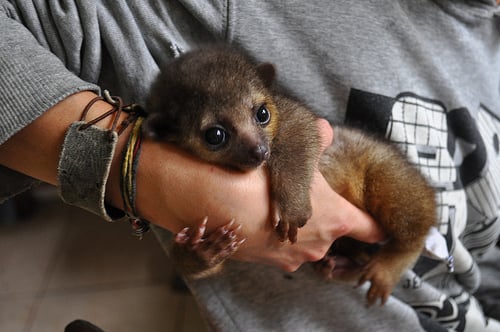
How much does it cost to buy a kinkajou?
On average, the price of a baby kinkajou is around $700 to $3,500, and this price will depend on the breeder, the quality, age and gender.
According to some of the classified ads we found on exoticanimalsforsale.net, for example, most prices ranged anywhere from $400 to as much as $3,000.
This JuliesJungle.com care sheet says the kinkajou on its own can cost about $2,000, but prices are subject to change without notice.
Kinkajou overviw
Kinkajous can come in various sizes as there are seven subspecies. The larger varieties can weigh up to 18 pounds and measure 25 inches in length. They will mature at 18 to 30 months, with the female going into heat every three months when they reach 30 months old. They will give birth to one to two cubs per year.
Generally, its inner fur coat is gray, and it has small ears that accompany its large eyes. Its feet tends to be short, with five clawed toes on every foot for climbing trees. A kinkajou has a prehensile tail which allows them to hang from tree branches in the wild. These fully-prehensile grasping tails can be used as an extra “hand” whenever the animal is climbing. Kinkajous climb trees in a similar manner to monkeys, making use of both claws on their feet plus their tails, which act as the fifth hand. The tail can be nearly as long as the body and it is also used for balancing when moving from one tree branch to another.
It can live in captivity for decades, usually around 20 to 25 years, but they are known to be as old as 40.
What are the extra costs?
A cage/habitat, at least 20 square feet, constructed of a solid material to prevent damage to their feet and a securable lock, can cost hundreds, depending on the size and construction material. These cages, when built, should withstand any climbing and digging, and if a fence is being built around the cage, it must, at a minimum, have buried wire at a 90-degree angle to prevent their escape. Owners recommend an outdoor enclosure with a roof and a limited indoor area with natural lighting available. Inside these cages should include ledges, shelves, ropes for climbing, and a plastic container to lounge in.
A kinkajou will feed on fruits, vegetables and monkey biscuits. Treats, given from time to time, can include raisins, graham crackers or dates. Be prepared to spend a few dollars per day depending on the type of food used. Owners commonly feed their kinkajous bananas, papayas, mangoes, melons, kiwis, grapes, pineapple, pomegranates and figs.
Spay and neutering costs can cost about $200.
Factor in the routine vet care and unexpected vet visits, especially when younger. A kinkajou must be vaccinated annually from various diseases such as hepatitis, parvo and canine distemper. They will also need routine deworming sessions. Their non-retractable claws also need to be trimmed and depending on your preference, this can be done via the vet or on your own if you’re comfortable with it.
Inside the cage, toys are also recommended to keep them interested. This can include toys with holes, ropes or shelves.
In some states, you may need special permits to own a kinkajou. These permits can cost up to $200 per year.
Shipping fees may apply for those who live out of state and buy from a breeder online.
JandaExotics.com says they are very social and will enjoy the company of another kinkajou. While it’s up to you, it doesn’t hurt to budget for another to keep it company while away.
Tips to know:
The Kinkajou marks its territory using scent glands near its mouth, throat, and belly. This animal will usually forage alone or in smaller groups, and it is more social in other settings.
Kinkajous are nocturnal tree dwellers. In the wild, they tend to spend most of their time in the tree canopy of rainforests. Kinkajous inhabit the tropical forests of South and Central America. It is a member of the genus Procyonidae which puts it together with the raccoon. As a species, Kinkajous are also related to olingos, ringtails and coatis.
If hand-raised from a young age, kinkajous can be quite tame, but you should remember that they are wild animals. Kinkajous are quite active and curious. Since they are nocturnal, they are most active starting in the late evening.
In the wild, the kinkajou will primarily feed on fruit and nectar. If properly bottle-fed and handled, these animals are very sweet and good-natured. Even when they bonded to their owners, they will go from one person to another without hesitation, interacting freely with strangers as if they were its owner.
Kinkajous are not endangered and are rarely seen by humans when in the wild, most likely owing to the fact that they are nocturnal. They are still listed under the IUCN-threatened animals list as “least concern,” even though their numbers are declining. Their wild populations are decreasing due to habitat destruction through human disturbance and deforestation, hunting, as well as the illegal pet trade.
When adopting, always make sure you work with an experienced breeder and a USDA licensed facility.
Unlike monkeys, a kinkajou doesn’t produce an unfriendly odor and will not need routine baths.
As they bond well, they will not re-home well if you do decide to give one up for adoption. With that being said, make sure you’re able to make the commitment.
They do get along with other pets as long as introduced at a young age. Children, however, may not play well as they can bite or scratch in some circumstances, which, unfortunately, can cause potential problems.
Most are trained to use the litter box, similar to a cat. If not trained or they don’t have access to a litter box, then they will use the bathroom in higher places.
How Much Does a Pet Owl Cost?
Owls are considered raptors or frankly known as birds of prey. \
Being a bird with a sharp beak and talons (sharp claws) that it uses to catch its food and eat it, owls, unlike other raptors, are mostly nocturnal, and as a result, owls can share a territory with other raptors and tend to not compete with one another.

How much does a pet owl cost?
Certain species of owls are captive-bred, specifically the Eurasian Eagle Owl, and these owls typically sell for around $3,000 to $3,500. Since it is illegal to own an owl without the proper licenses and/or permits, the average United States citizen will find it extremely hard to adopt one unless they have the right permits. In the United Kingdom, however, the laws are different as some owls can cost $300 to $800 to adopt by anyone. Even if you wanted to own an owl, they are known to make awful pets as they tend to avoid bonding, have very little brian power and are quite devoted to hunting.
For instance, on these BirdTrader.co.uk classified ads, a snowy, barn or Bengal owl can cost $200 to $900, according to some of the listings at the time of this publishing. The costs greatly depend on the age, quality and breeder.
What are the extra costs?
Owls, being strict carnivores, require a special diet such as rats, rabbits, quail and mice. The International Owl Center, when they feed their owls, will remove the stomach, bladder and intestine before serving. A quail alone can cost up to $3 each, with an owl eating one per day. Experts recommend having at least 90 days worth of food inside of a freezer.
Most vets don’t have specialized training when dealing with owls, so with that being said, you will need a caregiver who is trained in your area. Depending on where you live, this could be a problem, meaning you may not be able to own an owl, even if you’re legally able to do so or you may have to pay hundreds to have a vet visit your location for a simple vet exam.
Due to flying capabilities, an owl will need a very large cage in order to exercise, with access to both indoor and outdoor spaces. Building this enclosure, also known as a mew, along with the perches and necessary housing units, can easily cost more than $1,000+
Owners will need telemetry equipment in order to track the bird while it’s hunting. This equipment can cost upwards of $1,500.
Tips to know:
Owls, a group of birds of prey known for their distinct calls and silent flight, owls are nocturnal in nature, with a few exceptions. They are generally classified as being birds of the order Strigiformes. It is estimated that about 216 species of owls exist today, with 18 of these species belonging to Tytonidae (the Barn Owl family) and 198 belonging to Strigidae (the typical owl family).
Barn Owls typically exhibit a heart-shaped facial disc — the area which surrounds the face, eyes and the beak of the owl. They also lack ear tufts. Typical owls of the Strigidae family have a round-shaped facial disc and often have a shorter skull, beak, wings and legs compared to the Barn Owls. Both owl families exhibit monogamy in the choice of mates and are carnivorous.
Barn Owl distribution is primarily Australasia (also called Oceania that includes New Zealand, Malaysia, Tasmania and many others). Owing to its high number of species, distribution of the typical owl family is quite widespread, reaching all continents apart from Antarctica and the majority of species inhabit the tropics.
The average owl has a wingspan that can reach up to five feet.
The average owl can live up to 20 years.
The United States currently doesn’t allow private individuals to have native owls as pets. Keeping a pet owl is illegal in the United States as they are protected by Migratory Bird Treaty Act. They can only be owned by trained and licensed persons as either foster parents in a rehabilitation facility, as they are rehabilitated, for educational purposes, or in a breeding program. Some states allow certain species to be used in falconry, although owls rarely make ideal falconry birds. Even in such instances, the licensed individual to keep an owl does not essentially “own” the bird. The U.S. FWS retains “ownership” of the owls and they might recall them at any point of time if the permit conditions are not met.
A Great Horned Owl can live more than 30 years when in captivity, but smaller species can live up to 10 years.
An owl is known to make quite a mess as they always throw up their fur, bones, meat and feather all over. Most owls will projectile their poop, often squirting it as far as they can.
These birds live and hunt independently, meaning, unlike other types of birds, do not live in flocks, making them very antisocial.
How Much Does a Falcon Bird Cost?
AA falcon is any one of the 37 raptor species in the genus Falco.
Today, there are over 40 different species of falcons widely distributed across all the continents of the world such as the black falcon and the peregrine falcon.
Since falcons are birds of prey, they are well-known for their incredible hunting skills as well as for being a ruthless and dominant within their environment.
They hunt all kinds of small animals such as mice, fish and frogs — they will even catch smaller birds while flying in the air.
Because of its large size, great speed and alertness, the falcon has few natural predators.

How much does a falcon cost?
Before you consider purchasing a falcon, you first need to become what’s known as a falconer, which consists of three stages: apprentice, general and master. When you’re an apprentice, for example, you can only have one bird. As falconry is regulated in the United States, your local state’s Game and Fish Department will be able to tell you how you can become one. For the most part, in order to become licensed, you will need to pass a written test, find an established falconer to sponsor them for two years and build a proper housing unit.
On average, it can cost you anywhere from $200 to $10,000+ or more to buy a falcon, depending on its pedigree, type and where its origins are from. For example, you can expect to pay about $1,000 for a European falcon, but for genetically superior falcons that are often found in the Central Valley of California, you can pay an upwards of $100,000.
This Forbes article talked about falcon hunting in Qatar, mentioning that some birds could cost as much as $250,000. Most ordinary falcons, however, in excellent health at the peak of their athletic abilities can cost $5,000 to $25,000.
What are the extra costs?
As mentioned, in order to legally own a falcon, you must become a falconer, a process that requires at least two years. During this time, you will need to pass a test, find someone to sponsor you and build the proper housing unit. The education, hiring a sponsor and obtaining the permits can far exceed four figures. Always refer to your local laws to know the legalities.
Falcons will require housing beyond that of the typical pet. These housing facilities, referred to as mews, are often the size of a larger shed and will be constructed to adequately house the bird. These spaces will be equipped with perches, a shelter and some room to roam. Experts recommend budgeting at least $1,000 to build a suitable structure. Land, without a doubt, is also required so the bird can get exercise and can hunt naturally.
Falcons eat on a diet similar to what they would eat in wild, which can include mice, rodents, chicken, insects, beef and even road kill. Owners also include vitamin and mineral supplements as well. Be prepared to spend $3 per day to feed. Some falconers may also raise their own food to lower the costs.
Tips to know:
Falcons are medium-sized birds found throughout the world. However, falcons tend to favor the most temperate regions of the Northern Hemisphere, with the peregrine falcon being the most common bird-of-prey in the world. It is found on every continent except Antarctica.
They are best known for their ruthlessness as well as for their incredible flight capacity. Compared to other birds, falcons have tapered wings which allow the falcon to adjust their direction quickly. They have been recorded to dive at speeds of up to 200 miles per hour, making them one of the fastest creatures on earth.
Falcons range in size anywhere from nine to 24 inches tall; however, the height of the falcon will depend on the species.
Even though falcons have been known to stay in the same place most of their lives, most falcon species are migratory birds. They have been known to travel over 15,000 miles per year. Because of the issue with falcons being endangered species many breeders who produce peregrines for sport (falconry) produce hybrids with another species of falcon (such as gry or merlins) to help avoid issues with having to prove that the birds were captive-bred and not taken from the wild.
To find a sponsor in your area, you can visit the official North American Falconers Association website.
In captivity, falcons have been known to live seven to more than 10 years.
If you’re serious about becoming a falconer, consider joining a local club to meet with other owners. Take the time to dicuss the costs, benefits and see if it’s something worth joining.
How Much Does a Hawk Cost?
Hawks are believed to be one of the smartest birds, according to the techniques of determining avian intelligence quotient (IQ) by Dr. Louis Lefebvre. They are also renowned for having excellent vision. The hawk’s eye has roughly five times as many photoreceptors as that of human beings, in addition to special muscles and nerves unknown in eyes of other animals. Hawks also have an indented fovea, located at the back of the eyeball, which helps magnify the midpoint of the visual field.
Many types of hawks in the United States are endangered due to humans, but some people may shoot hawks to protect their livestock or simply as a sport. Many species around the world are protected by law. The most common hawks kept as a pet is a red-tailed hawk.

How much does a red-tailed hawk cost?
In order to legally own a hawk, one must become a falconer, which can take upwards of two years to legally become one. This process is required because handling and feeding a hawk is a lot different than other pet birds. On average, be prepared to spend about $650 to $5,000 per bird, and the cost will depend on the type of hawk, gender, age and who you’re purchasing it from. All in all, in order to own one legally, you must become a licensed falconer.
Raptorsforsale.com, an online classified site that focuses on selling hawks, has listings that vary anywhere from $650 to as much as $5,000, for example.
Golden Creek Bird Farm, based in Canada, has a few hawk listings at the time of this publishing, with prices ranging from $750 to more than $2,500.
What are the extra costs?
As stated above, you must become a certified falconer in order to legally own one. First, you must have a Federal and a local state falconry license which will be provided by your State Game and Fish Department. The only state that doesn’t have regulations, according to AmericanFalconry.com, is Hawaii. If you fail to receive a license and are found to own a hawk, then the state can confiscate your bird and you will be cited/fined.
Food, which often consists of frozen mice, quail, pigeons, can cost about $1 to $2 per day.
A transmitter and receiver to keep track of your hawk can cost close to $1,000.
When getting started, a housing facility and all of the equipment can easily cost more than $1,000.
If purchasing a bird online via a breeder, additional shipping and handling fees may apply.
Tips to know:
To receive a falconry license, you will first need to take a test on biology, training, the veterinary aspects of the bird, and test takers must score a minimum of 80 percent. Upon passing, you will then need to find a professional falconer to sponsor and train you for the next two years. Then, after these two years, you will be able to build a facility and obtain the necessary equipment before the Game and Fish Department approves your setup. After paying the fee, you can then become a falconer.
Hawks are technically regarded as birds of prey that live all around the world. There are more than 50 species of true hawks, most of which belong to the genus Accipiter. They are classified in the subfamily Accipitrinae. Most birds of the genus Accipiter are known as sparrowhawks or goshawks.
They are skilled hunters which may feed during the day or night. Their prey includes smaller birds, reptiles and even mammals, depending on the species of hawk. As a result of their excellent eyesight, intelligence, as well as natural predatory behavior, the hawk species are often used as opposed to falcons and eagles in the sport of falconry, in which these birds are used to catch small game.
A mature red-tailed hawk can reach two to three pounds and has a wingspan up to 52 inches.
They have keen eyesight and are capable of spotting their prey from 1,000 feet in the air and dive at speeds of up to 120 miles per hour.
The typical hawk is believed to possess a 20/2 vision, rather than the 20/20 vision of average human beings. This implies that a hawk is capable of seeing an object 20 feet away which a human can only see from a distance of two feet.
To date, there are 5,000 falconers in the United States. To get started with falconry, contact a local club to receive more information.
Hawks are not considered to be social birds nor do they like to be held. They tend to be solitary, not friendly and can’t be tamed.
In the wild, a red-tailed hawk can live up to 15 years, but in captivity, they can live close to 20.
Due to a hawk’s smaller size, it has been known they can carry less than a few pounds. HawksaLoft recommends keeping pets smaller than 15 pounds indoor if you feel threatened by hawks.
Red-tail hawk screech
How can I save money?
Consider purchasing your hawk from another falconer at a lower price or apply to obtain a permit allowing you to capture a wild one.
How Much Does a Panda Cost?
Today, the Giant Panda is exclusively found in China, while the Red Panda is found in China, Nepal, and India. Both types are nearly exclusively herbivorous, primarily feeding on bamboo.
The concerted efforts made by the Chinese government, as well as zoo breeding programs, have boosted the population of giant pandas, both captive and wild.
Looked on as the ambassador for all species of endangered animals, the giant panda is a well-recognized symbol of international wildlife conservation.

How much does a panda cost?
Pandas are loaned in pairs from China for 10 years ranging anywhere from one to two+ million dollars per year, according to this AlJazeera.com infographic. The Toronto Zoo, for example, pays $2.5 million per year, while the Atlanta Zoo pays $1.1 million for two pandas and another $800,000 rental fee for the birth of the two cubs.
As you may or may not know, since a panda is considered to be an endangered species, you won’t be able to own one legally.
What are the extra costs?
The costs to care for a panda, according to Pandas International, is close to $10,000+ per year. Pandas, on average, eat 25 to 35 pounds of bamboo per day. CNN Money says the costs are closer to $100,000 per year for two pandas if they ate organic bamboo shoots. The Memphis Zoo apparently pays $500,000 a year to feed their pandas.
A $400,000 conservation fee must be paid to China if a giant panda, while on loan, gives birth to a cub after 12 months. During this time, the cub will be owned by China, and after the two years expire, the cub must be transferred back.
A habitat for a zoo could cost upwards of $10 million to build. The Berlin Zoo in Germany, for instance, paid close to $9.6 million to build its “Panda Paradise.”
Tips to know:
Even though both species of pandas are currently protected to a certain degree, more protection is needed.
Pandas are thought to be quite selective with regards to the type of bamboo that they will feed on and tend to migrate according to the bamboo types and seasons. This aspect has resulted in their extreme endangerment owing to habitat destruction. Further measures and habitat restoration have to be considered to ensure that the species once again safe.
The giant panda, which has black and white patches, is the most recognizable. The same group of mammals also includes the red panda that much more resembles a fox or raccoon than a bear. They are related to the other species of bear, but genetic research suggests that there was a split about 40,000 years ago, which resulted in the animal possessing an elongated wrist bone that is similar to a thumb.
The giant panda weighs around 270 pounds and can measure five to six feet tall. Red pandas are much smaller and closer in resemblance to the raccoon. They can measure about 1.75 feet long and weigh around 11 pounds. The red panda also has a long bushy tail which is fox-like in appearance.
Only four zoos in the United States have pandas: DC, San Diego, Memphis and Atlanta.
Consider adopting a panda to help the conservational efforts. The donations are pricey, starting at $1,000, but you can be assured your donation goes to good use.
In the wild, a giant panda can live 15 to 20 years old, with the oldest panda ever on record being 38 years old.
How Much Does a Pet Squirrel Cost?
Squirrels are familiar to nearly everyone as these distinctive animals occupy a range of ecological niches all over the world.
With over 1,200 species of worldwide, with the notable exception of Australia, the squirrel family is composed of ground squirrels, marmots, prairie dogs, chipmunks and flying squirrel. However, a squirrel to most people refers to the 122 tree squirrel species, which belong to the 22 genera of the subfamily Sciurinae.

How much does a pet squirrel cost?
On average, a pet squirrel can cost about $100 to $350, and the costs will depend on the breeder, species, age and quality. Before adopting a pet squirrel, however, make sure purchasing a squirrel is legal since many states set restrictions on what kind of exotic pets you can own.
What are the extra costs?
A cage, at least three feet tall and four feet wide, with a nesting box and branches inside, is required to keep the squirrel contained at all times. A decent-sized setup can cost $180 to $300+, depending on the size and the materials the cage is made from. Some owners often purchase a second cage for outside use as well.
A squirrel will primarily fee on food high in protein, fat and carbohydrates such as plants, seeds, fruits, nuts, fungi and green vegetables. Most pet squirrel owners often combine a readily packaged squirrel food mix at the pet store with a mix of the food mentioned. Avoid relying on packaged squirrel food as this can often lead to malnourishment. A healthy squirrel will eat about one pound of food per week.
The teeth grow all through their lives, so it’s important they have chewing material readily available at all times. A flavored hardwood stick, pieces of hardwood or a sterilized cow hoof is often ideal for its dental health.
Squirrels, like most animals, love to socialize and play. Consider placing a small stuffed animal inside of its nesting box as they often like to wrestle with it when they feel playful. They also love to attach to tree branches or perches on the side of their cage.
Consider budgeting for routine and unexpected vet visits.
Tips to know:
Squirrels, considered small rodents, measure three to 11 inches long, with a tail length of about four to 10 inches, although some species, such as prairie dogs and marmots. are as large as a small beaver. The average weight, depending on the species can range anywhere from four to 28 ounces.
Their social behaviors vary depending on the type of squirrel. Gray squirrels are solitary creatures during the summer but often stay together in larger groups of up to 24 squirrels during winter to keep warm. Red Squirrels are solitary and prefer living alone all year long, except when they are raising young.
It is best that you try and purchase a young, captive bred squirrel; — one that has either been hand-raised or separated from its mother at weaning time. This way, you can almost be assured the squirrel will adapt to a human being and will be readily tame.
A healthy squirrel should have a clear nose, clear, bright eyes, a glossy, clean coat, and be of a healthy weight. You should also check to ensure the squirrel doesn’t have fleas or ticks.
Generally, a domesticated squirrel can live up to 20 years in optimum conditions.
Squirrels are often active for a couple hours after sunrise and a few hours before dusk. Other than this, you will more than likely find them resting.
If you allow your squirrel to run freely throughout a home, always make sure that all electrical wires are secured; otherwise, you may find it chewing on it.
Avoid too much handling as squirrels are prone to infections.
Vin.com offers 10 reasons why you shouldn’t own a pet squirrel.
If you ever find a squirrel in need, consider taking it to a local wildlife rehabilitator who can care for it. If you don’t know where to find one, consider calling a local vet’s office or searching online to see if you can find one in your area.
As for their temperament, owners claim they are attentive, very playful, affectionate and even intelligent.
While they aren’t considered to be aggressive, they can scratch or occasionally bite by accident, leaving some nasty marks.
How Much Does a Domesticated Fox Cost?
While some people think you can’t own a fox as a pet, they are taken aback when they find out it can be legal in some states.
Strongly resembling a domestic dog, a domesticated fox is much different than raising one.
Pet owners often avoid owning one due to their house manners, housing requirements and the strict laws when owning one.

How much does a domesticated fox cost?
The cost of a truly domestic fox can cost around $5,000 to $9,000 for just the purchase from a reputable organization that truly breeds domesticated foxes. However, you may be able to find a backyard breeder that sells their foxes for as little as $200 to $700, with the red fox often being the cheapest option. The costs, ultimately, depend on the species, coat color, breeder and age of the fox.
Before you even consider purchasing a domesticated fox, however, keep in mind that some states don’t allow foxes to be kept as pets. Refer to your state law to know of the legalities to avoid stiff penalties. Foxes and Friends, for instance, says 21 states have a ban on private ownership on any exotic animal.
According to Fast Company, importing a domesticated fox from Russia can cost $9,000, but you may need to find one for as little as $400 to $600 from a backyard breeder.
SibFox, a company from San Francisco, will ship a domesticated fox to the United States for $7,000. This will include the shipping, all immunizations and neutering.
What are the extra costs?
In the wild, foxes will feed on smaller rodents, birds, insects, reptiles and fruit, but in captivity, they will feet on a grain-free dog food, fruits and vegetables, similar to that of a dog. Depending on the weight, a fox will eat about one pound of food per day. Some breeders, however, may recommend a raw meat diet with a fruit and vegetable supplement. Like a dog, be prepared to spend close to $50 to $150 per month.
As with any animal, vet visits are crucial to its health. This includes heartworm medication, vaccinations, and the occasional nail trim. Unexpected surgeries or visits can easily add hundreds, if not thousands of dollars to your annual bill.
A fox can live inside or outside, but if outside, they will need protection from the sun and rain. Most owners will build a shelter, often equipped with a bed and blanket. Inside, a fox can act similar to that of a dog or cat, often laying on the bed or lounging in a favorite spot. Even if you plan on keeping your fox indoors, they will still need to time to roam outside because of their natural instincts. A good outdoor enclosure that’s dig proof can cost up to $2,500. Experts recommend an enclosure that’s at least 100 square feet with double doors.
Even if the fox is legal in your state, you may still need a permit to legally own one. Most exotic animal permits can cost up to $200 per year.
Shipping is often included in the estimate, but in some cases, you may have to pay a separate fee to have one shipped to your doorstep.
Like a dog, training highly recommended via the popular clicker method. Whether you want to purchase the training tools or hire a professional dog trainer, training will help your dog learn how to comfortably interact with other human beings and pets.
Tips to know
In captivity, a domesticated fox will either be an African desert fox or a species that is native to the Northern Hemisphere such as the red, bat-eared, corsac, arctic, grey or popular Fennec fox.
A domesticated fox can be trained to use a litter box, and yes, you can even walk your fox on a leash if trained.
If you want to know if a fox is legal in your state, refer to this summary of laws written by Born Free USA.
A domesticated fox is known to be much more destructive than the average household dog. A fox loves to chew on almost anything they can get their teeth on.
Foxes kept as a pet are known to bond close to their owners, just like a cat or dog.
A big drawback, according to those who have owned one, is often the musky-like smell. Even if they are housebroken, they may mark their territory by urinating on objects. This smell is hard to get rid of.
The average fox lifespan is two to five years.
Since there’s a good chance a fox is illegal in your state, consider a dog breed that looks similar to that of a fox. PetHelpful.com, for instance, lists 11 dogs that look like a fox.
How Much Does an Ocelot Pet Cost?
An Ocelot, also known as the dwarf leopard, is a highly endangered wild cat.
Commonly found throughout South and Central America, as well as parts of South Texas, the ocelot is a nocturnal species and is typically known to be quite solitary, although, it will at times, share a den with another ocelot of the same gender.
The Ocelot is an adaptable animal which can be found in a range of habitats, including grasslands, mangrove forests, marshes and tropical forests provided that there is ample dense vegetation. Being carnivorous, the ocelot will eat any type of small prey, including rodents, birds, snakes and monkeys.

How much does an Ocelot cost?
To own an Ocelot, you will need local state and federal permits, and since Ocelots are considered to be illegal in most states, you don’t have much of a chance to buy one unless you’re an accredited AZA zoo. Federal regulations, via the USDA, sets the standards for cage and habitat requirement, exercise protocols, emergency protocols and mental enhancement. While some states don’t require permits to own this cat, it’s always best to check your local laws to be certain.
If you’re legally able to own one, the average cost of a kitten can range anywhere from as little as $1,500 to more than $15,000, depending on the breeder and where you live.
According to BigCatRescue.org, an Ocelot can cost as much as $15,000.
What are the extra costs?
You will need state and federal permits, which can cost well over $300 per year.
These licenses, most of the time, will require you carry liability insurance. Like any insurance policy, a lot of factors can affect the pricing, but most quotes can range from $1,000 to more than $15,000+ per year.
As with any pet, some costs keep recurring every year, including food and veterinary care. Raw meat, manufacturer cat food and vitamins alone for a mid-size cat can cost you around $1,200 per year, while routine vet care can also be costly since there’s a good chance a vet has to visit your location to take care of the animal. Deworming, routine vaccinations, and even flea prevention can cost hundreds of dollars a year and much more if your Ocelot were to come down with an unexpected illness. Keep in mind, however, that some vets won’t tend to exotic pets due to legal liabilities. With that being said, be sure to find a licensed vet who is willing to work with you before even considering adoption.
A housing structure, which must be compromised of climbable poles, platforms, water deep enough for them to dive into and toys, can easily cost four figures, depending on the setup, size and materials it’s made from. A secured fence, typically built from an 11+ gauge chain link fence, also needs to be installed to prevent one from escaping. At a minimum, this enclosure should be at least 800 square feet. In fact, in some states, they may require a minimum amount of space.
Tips to know:
If you’re able to get a permit for your pet, you will not be able to travel with you at any time. If the authorities were to find your pet left the property, it can be confiscated.
Many insurance companies will cancel your homeowners insurance if they found out you housed an exotic pet.
The average Ocelot typically weighs 20 to 35 pounds and is distinguished for its striking spotted black and gold pelt, similar to that of a jaguar or leopard. When mature, they stand 16 to 20 inches tall and can reach lengths up to 35 inches.
Today, the Ocelot has been listed by IUCN as a species of Least Concern of becoming extinct in their natural environment in the near future.
In captivity, they have been known to live longer than 20 years, but in the wild, they typically live half this.


