
How Much Do Boxing Lessons Cost?
Boxing lessons can teach a person the art, strategy, and technique of boxing, and if you would like to learn the art of boxing, there is a lot more that you need to know besides striking and blocking.
While there are only so many tutorials and videos you can watch to try to teach yourself, this will never compare to being taught by an experienced boxer. By learning in person, the instructor can adjust things that apply specifically to you, such as your speed and your technique.

How much do boxing lessons cost?
The cost of boxing lessons will depend on the trainer, the level, duration of lessons, how many are paid up front and geographical location. For boxing lessons, most professionals, from at least what we had researched, charged anywhere from $35 to as much as $100 per hour. Private lessons, if you wanted to avoid the crowds, could cost $55 to $75+ per hour.
Some lessons may be charged by the month, and depending on the policy, this can often include one to three lessons a week, or even unlimited classes, for anywhere from $110 to $300 per month. Again, this will depend on the gym, the credentials of the trainer, and the age of the person being trained.
BoxingGyms.com states the cost of boxing lessons can vary anywhere from $15 to as much as $100 per hour. Do not forget to factor in your geographical location; New York will obviously cost more than a city in the middle of Idaho.
On a forum thread on BoxingForum.com, forum members claimed that they paid around $150 a month for lessons three times a week.
At BodyBuilding.com, a few members talked about what they were paying for boxing lessons. According to the thread, members had paid anywhere from $80 to $170 per month.
Brazen Boxing, a gym we had found online offered boxing classes for $75 or $90 per month, depending on the length. Perks included free co-ed classes, access to strength and conditioning classes, and access to the gym 24/7.
Boxing lessons overview
Depending on your skill level, the lessons will vary. Each trainer will know exactly where you stand and will teach you the ropes of boxing and work your way up the boxing ladder. When the trainer feels that you are ready, they may send you into the boxing ring to fight other students in the class.
According to Commando Boxing, there are three types of gyms you will experience: the hardcore club, the fitness club or the hybrid club. The hardcore club is just that — a gym you want to join because you want to learn how to be competitive and learn how to fight, similar to Mike Tyson. Here, competition can be fierce and very intimidating; however, if you want to become a boxing champion, this is the gym type you want. Next, a fitness club, according to the website won’t necessarily breed fighters, but it will help you get in shape by using boxing techniques. These coaches will not be prepping you for a boxing career; instead, they focus more on helping you lose calories. Lastly, a hybrid gym will be similar to a fitness class, but it will be designed
A boxing gym will have a ring, speed bags, double-end bags, heavy bags and other materials necessary to provide for your training. If it is a health center, it can include additional classes, weight equipment, spas, pools and more. All gyms vary in their facilities.
A boxing lesson can help you improve your core strength, help lose weight, develop rhythms, improve hand-eye coordination, reduce stress, and so much more. A typical lesson may include jump roping, shadowboxing, heavy bag work and various bodyweight exercises.
What are the extra costs?
If the boxing club requires a membership, it is probably best to factor in $40 to $100 per month.
Depending on the policy, it is probably wise to wear loose-fitting shorts, boxing gloves, and protective headgear. Some gyms may provide this; if not, the price for startup gear will depend on what you want to get. Simple gloves, for example, can cost $15 to $45.
Tips to know:
For younger children, be sure to check out local Boys and Girls Clubs of America. These clubs have fantastic boxing clubs for the youth.
Ask about the schedule before you commit. Some gyms can only cater to you during special times. Just make sure that these times do not interfere with school or work.
All boxing gyms are not created equally. ExpertBoxing.com shows you how to find a great gym in your area.
Taking boxing lessons will be a waste of time if you are not willing to put extra work into it. If all you do is go to a lesson once a week, you will not see much improvement. You will need to practice and work out between lessons if you want maximum results. This is the reason a gym membership is a great idea; you can work out and practice at their facilities a few times a week.
How can I save money?
Do not choose the gym solely for the price. Instead, you are going to want to focus more on the gym atmosphere and the trainer. Be sure to interview your trainer and see what he can do for you.
It may be best to get a gym membership. Those who have a gym membership can often get discounted boxing lesson rates.
The longer you subscribe to the lessons and/or gym, the more money you can save. For instance, using the Brazen Boxing example mentioned above, people that reserve a year ahead will save more than those that just do six months.
If you or your child is just starting out, do not invest too much money up front. If you pay for a bunch of gear, a gym membership, and a few months of lessons, it may be wasted if the trainee does not like it.
Look for specials online. For example, Groupon, from time to time, offers discounts from local boxing gyms.
In some cases, the first class will be free to offer you a “sneak peek.” If you feel you don’t know if you will like it or not, then it may be wise to take advantage of such an offer.
How Much Does Bowling Cost?
The cost to bowl will be based on the number of games you bowl, how many people are in your group, or the total amount of time spent bowling. Most bowling alleys also offer league play for all ages, in addition to bowling lessons for individuals and instructional leagues for small children.

How much does it cost to go bowling?
On average, plan on spending anywhere from $1 to $4.50 per game of bowling on an average day. Keep in mind that many bowling alleys have designated times when anyone is allowed to come in and bowl, commonly referred to as “open bowling.” If there are leagues going on, there is a good chance that the lanes will be filled and you will be unable to play. Refer to our table below to see what the most popular bowling alley franchises cost per game.
On special nights such as a cosmic bowling night, the rates can be slightly higher at $4 to $7 per game, or in some cases, the bowling alley may charge by the hour. If you call the bowling alley in your area, they will be more than happy to give you a quote for the night. Sometimes, it may be listed on the official website as well.
If the bowling alley charges by the hour, plan on spending anywhere from $17 to $29 per hour to play. During this hour, you can play as many games as you wish.
For example, Collier Lanes located in Michigan charges $1.50 to as much as $3.50 per game. They also have $7 all you can bowl specials after 9 p.m. If you want to bowl by the hour, the prices can be as high as $20 per hour.
Corporate bowling alleys such as AMF charge as much as $5 per game. As noted online, they tend to be on the higher end for bowling alleys.
If you would like to bowl on a league that offers competitive weekly play, the price will be a bit higher than open bowling. These leagues are put together in different ways, but almost all of them will have some type of prize for the winner or winning team. These bowling leagues for adults can range from $10-$20 per week and run for 12-15 weeks; bowling leagues for children will be $6-$10 per week and run for 8-10 weeks.
| Bowling Alley | Price |
|---|---|
| AMF | As little as $2 per game to $13+ for unlimited bowling. It will depend on the time of year, day of week and location. |
| Brunswick | $3 to $8+ per game, depending on same factors. |
| Dave and Busters | $10~ per game (half pricing on Wednesday) |
| Grand Station | $21 to $25 per lane, per hour |
| Lucky Strike | $8.95–$11.95 per person per game |
| Pinstripes | $5 to $8 per hour |
| Round 1 | $5 to $7 per game |
| Strikers | $2.85 to $5 per game |
Bowling overview
Upon arrival, you will have to reserve a lane at the desk. Once reserved, you will receive your lane number and your shoes if you rent them.
If you do not have your own bowling ball, the alley will have many you can choose for and won’t be considered an additional cost.
Most bowling alleys have automated scoring that will automatically keep scores as each player bowls.
Bowling alleys can also have full-service restaurants that serve typical bar food and alcoholic beverages, free Wi-Fi, an arcade, laser tag, an on-site pro shop, billiards and more. Higher-end bowling alleys may also have a wait staff that comes around to take food and drink orders.
The typical game generally takes up to 30 minutes to complete with a party of three to four.
What are the extra costs?
If you did not bring bowling shoes, the alley will require you rent shoes from them. Bowling shoe rentals can cost anywhere from $2 to $5 for the night.
If you forgot to bring socks with you, these can cost an additional $1 to $3 for a pair.
Tips to know:
Try to call ahead of time before going in. As mentioned earlier, if there are leagues going on, there’s a good chance that the bowling alley will be at full capacity. If it’s busy, some bowling alleys will accept reservations.
“Cosmic bowling” refers to bowling that usually takes place late at night in the dark. The balls usually glow in the dark and the lanes are lit with black light.
How can I save money?
Check your local paper and coupon books to see if you can find any sort of coupons. Many bowling alleys will locally advertise for buy one, get free games and more. Deal websites such as Groupon.com often have great deals for bowling across your state.
Most bowling alleys will have special nights where you can bowl for as little as a dollar. These deals are often on Monday, Tuesday or a random weekday night. You can also find some great deals during the summer when bowling alleys are slow. Try to find out when these days are and try your best to bowl on those days.
Some bowling alleys, especially during the summer, offer an “all you can bowl” pass, where you can come in and bowl as much as you want for a set duration.
How Much Does Unsalted Butter Cost?
Unsalted butter, commonly referred to as the sweetened butter, is usually used for baking purposes since it does not have the presence of salt. This allows a baker to control the flavor of what’s being baked.

How much does unsalted butter cost?
Unsalted butter is sold by the bar or by the pound. On average, unsalted butter sold at the grocery store will be about $2 to $7 per one-pound package, depending on the brand. Smaller seven- to eight-ounce packages, which are commonly found at a local retailer will retail for $2 to $6 per pack. For example, Walmart, for example, sells a seven-ounce package of President unsalted butter for $5. Another popular brand, Land O Lakes, retails for a similar price.
If buying in bulk/wholesale, such as for restaurant purposes, then the cost “per pound” can be much less. For example, at Food Service Direct, the costs of an 18-pound package retails for $97, bringing the average down to about $5 per pound.
At the Costco Business Center, a one pound, four-count container of Kirkland Signature unsalted butter retails for close to $13.
On Amazon, highly rated unsalted butter can cost more than $35 per pound.
Unsalted butter overview
At most grocery stores, a one-pound pack will contain four butter sticks, individually wrapped.
Unsalted butter is usually composed of 80 to 82% fat, 16 to 17% water and 1 to 2% curd or other solids. According to Fitday.com, this butter contains protein, calcium and phosphorus and vitamins A, D, E and K. In addition, it’s packed with nutrients such as fatty acids, lactones, methyl ketones and dimethyl and diacetyl sulfide.
Popular unsalted margarine brands includes President, Land O Lakes and Kerrygold. Target, Walmart and Kroger also have its own store brand as well.
Tips to know:
Since unsalted butter lacks the preservative factor of salt, its shelf life is a lot shorter than the salted kind. Despite this, unsalted butter is still preferred by most people since it gives more precise control of the amount of salt added to a recipe.
According to Foodsita.com, unsalted butter may actually have more fat or more water than its salted counterpart. With that, it can affect crusts, short dough and other high butter content recipes.
Apart from its usual use in baking, butter is also excellent for sautéing foods.
Butter has a lot of healthful benefits. According to Fitday.com, butter has antioxidants that help the body in fighting free radicals. It also has iodine which supports the thyroid gland.
When you cook, you must develop the skill of identifying which butter to use: salted or unsalted. If you are following a recipe, make sure you add the specific butter it tells you to ask. Choosing the wrong kind can very much affect the taste. If you are baking from scratch, it may just take some trial and error to see which one works best for each recipe.
When refrigerating butter, ChallengeDairy.com advises you to keep it in the coldest part of the refrigerator (32º to 38ºF) and in its original container or in a covered container. Although there is a butter keeper in the fridge, the butter is still good to be kept in the freezer since the former is generally warmer than the rest of the refrigerator.
Joy The Baker talks about why we use unsalted butter.
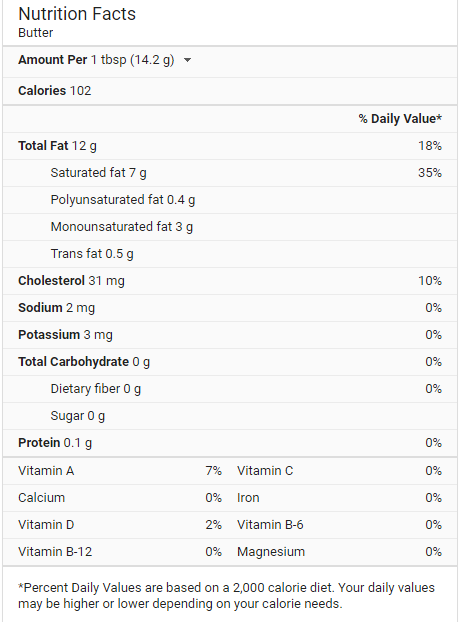
Unsalted butter nutrition
How can I save money?
You can save money by buying in bulk either online, at wholesale clubs or even restaurant supply chains.
Consider buying the store-branded unsalted butter instead of the name brand to save up to 30 percent.
You can use a butter substitute if you do not have butter to use for baking. Fabulesslyfrugal.com, for example, offers suggestions you can use in the absence of unsalted butter.
How Much Does an Unsafe Lane Change Ticket Cost?
An unsafe lane change is a term used to describe a vehicle not changing lanes safely. Most state laws require drivers to change lanes in a manner that would not threaten the safety of other motorists.
In the event you caused an abrupt break for other motorists because of a sudden lane change, changed lanes that has two or more lanes for traffic in the same direction, or changed lanes without the regard for “reasonable safety,” you may be issued a ticket that will result in a fine and points on your license.

How much does an unsafe lane change ticket cost?
The cost of an unsafe lane change ticket will depend on the state you received the ticket. From our research, the ticket can cost anywhere from $150 to more than $300 on average.
In California, for example, this type of ticket will cost about $130 to $280. In Texas, for example, an unsafe lane change charge is $160, according to the official state’s website.
In Surprise, Arizona, according to the website, an unsafe lane change violation is $240.
On a forum thread on Honda-tech.com, a forum member stated he had to pay around $280 for his unsafe lane change ticket.
According to Steetarticles.com, a ticket for an unsafe lane change can cost anywhere from $167 to $200.
Unsafe lane change ticket overview
An unsafe lane change while driving is considered to be an aggressive driving maneuver in some states. Other states regard it as a serious moving violation. According to Nolo.com, you can be pulled over, issued a ticket and be charged with a fee with an unsafe change lane if the driver does the following: The road had two or more lanes for traffic in the same direction, the lane boundaries were clearly marked and/or you either failed to drive “as nearly as practicable” within the lane or changed lanes without regard for “reasonable safety.”
As most states have its own policy, these violations, if found guilty, will go on your record, and in some states, you may incur points for a certain period of time, which will usually be no more than three. Refer to this trafficviolationlawfirms.com chart to see the average fine, points you may incur, if you need traffic school and the license suspension rate.
What are the extra costs?
Like most traffic violations, once you are issued an unsafe change lane ticket, you have the right to fight against it, especially if you think that you have been unfairly accused of an offense you did not do or are worried that it will add points to your driving record. You can seek help from an attorney to prove yourself in the court. As a matter of fact, a significant number of people have won the court over this time of issue; however, fighting over it can be time-consuming and costly.
An unsafe lane change violation can quickly become a reckless driving charge, depending on the circumstances involved. As your charges multiply, the penalties can increase.
If your ticket results in points being added to your license, then your insurance company could raise the rates of your monthly premiums.
Tips to know:
An unsafe change lane can result in other traffic violations, which can add points to your driving record. Depending on the state law, you may be required to attend a state-approved defensive driving online course to dismiss the citations added to the record.
With most unsafe lane change charges, drivers without a record may see up to three points added to their record; however, a driver can have up to three points removed from their driver’s record if they have had no tickets for 12 consecutive months. All states will vary in its policies. To avoid confusion, consider talking with your local courts or an attorney to see what charges you may be facing.
Even if you know you are guilty of making an unsafe lane change, going to court is still a good idea. If you go and admit fault, but you ask to have the points taken away, you may succeed. While you will still have to pay for the ticket, you will save yourself from having to deal with higher insurance payments.
How Much Does It Cost to Rent a Bounce House?
Bounce houses, an inflatable structure used for jumping, are often seen at birthday parties, family events, or any other get together that involves children who need to be entertained. A bounce house can range in size and design. For example, there are small bounce houses that are designed to hold two to five toddlers at a time, while a medium-sized bounce house could hold up to 12 children at once.
The price to rent a bounce house will depend on the size, the length you need it for and who you’re renting the bounce house from.

How much does it cost to rent a bounce house?
To rent a basic bounce house for the afternoon, from the quotes we researched, plan on spending anywhere from $75 to $200 for the day. Depending on the company, this will be for four to six hours. On some occasions, the company may charge by the hour, with rates ranging from $35 to $75+ per hour.
Now, if you wanted a bounce house that’s much more than just a “bounce house,” then the costs could be closer to $200 to $450 per day. These bounce houses can often be equipped with the normal jumping areas, along with an inflatable slide, climbing walls and/or a splash area.
Bouncy Bouncy Inflatables, a rental company based in Arizona, has a handful of themed bouncy houses listed on their official website, ranging from characters to a sports theme. Here, depending on the theme, could cost $100 to $225+ for a six-hour period to have it delivered; however, if you were to pick it up, it could be as little as $75.
FunBouncers.net, a rental company located in Ohio, for example, charges $199 for a daily rental.
If you want to buy a bounce house, the cost of one can be anywhere from $65 to $300 for a kiddie one. Keep in mind that this is not the price for the commercial sized bounce house that you are accustomed to seeing at a rental company. The smaller the bounce house is, the less you will have to pay. For instance, the Blast Zone Little Bopper retails for $155 to $250, while the Intex Playhouse retails for $60 to $80. Commercial-sized bounce houses can range anywhere from $2,000 to as much as $8,000 to purchase.
If you are at an establishment that has a bounce house, you may be able to play in it for a small charge. Most places will charge $3 to $5 to play for a set time.
Renting a bounce house overview
A commercial grade bounce house, which is usually rented out, is usually 15 feet wide and is made of a reinforced vinyl that is prone to rips or tears. Most bounce houses can only hold upwards of 600 to 900 pounds.
When you rent a bounce house, they will include everything from the stakes to the blower and straps and will ask that you sign a contract and place a deposit to secure your date. These companies, unless they notify you, will have an attendant monitor the bounce house the entire time, making sure everyone is playing according to the rules. The estimates mentioned above will also include the delivery, setup, and takedown.
What are the extra costs?
With a rental company, the renter will have a set time for rental. If you go over the time limit, it can result in additional charges, which is usually charged by the hour.
If you live outside of their area, additional mileage surcharges can be applied to the bill. This is often applied if you live 20 to 30 miles outside of their radius. Most of the time, if the company does charge this surcharge, will be less than $50.
Many rental companies can throw in add-ons that work with the bounce house. These can include a bounce house slide, playground setup or even a ball pit. Each additional item can cost anywhere from $45 to $200 per piece, per day. However, if you were to bundle the items together, you could receive a discount.
A cleaning fee could apply if the bounce house were damaged during the rental period.
An attendant may not be provided by some companies, but for a small fee, usually around $25 to $45 per hour, they can be upon request.
Cancellation fees often incur if you cancel within 48 hours.
If the bounce house isn’t near a power outlet, then you may have to rent a generator for the day. A generator, on average, can cost $75 to $175 per day, depending on how long it will be used.
Permits are sometimes required if you set up in a public setting.
Types of bounce houses:
Obstacle Courses
Some bounce house setups will offer a dual-sided obstacle course through which people can race.
Slides
Some will have a ladder that can be climbed to the top of a slide.
Specialty
There are inflatable activities such as life-size twister, bull-riding, boxing, and others.
Tips to know:
Most bounce houses will require a large grassy area that is usually, at a minimum, 20′ x 20′ in size. If you do not have the adequate space, they may not be able to install or set it up properly.
Keep in mind that a bouncy house is not guaranteed. If the weather is bad, they probably will not set it up.
ALWAYS make sure that the company has some sort of liability insurance. That way, if problems do arise, you will know that you are covered.
All bounce houses are not created equally. If you have younger children, try to see if they have smaller sizes that can cater to them.
If setting up in a public setting, always get permission before doing so as most require either a permit and/or permission before doing so.
How can I save money?
With anything, be sure to compare prices with at least three to five companies. By doing so, you should be able to get an instant quote over the phone. Most companies will have prices listed right on their official website.
Check out daily discount websites such as Groupon to see if any deals exist in your area.
How Much Do Onions Cost?
Onions, just like garlic, are members of the Allium family, and both of these are high in sulfur-containing compounds, which are responsible for their odors. Onions are high in vitamin C, fiber and each serving has less than 50 calories.

How much do onions cost?
Onions commonly sold at the grocery store or farmers market will by the pound or by the bunch. No matter how they are packaged, the price varies according to what kind of onion you are buying and where you live. Common types of onions, as described inside the table below, can include the red onions, scallions, Vidalia, brown, and yellow onions. Red onions are known to cost more than the white and brown, but, they also provide a unique flavor when compared to other varieties. Overall, onions, regardless of the type of onion you purchase, you plan on spending $1 to $3 per pound. Refer to our table below to see what each type of onion can cost.
Scallions or green onions are commonly sold by the pound or by the bunch, and the average cost of a bunch can be around $0.50 to $1. Some stores sell onions by the pound, and the price, if sold this way, can run anywhere from $2 to $3 per pound, making the average bunch cost $1.50 to $2. The same price range can be applied to yellow onions. They also cost around $1 to $2 per pound. However, there are times when their price goes higher, especially if the crop outlook isn’t as good as prior years.
Vidalia onions, on the other hand, can cost $2 to $5 per bag, with each bag containing up to 10 onions.
FoodCoop.com, for example, lists the average price for onions around the United States. At the time of this writing, an organic Vidalia would cost about $1.25 per pound in Georgia, while a three-pound bag would retail for $1.50 each in Canada. A loose yellow, with no label, would cost close to $1.50 per pound, whereas an organic mini purplette onion would cost $3.25 each.
The USDA, as of this 2013 report, says the average fresh pound of onions will cost $1.04 per pound.
| Type | Price |
|---|---|
| Cippolini | $3~ each |
| Leeks | $2.50 per pound |
| Pearl Onion | $4 per 10-ounce bag |
| Ramps | $2.50 to $4 per bunch |
| Red Onion | $0.30 to $1.25 per pound |
| Scallion | $1.50 per 6-ounce bunch |
| Shallot | $1 per pound |
| Spring Onion | $2 per bunch |
| Vidalias | $0.30 to $1.25 per pound |
| White Onion | $0.30 to $1.25 per pound |
| Yellow Onion | $0.30 to $1.25 per pound |
Factors that affect the price:
Location
Not all states in the country can grow onions. Because of that, the production of onions in restricted to a certain place, making it a lot expensive for other regions that do not have onion production. Vidalia onions, for example, could not be grown in the state of Iowa. Because of this, since they must be transported, the cost can be higher.
Season
Like most vegetables and fruits, growing onions will seasonal in most parts of the country. If it is considered to be the offseason, then you will likely pay more per pound.
Production
Some onions are grown naturally and preservatives are used to keep them fresh, while other onions may be organic, meaning that they are all-natural and contain no preservatives. Finally, there are onions that are produced in an artificial setting. The way the onion was produced is going to greatly affect the price. Organic onions are going to cost the most.
Tips to know:
Onions can be added to almost any dish to enhance the flavor, but this is not their only use. They can also be used to repel insects, for example. They also have a variety of medicinal effects. Since they are rich in vitamin C, they can be used to treat colds, coughs and asthma. These effects can be felt by inhaling the onion vapors. Onions are also a good source of fiber and other key nutrients.
When purchasing onions, you should look for a dry outer skin free of spots or blemishes. The onion should be heavy for its size and have no scent, according to the National Onion Association of USA.
As per Onions-usa.org, dry bulb onions must be stored in a cool, dry, and well-ventilated place. They should not be stored in plastic bags as the lack of air movement will shorten the storage life of bulb onions.
How can I save money?
Aside from shopping around for cheap onions, you can save money if you have the time and means to plant and grow your own onions in your vegetable garden.
It’s almost always cheaper to purchase onions in larger bags. Almost all grocery stores and wholesale clubs offer bulk bags for as little as $3 to $5 for a 10-pound bag.
Local farmers markets are often cheaper than your local grocery store.
How Much Does It Cost to Wrap a Boat?
A boat wrap, like a car wrap, is a great way to add a design and appeal to the outside of your boat. If you are looking for a way to customize your boat’s design without having the expense of an entire paint job, you may want to consider a boat wrap.
Wrapping a boat is basically the process of completely or partially covering a boat with a printed and laminated vinyl material.

How much does it cost to wrap a boat?
The average price to wrap a boat, according to our research, is around $1,400 to $5,000, but to budget, plan on spending about $100 to $150 per foot, including the design work. Your final price will be dependent upon on the size of your boat, the design, whether you are getting a full or partial wrap, and the company used. The main factor when wrapping your boat will be the topsides of the boat. Since wraps will come in fixed widths, if your boat’s topsides are slightly larger than the width of the vinyl, then another cut will be needed for the job. The same can be said for complex cuts and curves.
For instance, mini-boat wraps can start at $699, while half wraps start at $1,200. Full wraps start around $1,900. These prices, however, do not include the installation — just the wrap itself.
On this forum thread on BBCBoards.net, one member said he had paid $1,800, including the design work, to have an 18-foot bass boat wrapped. Another member on the same thread said the quotes he received could be anywhere from $800 to $3,500, depending on the quality of the material being used and how much of your boat you want wrapped.
Another forum thread over at TheHullTruth.com said the going rate was usually in the $100 per foot rate, and this would include the design work.
OffshoreOnly.com, another boat forum, had a member post a picture of his boat he recently had wrapped. According to his post, he had paid $2,000 to have it installed and was very happy with the results since it was much cheaper than a paint job, and if you were to want to remove it in the future, you would be able to do so.
Boat wrap overview
Most professionals, when they wrap your boat, will use a vinyl boat wrap. From a distance, the wrap will almost appear as if it were painted on; however, upon close inspection, you may be able to see visible seams. Once inside the water, however, it won’t be noticeable.
Depending on the size of the job, it can take anywhere from one to three days to complete the job.
What are the extra costs?
If you want a custom design but you are unable to design it yourself, you may need to hire either the company wrapping your boat or a separate graphic designer to create it. Plan on spending $60 to $95 per hour to have a graphic designed.
Expedited wraps, if you were to need it in less than a few weeks, can increase the costs as many professionals usually want you to work with their schedule.
A good wrap, as long as it’s applied correctly, can last about five to seven years with proper care. In the future, if you were to want to bring the look back, then it would be safe to budget for a new wrap. VinylBoatWrap.com.nz says if your professional were to use a higher quality 3M vinyl, it could be warranted up to seven years against material faults. A quality vinyl, as long as applied right, shouldn’t peel or lift.
Tips to know:
A boat wrap is reversible. If you change your mind in the future or even want to change your look, a professional can remove the wrap without damaging the boat’s underlying surface. While it can be a time-consuming process, it can be removed without ever knowing a wrap was there in the first place.
Boat wraps can be applied to just about any boat’s surface as long as the surface is in good condition. In general, there should be no flaking paint or an excessive chalky gel coat.
How can I save money?
Wrapping a boat, when compared to painting a boat, will almost always be 50 to 70 percent cheaper. If you have a smaller boat less than 30 feet long, then you will, almost always, come out ahead when you have your boat wrapped.
Request a few quotes either online or by calling professionals in your area. Providing a picture and/or description of your boat and job should be easy for a professional to give you a ballpark over the phone or Internet.
How Much Does a Boat Lift Cost?
A boat lift is a large structure that is capable of lifting your boat out of the water.
Whether you’re keeping your boat at a marina, in your backyard or at a private pier, keeping your boat on a lift will offer a few advantages: you won’t have to worry about painting the boat’s bottom, you won’t have to worry about your boat floating away nor will you have to worry about your boat sinking.

How much does a boat lift cost?
The cost of a boat lift will depend on the size of the boat that needs to be lifted, the type of lift, the brand and where it’s purchased. The average price is usually between $2,000 to $20,000+. As a general rule of thumb, plan on budgeting $1,000 per ton and $500 per piling when budgeting.
For instance, a cantilever boat lift can be around $700 to $3,500, depending on the weight of the boat. For instance, the popular Hewitt brand retails for $1,600 to $3,500.
Vertical boat lifts can cost anywhere from $6,000 to more than $20,000, depending on the boat lift and the additional features you may want to add. For example, adding a power feature could increase the price.
A hydraulic boat lift can cost $2,000 to $10,000, again, depending on the weight of the boat and features you want to add.
For larger boats, elevator boat lifts are needed, and these types of lifts can lift weights ranging from 1,500 to 16,000 pounds and the pricing starts at $8,000 to $22,000.
For specific boats such as a Pontoon boat, a pontoon boat lift can cost anywhere from $8,000 to more than $16,500 without installation.
Members on the TheHullTruth.com talked about this very question and said they had paid anywhere from $3,000 for a 10K lift to $4,300 for an 11,000-pound aluminum lift.
Air Dock Boat Lifts lists its prices, along with the sizes the boat lifts are capable of handling. According to the price list, the costs range from as little as $700 for a PWC model capable of lifting up to 650 pounds to as much as $8,343 for a lift capable of lifting up to 24,000 pounds.
The types of boat lifts
Cantilever
A cantilever boat lift will have few moving parts and the load is fully supported by the frame. Most will be made of a corrosion resistant aluminum, assuring low maintenance and no rust. This type of boat lift will be your cheapest option and can be the easiest to move around.
Elevator
An elevator boat lift will be “side mounted” to a seawall or dock, often resembling the same functionality of a forklift. Made of either a galvanized steel or aluminum, these lifts can lift up to 16,000 pounds.
Hydraulic
Designed to hold medium to larger boats, a hydraulic boat lift will combine strength and the quality of marine grade aluminum to hold weights up to 10,000 pounds.
Vertical
This type of lift can carry loads ranging from 1,000 to 10,000 pounds. This lift can easily be moved due to its lightweight designed and will commonly be electric powered, making it very easy to control.
What are the extra costs?
Some dealers include the installation while others may charge for it separately, adding to your expenses. If the installations costs aren’t included, then plan on spending another $500 to $1,000.
A boat railway is needed to bring the boat into a boathouse or up on shore. The price of a boat railway starts at $1,500 to $3,500, depending on the length of the tracks and roller sizes.
There are add-ons you can add to your boat lift. For example, carpeted bunks, a motor stop, pontoon rack kit, and/or a pontoon stabilizer bar are just a few of the many accessories you can add to enhance its usage and appearance.
Like the boat itself, the lift must also be maintained to lengthen its life. Maintenance will include making sure that the nuts, bolts, runners and other parts are all working properly. Regular maintenance is important since it will avoid costly repairs in the future. This can be done by regularly lubricating the gears, steel cables and other moving parts with grease. You also need to check for any cracks in the belts, defaults in the electrical cables, and cuts in the wire insulation.
If purchasing online or from a seller who requires it to be shipped, shipping/freight charges will need to be factored in.
Tips to know:
When not in use, even for a day, the boat lift must be raised to the normal level position. You also need to shut all power to the lift from the circuit breaker.
When choosing the ideal boat lift, you need to consider the boat’s specifications: the length of its water line, its length overall, the beam and the actual weight of the boat, rigging and equipment, not the displacement. You can refer to your boat’s operator’s manual for the important information regarding the lifting process. Once you have all the information needed, you can then contact the boat dealers in your area and see what equipment is available.
How can I save money?
When buying a boat lift, you may find it cheaper to go for a third party boat dealer rather than the manufacturer. Also, consider looking slightly used models to save up to 60 percent.
Shop around. Contact different dealers and get the average pricing. Do not just go for the cheapest, but for the one that has a reputation in giving out quality boat lifts.
If you are up to it, you can make your own boat lift. All you need to have is the right knowledge and the appropriate materials. eHow.com gives a suggestion on how to make your own boat lift. You can check it out in order to save money.
How Much Does Undercoating Cost?
Undercoating is one of the most effective ways to stop corrosion and rust before it starts, extending the life of the vehicle. It can also help reduce road noise since debris won’t make contact with the metal.
The best time to undercoat your car is when you purchase it brand new since the car hasn’t been driven yet and is a reason why most dealers offer this as an add-on; however, used vehicles can have the job performed as well.

How much does undercoating cost?
The cost will depend on the vehicle, where you live and the company performing the job. The average cost of an undercoating job for your vehicle can be around $150 to over $500.
At Ziebart, a popular franchise that performs undercoating, charges, from we saw, was about $250 to $350, and this would include a 10-year warranty; however, in order to keep this warranty active, you would have to come back every year for about $50 per visit.
TheAutoProtectors.com, a website that deals with car maintenance and restoration, says the price usually starts around $249. The said amount should include the labor and all the materials necessary to perform the job. The price, however, goes up depending on the particular vehicle that is being undercoated.
Members on the F150Forum.com talked about what they had paid to undercoat their truck, and according to the thread, one member had paid $300.
On another forum thread at Stangnet.com, they had said you should be prepared to spend anywhere from $179 to $279 to have the job done at a local dealership.
Factors that influence the price:
The size of the car
The rule of the thumb is that the bigger your car, the more undercoating will be necessary; therefore, your cost will be higher than a smaller car.
Location
The price for car undercoating varies from one region or city to another. Metropolitan areas are known to offer a bit cheaper price since there is more competition.
Undercoating overview
Undercoating is important for vehicles since it stops the water, ice and salt on the roads from corroding the underside of your car. If you want your car to be undercoated, you just need to bring it to the nearest mechanic or dealership, and they will basically perform the entire job. The fee, with the estimates provided above, will include the undercoat products, necessary materials and the labor for the undercoat. Other car dealerships also sell undercoating packages to their customers.
According to DoItYourSelf.com, the process usually starts by cleaning off your car, most especially the underside of it. Degreaser, grinder and metal sandpaper will be used in cleaning and getting rid of the car’s rust spots. Once everything is clean, the painting and priming will come next, and all of the spots being cleaned will be primed with a primer. After it has dried, the area will be painted with black automotive paint. Once dried, the actual car undercoating will be done. While using a paintbrush, the undercoat will be applied liberally, and all parts exposed to the road will be covered.
The first coat dry for at least an hour and then the second thicker coat will be applied. When done, it will be left overnight or for the next 24 hours to dry.
What are the extra costs?
Rust-proofing is another cost to consider, and although rust proofing is usually confused with undercoating, rust proofing is a different thing. If you want to fully protect your car from early rusting, you can have it rust-proofed, which is commonly done with an underproofing job. The price for rust proofing is similar to undercoating pricing.
Paint protection film is another way to protect your car. When a paint protection film, which is a flexible and clear layer of urethane film is applied to your vehicle, it will act as a barrier protecting the paint from rocks, stones, sand, and bugs.
The undercoating may last for only a year. No matter how well you take care of it, the undercoating will wear off sooner or later. Undercoating that is worn and patchy will not do any good for your car since water, salt and other elements can be trapped under the coat which will result to eroding the metal. With that being said, you will have to plan on having this type of job done every few years.
Tips to know:
Contrary to what majority of people believe, undercoating and rust proofing are not exactly the same. Generally, rust-proofing products can often be more expensive when compared to undercoating. Rust-proofing includes treating metals with a thin clear coat.
It is very important that the undercoating should be done by a professional since it is a delicate job. If it is not done well, the water drainage holes in the vehicle might clog which will create water accumulation inside, resulting in the metal parts rusting. To find a professional, it is advisable that you use services such as HomeAdvisor.com to get quotes in your area.
If you are planning to do the job yourself, cleaning the underside of your car is the most important part. If it is not completely free of grease and other substances, these substances will get trapped underneath the undercoating and cause even more damage than you are trying to prevent in the first place.
How can I save money?
If you have the skill to do it on your own, you can do the undercoating of your car all by yourself. As mentioned above, some kits found online can be found for as little as $10 to $20.
Try to get as many quotes as possible before deciding on a professional. Consider talking with a popular franchise such as Ziebart, the local dealer and/or local mechanic.
How Much Does a Border Collie Cost?
The Border Collie originated from the United Kingdom and was bred to be a herding dog. Known to be extremely energetic and athletic, these dogs can commonly be found in sporting events as well as herding sheep on farmland across the world. Although border collies are noted as one of the smartest dogs on the planet, there are many people that simply love the look and personality and want to keep one as a pet.

How much does a Border Collie cost?
The price of a Border Collie will greatly vary on so many factors such as its age, the breeder selling it, colors, quality, its bloodline and geographical location. A Border Collie not registered with the AKC, but often considered a non-registered “working line” dog, will cost anywhere from $275 to $675. A purebred Border Collies registered with the AKC can cost anywhere from $750 to $2,200. Keep in mind females will often cost 10% to 20% more than their male counterparts. An older dog, if you were to find one at a local shelter, can cost less than $200.
PuppyFind.com, a popular online dog classified website, has close to 500 listings at the time of this writing, with prices ranging anywhere from $450 to more than $1,500.
Glancing at the AKC Marketplace, we had found most AKC registered breeders were charging anywhere from $1,500 to $2,000 for puppies around eight to 12 weeks old. Most of the listings that we looked at offered vaccinations, a deworming, microchip, AKC paperwork and DNA testing for Collie Eye Anomaly (CEA), Trapped Neutrophil (TN), and Ceroid Lipofuscinosis. Some breeders would remove the dew claws at birth as well.
Animal-World says prices can range from as little as $100 for an adult to as much as $1,000 to $1,500 for a show quality puppy.
What is going to be included in the adoption fee?
Any reputable breeder will always include up-to-date vaccinations, medical records, a certified vet exam from a registered veterinarian, a health guarantee and a travel crate if it’s being shipped. AKC registered dogs will come with the appropriate registration paperwork, an OFA certification and/or DNA tests. Talk with your breeder to know exactly what you’re getting with the adoption.
What are the extra costs?
With any pet, including a Border Collie, it’s important to think about routine and emergency vet visits, food, toys, shelter, accessories, and more. No matter what type of dog you have, it is safe to save at least $800 per year for necessary expenses and even more if your dog were to come down with a serious illness.
If the dog has to be shipped via air or car, the costs can vary anywhere from $100 to $300, depending on the mode of transportation and how far it has to travel.
Training and obedience classes need to be factored in, especially if you plan on having your dog compete in local competitions.
Tips to know:
Popular coat colors may include black and white, red and white, red tri-colored, and black tri-colored.
Males will measure 18 to 22 inches, with females measuring a pinch smaller on average and considered to be medium-sized dogs Both genders weigh anywhere from 30 to 55 pounds.
The average lifespan, as long as healthy, is 10 to 15 years.
Because this type of breed is extremely energetic, it is so important that you have the right amount of room to allow it to run and exercise. These dogs are highly ideal for those who have larger yards and are not ideal for an apartment or condo setting.
Noted as one of the smartest dogs, these dogs are capable of memorizing well over 100 words, making it very easy to train and entering them in dog shows and competitions. However, don’t take the word “easy” for granted. Just like any other dog breed, a Border Collie can still pick up bad habits.
Generally, as long as the dog is raised with other animals at a younger age, it can get along with other well-behaved household pets. The same can be said about children as long as they properly socialized and well trained.
A Border Collie, just like any other breed, is susceptible to common health conditions, including osteochondritis dessecans (OCD) and progressive retinal atrophy. OCD is the result of damaged cartilage growth, which can cause discomfort near the affected limb. Progressive retinal atrophy can cause night blindness, and at the moment, there’s no treatment for the disease.
How can I save money?
Border Collies are very popular dogs, and for that reason, it can easy to find older dogs at local rescue groups or even at a local adoption center. Granted, these dogs may be older, but you can feel good offering a dog a forever home; plus, the adoption costs will much less than adopting from a private breeder.


