
How Much Does Borax Cost?
Borax, also known as a sodium borate or disodium tetraborate, is a boron compound that has the consistency of a white powder. This white powder dissolves in water and has a wide variety of uses, including being used for a laundry detergent, anti-fungal compound, a texturing agent in cooking and even in cosmetics. Many recipes found online are often for cleaners to soften hard water, create a homemade laundry detergent soap or even used as a pesticide to get rid of common pests such as roaches.

How much does borax cost?
On average, borax is going to range anywhere from $2 to as much as $5 for a 55-ounce box. The cost of borax is going to depend on the brand, size and its use. Most of the time, you shouldn’t have to spend more than $3 per box.
For example, at Walmart and Target a six-pound package of borax detergent booster retails for $4.
Aside from the powder form, borax can also come in tablet form. These tablets, designed to keep the inside of a washing machine clean, can cost around $8 to $12 for about three to five tablets.
A borax flux, which is usually used with machinery and sewing, can vary anywhere from $7 to $10 per pound.
Borax hand soap, which is very similar to the soap you use in the bathroom and kitchen, can cost anywhere from $6 to $12 for a five-pound box.
According to TheFamilyHomestead.com, a 76-ounce box will usually cost around $3. For those who are making their own laundry detergent, plan on spending around $0.14 per batch.
Borax overview
Borax, when purchased online and in store, will almost always be the “20 Mule Team” brand. This brand is sold in a white box with red lettering and a pinch of green.
Borax will be found at almost all grocery stores in the laundry detergent aisle. It can also be found at hardware stores, farm supply stores, international grocery stores and even local swimming pool supply stores.
Laundry detergent will often come in a five-pound box, while hand soaps will generally come in 12 or 16-ounce containers.
What are the extra costs?
Due to its powder form, borax often works better in a stainless steel dispenser that is designed for it. These dispensers can cost anywhere from $30 to $80.
If you are making your own detergent or soap, you may need to add extra ingredients into the borax. For instance, you could add fragrance to the mix to give the soap a clean fresh scent.
Tips to know:
Borax is a great way to help eliminate all sorts of odors and even help remove stains that are very hard to get rid of.
If you are a budget-savvy person, borax is a great alternative for any name brand laundry detergent, and studies have shown that borax can actually work better than some name brands that are out there.
Borax is great for more than just cleaning clothes and various body parts. In fact, it can also be a great deterrent to keep fleas out of the home. According to Three-Little-Pitties.com, borax can keep fleas out of a home for up to a year.
While it is a “natural” ingredient, The Balance says it should be kept out of reach by children and pets since it can be toxic. If you do, by chance, plan on using it inside your home, be sure to label everything accordingly.
How can I save money?
With popular brands, such as Arm and Hammer, you can often find that there are hundreds of coupons available on the internet. Check the internet, your local paper or social media channels to see if there are any coupons you can take advantage of.
Buying in bulk at local wholesale clubs can often be cheaper than buying individual boxes at local retailers.
How Much Does a Knuckle Tattoo Cost?
A knuckle tattoo is a specific tattoo that either uses two groups of four letter words or one eight letter word spread across the knuckles when put together.

How much does a knuckle tattoo cost?
The cost of a knuckle tattoo will depend on the design, the tattoo artist, colors involved and geographical location. On average, a knuckle tattoo can cost you $55 to $150 for two knuckles with simple lettering. However, this price can increase if the artist is in demand or if the details are complicated. If the font you want is custom, for example, you could pay up to 50 percent more. The same could be said if you were getting a symbol or design that you made yourself. We reached out to a few shops in the United States and were quoted a “ballpark” estimate over the phone or via a contact form. We had put in our estimates located inside the table below.
Regardless of the design, most tattoo artists charge by the hour, ranging anywhere from $75 to $150 an hour, but some may charge per tattoo design, and this price is different according to the size of the tattoo and the number of colors in the design.
| Geographical Location | Quote |
|---|---|
| Addison, TX | $95 |
| Austin, TX | $125 |
| Denver, CO | $150 |
| Portland, OR | $120 |
| Watertown, NY | $115 |
| Whittier, CA | $150 |
Factors that affect the price
Tattoo design
It is hard to quote a tattoo since there are some considerations that should be kept in mind. However, like most tattoos, the price boils down to the design and its complexity. The designs for knuckle tattoos, generally, are usually words, names and/or a mix of symbols. If you have other elaborate designs in mind, you will most likely have to pay more.
The colors
The colors, just like the design, can affect the pricing. If you want more than one color, then costs may rise.
The location of the shop
If the shop you choose has very little competition in the area, they may charge more simply because they can, but this isn’t always true because the cost of living can play a role, too.
What are the extra costs?
Since the tattoo fades fast, you may need to redo and touch up the tattoo over time, or at a minimum, have the outline of your tattoo highlighted to bring the original vibrant color. If so, you more than likely will have to pay for the tattoo again. Some artists, however, do not charge to retouch their own work or may charge less than the original. Plan on spending around $30 to $50 for a touch-up.
Aftercare is extremely important to prevent infection and help the tattoo heal the way it should. Aftercare products such as the skin ointment creams will be an additional cost to consider.
Tips to know:
Before you decide on your tattoo, you can either come in with your own custom design or you can choose from a design an artist may have at their shop. The estimates mentioned above will include the design, the supplies and the time the professional has to put in to create the tattoo.
Most shops will have a minimum, regardless of what you want to have done. Be sure to ask about this sort of policy before getting a quote.
This Instagram page has a few knuckle tattoo ideas if you can’t think of any.
How to save money?
Talk with at least three to five artists in your area. Most of the time, you can either get a quote over the phone or even via a contact form online. However, don’t go with the cheapest option as this isn’t always the best idea. Be sure to ask for references, ask for certifications and see if they have any violations with the state.
How Much Does Knotty Pine Wood Cost?
Knotty pine is a lightweight wood, characterized by its straight grain and fine textures. This wood tends to have a rustic look, and while knots can be spotted, the knots tend to be smaller and tight.

How much does knotty pine cost?
Like any other wood used for wall paneling and furniture, the price of knotty pine can vary from one retailer to another. The price will often depend on the quality of the wood, the size, thickness, and the amount of wood you purchase. A 2’x8′ piece, for example, can cost about $35, whereas a 3’x8′ and 4’x8′ piece could cost $55 and $70 respectively.
Since most knotty pine is sold by the panel that typically measures anywhere from 1’x4″ to 2’x8″, the prices are going to range anywhere from $2 to as much as $6 per panel. The price can often go up and down depending on the pine finish.
The Hardwood Store of North Carolina, for example, lists its prices for knotty pine wood on its official pricing page. Depending on how many feet you buy at once, the costs can range anywhere from $2.55 to as much as $3.85 per board foot.
Factors that affect the price:
Size
As the size and thickness increases, the value can increase as well. However, the more wood you buy, the cheaper it will be per piece. Buying in bulk can always save money.
Wood grades and the quality
Some knotty pines are known to be a lot cheaper than the others; however, the quality could not be compared with wood that is priced higher due to the outstanding quality. As we all know, wood is priced according to its grade. First-grade wood, more often than not, may be more expensive, but it will have very few noticeable defects.
What are the extra costs?
If purchasing online, shipping costs may apply, depending on the retailer’s policy. Some online retailers, however, may waive the freight charges if you spend a certain amount.
If you shop at a local retailer, some can deliver it to your doorstep for an additional fee.
Tips to know:
When buying wood, always check for the possible defects. Although some the defects in a knotty pine make it appealing, you should check that there are no defects that will pose a threat to quality later.
Knotty pine is usually used for decorative purposes since it is a very soft wood and knots may cause it to split, break, or bow. This is also the reason that the wood is primarily used for wall paneling rather than flooring.
Buying knotty pine can be done at your local big box hardware store like Home Depot, Lowe’s or even online. However, it is good to buy the wood in person since you can check its quality. By buying it in person, you can also choose the pieces you want since some may have imperfections or be slightly discolored compared to the rest.
Paneling, when purchased for a wall, will often be about 3/4 inches thick and commonly come in widths of four to eight inches long. As for lengths, common cuts include 12, 14 and 16 feet.
How can I save money?
Shop around both locally and online for the highest quality yet cheapest knotty pine wood. Watch the local ads for times when their lumber is on sale, which is usually once every few weeks. Sales may occur according to the time of year as well.
If you are going to buy the wood locally, there is no reason you should have to pay for delivery. Ask a friend, relative, or neighbor to borrow a truck if you need one. You can load and unload the wood yourself, saving you from paying for this service.
As with purchasing any lumber, the more lumber you purchase at once, the more you can probably save per “board foot.”
How Much Does Knob and Tube Wiring Replacement Cost?
Knob and tube wiring, commonly known as K&T or open wiring, is an older form of electrical distribution consisting of two longer wires wrapped in a rubber insulator, ran along the beams of the home and wrapped around a ceramic-based tube at the joints to prevent chafing. This type of wiring started in the last 1800s and was used in homes up until the 1930s. If your home was built in the late 1800s to the early 1900s, there’s a pretty good chance your home will have this sort of setup.
If your home still uses the knob and tube electrical system, you may find it difficult to find an insurance company that is willing to insure your home. The reason for this is that these older systems could have worn out wires that have shorts in it, causing electrical problems such as shorting out, starting fires and/or even causing small explosions.

How much does knob and tube wiring replacement cost?
The cost to replace knob and tube wiring will vary depending on the size of the house, the number of floors, how much wiring needs to be replaced, the geographical area and electrician doing the job. The average cost for replacement, according to our research, can be around $500 to $1,500 or more per room.
This question was asked by a member on Zillow, and a few members said you should expect to pay about $5,000 for a 1,200 square foot home to replace the entire wiring system, bringing the replacement average to about $4 per square foot if you’re looking to have an entire home’s system replaced.
Angie’s List says if you want to replace the knob and tube wiring inside your home, then you should be prepared to spend $8,000 to $15,000 for a 1,500 to 3,000 square foot home. The article also mentions that you should be prepared to upgrade the service to your home to 100 amps at a minimum, but most contractors will recommend 200.
On this Reddit thread, one member said they had purchased a three-story home with a basement, and when everything was said and done, the total costs, when outsourced out, was close to $10,000. This quote, according to the post, included a new second breaker on the second floor and was in the Chicago area, which is known to be pricier than other cities in the United States.
A member on this City-data.com thread said they had paid $4,000 for a 3,200 square foot home.
Knob and tube wiring replacement overview
The price estimate we mentioned above should include the labor and parts needed to complete the job. A reputable electrician will always offer you a contract up front, clearly stating what’s going to be included in their estimate. These estimates will include running the new wires, filling any holes made, disconnecting the old system, installing a new junction box, replacing fuses and updating any outlets or electrical components that need to be updated.
According to SpearesElectric.com, there are two ways to replace knob and tube wiring. The first method involves running the wires in the fastest and shortest route by destroying the walls and ceiling of the house. This is known to save you money on electrical costs since you look for the fastest possible route. The second method involves looking for ways to fish the wiring through the walls and ceilings.
Regardless of how the wiring is removed and/or replaced, plan on having your electricity shut off for a few hours as the electrician works on your home.
What are the extra costs?
Depending on which part of the house has the wiring replaced, you may need to put up insulation in preparation for any work you want to do with your walls or ceiling.
If the electrician has to be open up the ceiling and/or walls and doesn’t include the patching in their quote, then you need to budget for patching and painting the drywall.
The costs can increase if you have more than one floor and/or your home doesn’t have a crawl space or attic access.
The panel, more often than not, will need to be replaced as well, and this may or may not be included in the initial quote.
Tips to know:
Depending on the complexity of the electrical job, you may need to tear down walls and ceilings just to get to higher floors of the house and install a more modern electrical system.
If your house has knob and tube wiring and a distribution panel that has never been updated, the house may also have other problems associated with older homes. These problems include untreated asbestos insulation and burst and/or frozen lead water pipes. There might be other things that require immediate attention other than the electrical wires.
If you are replacing knob and tube wiring with aluminum wiring, you must keep in mind that aluminum wiring can cause problems when it is installed with the wrong light switches and/or electrical outlets.
Weigh your options regarding the type of replacement you want. While the initial replacement that involves tearing down walls may be cheaper at first, the charge of replacing damaged walls can cause the project to become even more expensive. Ask the electrician how much damage he or she thinks the walls will incur and then decide which would be best for your situation.
Knob and tube wiring, according to Mr. Electric, is dangerous because it uses a sheathing that can wear away over time, its two-stranded, meaning there’s no ground wire, it doesn’t carry high ampacity loads, and it also uses a two-prong receptacle, restricting the use of smaller appliances.
How can I save money?
If you are planning to replace the knob and tube wiring system in your house, consider getting three to five quotes. Most contractors will be more than happy to offer a free estimate. If you don’t know where to find these estimates, HomeAdvisor.com can match you up with countless licensed and respected contractors in your area for free. Simply describe your job and watch the quotes roll in.
How Much Does a Knee MRI Cost?
A knee MRI will use magnets and radio waves to capture the images inside the knee area and its surrounding areas. Unlike an x-ray, an MRI won’t use any radiation. Once done, an MRI allows a doctor to view the soft tissues in your body, along with the bones. It can also provide detailed images such as the cartilage, tendons, blood vessels, ligaments and muscles.
This MRI, according to the Radiological Society of North America, will be ordered to treat conditions such as arthritis, bone fractures, fluid buildup, infections, tumors and more.

How much does a knee MRI cost?
The average cost of a knee MRI can range anywhere from $700 to $3,500 when done in a hospital setting without health insurance. This amount does not include the radiologist and report, which may cost a few hundred dollars more depending on the specialist. If you have a health insurance policy, you will be responsible for your deductible and/or co-pays, but in some circumstances, you may be able to call your insurer or even visit their website for a ballpark estimate. Since all policies vary, it is best to discuss this pricing with your health insurance provider.
If you do have insurance, our research has indicated most people, after the insurance kicked in, had paid anywhere from $450 to as much as $1,100. This, of course, could be much less if you were to have a better insurance policy or you have met your deductible for the year.
On AuntMinne.com, they did research showing the isoprenalines with knee MRIs across the United States. The researchers, according to the study they had cited, said they had found prices ranged from as little as $259 to more than $2,042, with a high average located in the West to a lower average in the Midwest.
Forum members talked about the costs of a knee MRI on LetsRun.com, and according to the forum thread, they had said the prices, without insurance, would be inside the $700 to $2,000+ range.
Knee MRI overview
Depending on your doctor’s orders, you can get a knee MRI in two types of centers: either a hospital or a freestanding MRI center. A hospital, almost all the time, will be more expensive due to the higher overhead costs and billing procedures, whereas a freestanding MRI center will be just that — a center that primarily focuses on MRIs. These centers will be cheaper but sometimes may lack the quality when compared to a local hospital.
Prior to the knee MRI scan, the patient is asked to remove any metal attached to the body, such as piercings and your clothing so you can slip into a hospital gown. The MRI technologist will then insert an intravenous line if you’re using a contrast dye and position you on your back to start the scan.
The scan usually lasts for 30 to 60 minutes; however, it may take longer if the patient has trouble taking the test, such as claustrophobia or lying on a hard surface for that long. Breaks may need to be taken if this is the case.
The estimates mentioned above usually includes the physicians (interpretation) and technical (imaging) fees. There are times when the test will be billed in two parts.
After the MRI has been done, the MRI images will be black and white, with the contract appearing bright in abnormal areas due to enhanced cell activity. When the doctor reviews your MRI, he or she will explain teh problem and discuss your next steps for potential treatment options.
What are the extra costs?
A professional radiologist, if charged separately, will be about $250, on average, to interpret the results.
If the patient is unable to take the test while awake, sedation may be necessary.
Depending on your condition, your doctor may order an x-ray along with the MRI.
Tips to know
Because of the nature of the MRI, there are many people who have a hard time with the test. If you have a hard time lying down on a hard surface for too long, your may not be able to undergo an MRI. If the loud noise of the machine will bother you, you may need to wear headphones or earplugs.
People who are claustrophobic will most likely not be able to have a traditional MRI done. However, in recent years, open MRIs have become an option. This type of MRI will have the same results but will be more comfortable for the patient. It may cost more than a traditional MRI.
How can I save money?
Make sure that your health insurance will cover part of the costs, if not all, of the MRI scan. That way, you can lessen your expenses. If you have insurance you can use them to ask for the available in-network providers in your area that offer reasonable prices. If you do not have a policy, consider using comparison websites such as eHealthInsurance.com to find an affordable policy.
If it isn’t an emergency, call providers and ask if they offer discounts for self-pay patients in case you do not have a health insurance. If they do offer discounts, ask what will be their price of the service. You may be able to get up to half off the price if you are able to pay cash up front.
A freestanding center, on average, can be up to 60 percent cheaper than a hospital. If your doctor allows it, see if your city has a center that specializes in MRIs.
How Much Does an Ignition Interlock Device Cost?
An ignition interlock device, a shortened term for ignition interlocks or IID, became the answer to the usual problem of driving under the influence.
With an interlock device, the issue of drinking and driving can be addressed. The interlock device is basically a Breathalyzer that is installed in your car’s ignition system – you breathe into the breathalyzer and your BAC (Breath Alcohol Content) is measured. The vehicle will not start if the BAC of the driver is over a certain percentage. The BAC limit differs from state to state, but it is commonly set at .02% to .04%.
If you were charged with a DUI, some states will have an ignition interlock law and will require you to install one as part of your court sentence.

How much does an ignition interlock device cost?
The average cost of an ignition interlock device will depend on the state that requires the lock. From our research, the average installation costs will be in the $75 to $200 range, while the monthly monitoring costs will be anywhere from $60 to $100 per month. In some rare circumstances, the installation costs could be even more if you drove a car that took longer than average to install. For instance, hybrids and/or vehicles with a pushbutton start can cost more.
DrivingLaws.org says you should expect to pay about $100 per month for installation and between $50 to $100 per month for the lease.
According to DUIArrestHelp.com, the overall cost of installation, calibration and schedule maintenance can cost about $75 to a couple hundred dollars per month.
Ignition interlock device overview
The interlock device program is only intended for people who have been convicted of DUI (driving under the influence), sometimes called DWI (driving while intoxicated), again, depending on the state you live in. Usually, the court will be the one to require the offender to install the device on their vehicle, although these can be purchased for other reasons outside the court.
Once installed in the vehicle, the driver will not be able to start the car without measuring the alcohol content on their breath. Activating the device starts by blowing into a cell phone-sized hand-held sensor attached to the car’s dashboard. If the breath contains a higher BAC, the car will not start at all.
Each month, depending on the state’s requirements, you may have to attend a service center to have your device checked on.
Interlock devices are regulated by every state and are available for lease only. You cannot buy it directly at any store.
What are the extra costs?
An installation fee will always apply and will more than likely be within the $50 to $200 range, depending on your state and the car you drive. For example, the cost of installing an interlock device in Florida is $75. This fee may be higher if you have a luxury vehicle or if the installation takes longer than the usual.
There will always be a monthly fee that ranges anywhere from $50 to $100, again, depending on the state in which you live.
Other states have a policy of depositing money before the device can be used. Most often, the individual required by the court to have an interlock device in their car must deposit at least a hundred dollars. However, this amount is refundable if the device is returned to the court in working order.
Once you no longer need the device, it will need to be taken out of your car in the same way that it was installed. A removal fee of about $50 to $100 may incur in this scenario.
In some states, an administration fee of about $100 may apply.
Tips to know:
If you can’t afford the device, talk with your court to see if they have a program or fund set up to help you financially.
Be wary of third-party companies that claim they can get you a cheaper rate. If the offer seems too good to be true, pay close attention to the fine print because you may find it won’t include the vehicle inspection fee, installation fees and/or calibration fees. While some third-party companies are okay, just make sure no hidden fees come along with it.
How Much Does an Intake Manifold Gasket Repair Cost?
The intake manifold is an aluminum, plastic or steel-like cover that will sit atop of the engine, attached by an intake manifold gasket, either made of plastic or rubber. This gasket is responsible for directing the air-fuel mixture inside the engine to the corresponding cylinder to be burned for power. Over time, as the gasket expands, contracts and attracts heat from the engine, it can fail, causing the coolant, which passes through the gasket to cool the engine, to leak. This leaky gasket, in turn, can result in a vacuum-like sensation, sucking the coolant back into the leaky gasket, causing poor engine performance.
Symptoms of a bad intake manifold gasket may include an overheating engine, coolant leaks, colored fluid beneath your car, a rough-running engine and/or the “check engine” light illuminates on the dashboard.

How much does an intake manifold gasket repair cost?
On average, the cost to repair the intake manifold gasket will depend on the mechanic you visit, where you live and the car you drive. On average, the complete repair, with labor and parts included, will be in the $300 to $1.050 range. The price range can widely vary, again, depending on the car you drive. From our research, a higher-end car, such as a Porsche, could cost close to $1,000, whereas a Volkswagen could be as little as $150. Most professional repair costs, however, will be inside the $275 to $550 range. Check out our table below to see what your make and model may cost at a local mechanic/dealership.
The parts only, again, depending on the car you drive, will often be in the $20 to $125 range. Although the parts will be cheaper, it’s the labor that will cost you if you were to take it to a professional mechanic. At AutoZone, for example, the costs vary anywhere from $15 to $65+. The same prices were seen on Amazon.com as well.
OpenBay.com says the average estimated cost will be anywhere from $350 to $600, depending on the make and model of your car and where you live.
Someone who asked a question on Just Answer said they were quoted $759 to replace the lower intake manifold gasket and it took his mechanic up to seven hours to replace.
| Make and Model | Average Price (Labor + Parts) |
|---|---|
| Buick Century | $475 |
| Buick Lesabre | $325 |
| Chevy Blazer | $450 |
| Chevy Impala | $750 |
| Chevy Malibu | $550 |
| Chrysler Town and Country | $350 |
| Dodge Ram | $450 |
| Ford 150 | $650 |
| Mustang GT | $325 |
| Nissan Altima | $550 |
| Pontiac Grand Am | $750 |
| Toyota Camry | $325 |
| Toyota Corolla | $210 |
| Volkswagen Jetta | $275 |
Intake manifold gasket overview
During the repair, the mechanic will first scan the car for any codes to confirm the gasket is, indeed, the root of the problem. From there, he or she will visibly inspect the manifold for any leakage and will pressure test the cooling system. If leaks are suspected, each gasket will be removed and replaced accordingly. Depending on the make and model and the size of the engine, the manifold could be buried beneath several layers, including the injectors, which can lead to a few hours of labor time, usually five to six hours, according to professional mechanics. Each layer will need to be taken off in order to expose the manifold gasket.
What are the extra costs?
When this part fails, it can either leak coolant into the engine or can even contaminate the engine oil, so in some cases, the engine oil may need to be changed after the gasket has been repaired.
Depending on the severity of the situation, your mechanic may need to add an additional labor hour if the bolt or stud holding the gasket in place were to break.
While usually included, about two gallons of coolant will need to be added after the job has been completed. Some garages may charge you for the coolant, while others may tie this into the repair quote.
How can I save money?
If you see any leaks or signs of a poor intake manifold gasket, get it repaired immediately. The intake manifold plays a key role in the engine functioning, directing the fuel mixture inside the engine to the correct cylinder, followed by a cool down to keep the engine running at an optimal temperature. If these seals were to fail and leak, then the engine will lose its coolant, causing it to either overheat or run inefficiently. If you wait and proceed to drive, even though there’s a leak, there could be larger problems in the future such as severe damage to the cylinders or engine block.
As with any repair, try to get at least three quotes before accepting one. As long as you know the gasket is the issue, most mechanics should be able to offer a ballpark quote over the phone.
How Much Does it Cost to Enlarge a Ring?
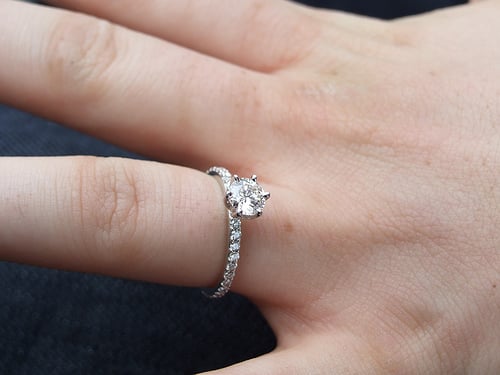
Enlarging a ring is the process used to make an existing ring larger. Enlarging a ring may be needed for a variety of reasons such as sudden weight gain, an injury that affected the size of the finger permanently or a ring that was purchased in the wrong size.
How much does it cost to enlarge a ring?
The cost of enlarging a ring will depend on the type of material the ring is made from, if gems/stones are present, the thickness, where you live and the professional doing the job. The average cost of resizing a ring is anywhere from $25 to more than $120. Usually, the larger the ring is, the more material that will be needed. The material also plays a role. For example, platinum and white gold will always be more than a yellow gold ring.
From cheapest to most expensive, JewelersMutal.com lists yellow gold being the easiest metal to resize, with tungsten being the hardest. In order, the other metals include sterling silver, white gold, rose gold, platinum and titanium.
Callagold.com talked about five ring quotes, with prices ranging from $28 to $109 for an enlargement.
Enlarging a ring overview
If you want to enlarge your ring, you can simply bring it to a trusted jeweler. The first thing that the jeweler will do is determine your target ring size by having you try on various ring sizes to find the one that fits you best. Once they agree to a size, enlarging a ring involves stretching the metal and cutting a band to create a bridge for additional metal to re-join the piece. Another method, which involves stretching the ring, will be done by pulling apart the ring and elongating it; however, most jewelers may avoid this method as it often weakens the metal and/or could change the look of the ring. If done properly, the cut shouldn’t present any significant color differences, and most of the time, it can be weaker in the area where the ring was cut.
Every jeweler will have his own policy when it comes to enlarging a ring. Some may have to ship it to a headquarters, while others can do it in-house.
Depending on the jeweler and how busy they are, the newly enlarged ring will be ready for pickup within a few days, but some, if it’s a simple enlarging job, it could be done the same day. Your results will vary.
What are the extra costs?
If you have a ring has a stone, such as diamond, all the way around the band, you may need to get another stone added to it. This will cost a lot more, and the price will vary according to the price of stone at the time of the resizing. If the diamond or gemstone are set along the side of the ring, it may need to be retightened or even reset.
In the event you are trying to resize a white gold ring, you will need to get the rhodium plated to avoid a “yellow tinge” appearance on it. This costs around $30.
Tips to know:
If you have a ring made of tungsten carbide, there is no way you can have it enlarged. Titanium is another metal that can be hard to enlarge, and some jewelers may not be able to accommodate your request.
Always take your ring to a reputable jeweler and ask about their policies. How do they enlarge the ring? Do they have any references? What happens if the ring gets damaged during the process? These are all important things to know before dropping it off with any jeweler.
Always inform your jeweler about the engravings or special designs inside the ring. If he can re-size the ring without damaging the engravings, that would be better.
Try to find a jeweler that can perform the enlargement in store. This will usually cost less and take less time since the ring does not have to be sent to a third party.
Carefully inspect your ring upon receiving it, and pay close attention to make sure there are no visible signs it has been worked on. A good ring enlargement, if done right, will look polished and brand new, with no imperfections.
How can I save money?
Ring resizing, which includes enlarging. is usually free when you first buy the ring. Check with your jeweler to see if you can take advantage of an offer such as this.
If your budget does not allow for a professional re-size yet, you can opt for a temporary solution. As per Helium.com, you can purchase ring sizers in order to temporarily fix the situation until you can have your ring professionally re-sized.
How Much Does a Disney Annual Pass Cost?
A Disneyland annual pass allows the holder and their family to go to Disney anytime they want to in the calendar year, but this isn’t always the case as some passes do have blackout dates.

How much does it cost?
The costs for annual passes depend on the location (Disneyland or Disney World) and the type of pass you want to sign up for. On average, passes can range anywhere from $125 for just the waterpark pass at Disney World to as much as $1,049 for a Signature Plus pass at Disneyland. Refer to our to chart below to see what the annual costs of each membership.
| Type of Annual Pass | Costs (plus tax) |
|---|---|
| Disney World Platinum Plus | $869 |
| Disney World Platinum | $779 |
| Disney World Gold (Florida Residents Only) | $549 |
| Disney World Silver (Florida Residents Only) | $389 |
| Disney World Weekday Select (Florida Residents Only) | $259 |
| Disney World Epcot After 4 (Florida Residents Only) | $249 |
| Disney World Water Parks | $125 |
| Disney World Water Parks After 2 (Florida Residents Only) | $69 |
| Disneyland Signature Plus Passport | $1,049 |
| Disneyland Signature Passport | $849 |
| Disneyland Deluxe Passport | $619 |
NOTE: Prices as of June 2017. Refer to official Disney page for more information and pricing.
Disney annual pass overview
To purchase an annual pass, you can either call (407) W-DISNEY or you can do so by going online. Once purchased, you will be given a confirmation number via email that you will have to take to the front Guest Services office to redeem for your pass. During this time, you will be asked to take your fingerprint to prevent sharing and show your ID to collect your pass. Every time you use your pass at the gate, you will be asked to scan your index finger and show your pass for entry. If the scan, for whatever reason, fails, then you will need to show your ID. The annual pass, once activated, will expire 366 days from that day.
Each package, depending on the one you choose, will have different inclusions. Disney World, as of 2017, includes the Platinum Plus, Platinum, Gold, Silver, Weekday, After Four, Water Parks, Water Parks After 2 and Premiere Annual. The Platinum Plus, available to everyone and being the most expensive option, will include everything: one-year admission, standard parking, a complimentary MagicBand, special discounts, PhotoPass downloads, admission to Disney’s Oak Trail Golf Course, the ESPN Wide World of Sports Complex and the water parks. The other tiers, the Platinum, Gold, Silver, Weekday and After Four won’t include admission to Disney’s Oak Trail Golf Course, the ESPN Wide World of Sports Complex and the water parks. The Gold, Silver, Weekday and After Four pass is only available to Florida residents. The After Four, as the name implies, will only entitle guests admission after four p.m. The water parks pass allows guests admission to the water parks only.
Disneyland, on the other hand, offers three popular passes on its website: Deluxe, Signature and Signature Plus. The Signature Plus, being the most expensive option, offers no blackout dates, admission to both parks, parking, discounts and pass holder events. The Signature will have certain blackout dates, usually on holidays, but other than that, it will have the same inclusions as the Signature Plus. Lastly, the Disney Deluxe, the cheapest package available, will also have blackout dates, no parking and cheaper discounts.
Discounts, on both passes, will include exclusive merchandise, restaurant and hotel discounts.
What are the extra costs?
If you were to lose your annual pass, you could get a new one at the gate for $20 each.
Tips to know:
To see the official Disney blackout dates, refer to this official calendar.
How can I save money?
The theme park does allow you to spread your payments over 12 months with its official payment plan.
Florida residents, according to our research, will receive a discount up to 15 percent off.
Annual pass holders can save at participating hotels, often as much as 40 percent off your stay.
As long as you plan on going to the park at least 11 times while your pass is active, it will be worth it. However, if you don’t plan on going this many times, then it may be wise to purchase a park hopper pass or day pass.
Discounted annual passes are available at select AAA offices in Orlando.
Disney Vacation Club members can save money as well.
How Much Does a Corn Snake Cost?
Corn snakes are known to be one of the most popular types of snakes to be kept as pets due to their mild manners, easy handling and are known to be easier to care for than other snake species. These snakes make great pets because they are non-venomous and non-aggressive, known for its ability to withhold its bite.
Known for its belly patterns which resemble a maize, corn snakes are great climbers and considered as one of the best escape artists.

How much does a corn snake cost?
On average, the cost of corn snake depends on the morph and who you purchase it from. Most hatchlings, with more than 50 colors available on the market, will be anywhere from as little as $30 to $100. Refer to our table below to see what popular corn snake morphs may cost with a local breeder.
At PetSmart, for instance, the fancy corn snake retails for about $50.
Reptmart, for example, has more than five pages of corn snakes available. The prices, according to the retailer, range anywhere from $30 to more than $65.
| Morph | Average Price |
|---|---|
| Albino | $35 to $45 |
| Albino Bloodred | $55 to $70 |
| Albino Motley | $40 to $55 |
| Albino Okeetee | $50 to $60 |
| Albino Striped | $60 to $80 |
| Amber | $40 to $50 |
| Black | $35 to $45 |
| Black Albino | $75 to $95 |
| Black Bloodred | $50 to $60 |
| Blizzard | $70 to $90 |
| Blood Red | $60 to $80 |
| Butter | $50 to $65 |
| Caramel | $40 to $55 |
| Caramel Blood | $70 to $90 |
| Charcoal | $45 to $55 |
| Crimson | $60 to $80 |
| Fancy | $45 to $55 |
| Fire | $90 to $120 |
| Ghost | $40 to $55 |
| Gold Dust | $40 to $55 |
| Hypo Motley | $65 to $75 |
| Hypo Striped | $50 to $65 |
| Hypo Upper | $65 to $75 |
| Hypomelanistic | $40 to $55 |
| Lavende | $45 to $55 |
| Lavender Blood | $75 to $90 |
| Motley | $60 to $75 |
| Normal | $30 to $45 |
| Okeetee | $45 to $55 |
| Opal | $65 to $80 |
| Rosy | $45 to $55 |
| Silver Queen | $60 to $80 |
| Snow | $35 to $45 |
| Striped | $60 to $75 |
| Sunkissed | $75 to $90 |
| Ultra | $65 to $75 |
What are the extra costs?
If you are buying a corn snake online, you will most likely have to pay for the shipping costs. Due to the fragility of the shipment, plan on spending around $30 to $50 for next day shipping.
As for its diet, a corn snake will feed on frozen rodents every one to two weeks, depend on the snake’s age. Budget about $10 per month, with each frozen mouse retailing for about $1 each.
A cage, at a minimum, should be 20 to 40 gallons in size, but the larger, the better. This tank should include a mulch-type substrate, hiding spots, adequate lighting, a water dish and a constant 85-degree Fahrenheit temperature, with a humidity level between 40 to 60 percent. The full setup should cost about $200 to $300, depending on what type of setup you’re envisioning. This cage, to maintain a clean atmosphere, should be cleaned at least once a week with a bleach solution.
Tips to know:
The average adult takes up to three years to mature. When fully grown, it measures four to six feet long. As a hatchling, commonly found at a pet store, they will measure about 11 to 15 inches.
In captivity, as long as taken care of properly, the average corn snake can live 15 to 20 years.
Although they are non-venomous, corn snakes have potent toxins in their saliva that may cause redness if you are ever bitten.
Make sure that the cage for your corn snake has an escape-proof enclosure as they have been known to escape, even if you think they can’t. Always ensure the lid is as secure as it can be with no gaps present.
When purchasing, look for one that is well fleshed with clear eyes; no cuts or scrapes; no signs of mites or ticks; a clean vent; and one that is alert and flicking its tongue. All of the aforementioned characteristics are an indication of a healthy snake.
Red flags, on the other hand, may include vomiting, abnormal feces, bumps, shedding difficulties or a white substance in the mouth.
Corn snakes can be housed together; however, it’s best to avoid housing different species together.
When your snake is ready to shed, its eyes will turn a milky blue color, and time goes on, the skin will turn dull, developing a white-like sheen. The snake will shed regularly depending on its conditions.
Common health conditions, according to Petco, can include dermatitis, respiratory disease, stomatitis and/or mites.
A corn snake may bite if it feels frightened or hurt; however, if you were to be bitten by one, it usually won’t hurt due to their smaller-sized teeth.


