
How Much Does a Kidney Removal Cost?
A nephrectomy, more commonly known as a kidney removal, is a surgical procedure performed to remove the kidney. This procedure will commonly be done when a patient has some sort of damaged or even dysfunctional kidney because of cancer, birth defects, kidney stone damage or uncontrollable blood pressure. Under general anesthesia, nephrectomy is performed to remove a non-functioning kidney or a congenitally small kidney.
The price of a nephrectomy is going to depend on the doctor performing the procedure, the type of nephrectomy being performed, the geographical location, the hospital and the inclusions in the initial bill.

How much does a kidney removal cost?
On average, a kidney removal procedure can cost anywhere from $7,500 to as much as $35,800+ without health insurance.
Health insurance policies will commonly cover this procedure as long as it is deemed medically necessary. Check with your health insurance policy to know more about the deductible and co-pay.
According to GlobalDoctorOptions.com, the price for nephrectomy range from $7,000 to $9,000.
HealthCareBlueBook.com states that the entire procedure can cost upwards of $22,000.
Types of nephrectomy procedures
Partial
A partial procedure is just that — it will remove only a portion of the kidney.
Bilateral
A bilateral nephrectomy will remove both of your kidneys.
Simple
A simple nephrectomy will take out the entire kidney. During the procedure, a small incision, up to 12 inches in length ill be made following the lower ribs; in some cases, a rib may have to be removed. Once exposed, the muscle, organs and fat will be set aside to expose the kidney. The kidney will then be disconnected from its blood supply and the ureter tube. The incision will then be sutured.
Radical
The radical will extract the nearby adrenal gland and lymph nodes, along with the kidney. With this procedure, it will be similar to the simple nephrectomy; however, the incision will be made near the abdomen and can be longer.
Laparoscopic
A laparoscopic nephrectomy procedure will use a camera that’s attached to a guided surgical instrument. In the abdomen, the doctor will create three to four very small incisions, just large enough to be able to remove the kidney but a lot smaller than the other procedures. During the removal process, a sling will be used instead, making the process last longer than the other types mentioned in the list; however, the recovery period will be shorter.
Da Vinci
Another procedure, known as the Da Vinci partial nephrectomy, will use smaller incisions just like the laparoscopic procedure. This procedure, however, will use robotic technology that’s able to guide the doctor’s hands as he or she performs the surgery for precise movement.
Kidney removal overview
Before the surgery is even considered, a doctor will take your blood and conduct a physical examination to see if you’re a suitable candidate for the surgery. He or she will cease all blood-thinning medication one week before the surgery is scheduled.
The procedures noted above, regardless of which procedure you have done, can take up to three hours and will commonly be done by either a urologist or general surgeon.
After the procedure, the recovery period can be very painful, and the hospital staff will attempt to get you to sit up and walk slowly to help control the pain. During the first few days after the recovery, the incision will need to be drained and a catheter will have to be used. Expect to stay at the hospital for up to one week, and the full recovery time can take up to six weeks.
What are the extra costs?
Pre-op blood work, tests and doctor’s visits won’t be included in the price estimates above. Other tests, which won’t be included in the quotes above, will include a urine analysis, x-rays of the kidney, an ECG, ultrasound, cystoscopy, IVP and/or MRI.
Anesthesia will be required to make sure that the patient does not feel pain or fall asleep during the entire operation. Anesthesia is usually not included with the payment that is made for the procedure. Anesthesia can start at $500 and rise from there.
Additional hospital overnight stays can result in a fee that ranges anywhere from $800 to $2,000 per night depending on the hospital and where you live.
After the procedure has been performed, additional follow-up visits will be required to ensure that the patient has recovered properly.
Pain medication will be given after the surgery due to the pain. IVs may be required as well to ensure that the electrolyte balance is normal.
Tips to know
Possible post-op complications may include infection, bleeding, pneumonia or an allergic reaction.
How can I save money?
Talk with a few different hospitals to see what the process is going to cost. Most hospitals are more than happy to give a good estimate over the phone.
If paying with cash, ask for a discount. Many hospitals are more than willing to give a cash discount.
Ask your insurance provider to see how much they can cover the total cost of the procedure.
This procedure is commonly done overseas. If heading overseas, always make sure that you do your due diligence to ensure that you know the surgeon that would be performing the procedure.
How Much Does It Cost to Resize a Ring?
Resizing a ring is the process where a professional jeweler will take any type of ring and re-size to either a larger or smaller size. As people grow older, finger shapes and sizes can change, making it hard to wear the ring comfortably, and fortunately, all you have to do is bring it to a professional jeweler to make it fit comfortably again.
The cost of resizing a ring is going to depend on the type of ring being resized and the jeweler performing the job.
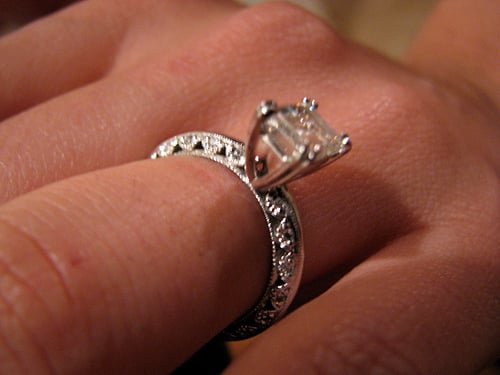
How much does it cost to resize a ring?
On average, a professional ring resizing job can cost anywhere from $10 to $150+ depending on the type of the ring, the material and complexity involved. According to JewelersMutual.com, they list the metals from the least to the most on the cost scale: yellow gold, sterling silver, white gold, rose gold, platinum, titanium and tungsten. A simple resize that needs to be smaller will cost $10 to $60, while a complex resize can exceed $50 to $150.
For example, rings that contain white or yellow gold can be toward the lower end, while expensive rings such as an engagement ring or diamond ring can be in the higher price range.
If the ring was purchased within the last year, the ring may be under warranty, and because of this, many jewelers will be more than happy to re-size the ring at no cost. If you think it’s still covered, check the warranty information or call the jeweler where the ring was purchased to get more information.
It’s not uncommon to find the original jewelry store where it was purchased from to have them do it for free. Contact the original store and discuss your options.
According to a message board thread over on DiamondRing.com, forum members stated that a re-size could range anywhere from $60 to as much as $100.
We researched a few popular jewelry chains to see what they would charge for a ring resizing job and noted our findings below:
| Jeweler | Average Cost |
|---|---|
| Helzberg Diamonds | $65 to $115 |
| Jared | $50 |
| Kay Jewelers | $35 to $60 |
| Shane Co. | $35 |
| Walmart | $10 |
| Zales | $35 |
Resizing a ring overview
During the process, two open ends will be formed on the bottom of the ring, removing the shank metal. When this excess metal is removed, the ring will be soldered together to the appropriate size. As long the jeweler does a good job, you shouldn’t see a significant color difference at the seam, but at the joint, the ring may be a bit weaker. According to dmia.net, a platinum ring will almost always show a fine line at the joint where it was soldered and this will be impossible to hide due to the metal’s properties. GemNation.com has a step by step guide on how the process is done.
How long does it take to resize a ring? Depending on the jeweler and job, jobs can take anywhere from a few hours to as long as two to three weeks. The jeweler will look at the thickness of the ring, how needs to be resized (up or down), the placement of the stones and if any engravings are present.
When getting your ring resized, you can either take it back to the jeweler you purchased it from or you can take it to a local jeweler. If under warranty, it’s highly recommended you take it to the jeweler you purchased it from to potentially get the resizing done for free.
What are the extra costs?
Making a ring larger, rather than smaller, can cost more since additional materials will be required to have the ring appropriately re-sized. The same can be said about the ring’s thickness.
If stones have to be moved around within the ring, some jewelers may back out of the process because of the difficulty. If a jeweler does agree upon doing the procedure, it can cost extra due to the complexity.
A ring with more than one diamond can cost extra since the jeweler will have to take out a few diamonds and place them back again.
According to callagold.com, these factors could also increase the price: gems become unaligned while resizing; the ring has inlaid stones; pearls have to be removed; sensitive gems are in the ring; the ring is thicker than average; the ring needs to be sized two sizes larger; or the ring is so thin it may break.
Tips to know
If there’s engraving on the inside or the outside of the ring, you may risk losing part of it during the process.
How can I save money?
Check with the original jeweler where the ring was purchased. Many jewelers may do it for free depending on their policy. If it was purchased online, either talk with the jeweler online or consult with a few jewelers in the area to see who can offer the best service at the lowest price.
Always leave this type of job up to the professional. A resizing job can be done on your own, but it should be left up to an expert as a bad job can do a lot of damages.
Be sure to talk with at least three jewelers in your area. What you’re going to find is that many of them are going to greatly vary with their pricing.
Some of your larger name jewelry companies often have coupons or special promotions on their website. Check out the official website before setting up a repair appointment.
Ring guards are available for those who have a loose-fitting ring.
How Much Does Re-shafting Golf Clubs Cost?
Re-shafting a golf club is the process of removing the old shaft and replacing it with a newer one. Golfers may often have this process done if they want a new shaft or the previous one broke. Installing a new shaft can be a time-consuming process for many golfers, and this is one of the main reasons that most turn to a professional.
The cost of re-shafting a golf club will depend on the number of clubs, the type of materials, as well as the professional that is doing the job.

How much does reshafting golf clubs cost?
Depending on the quality of the shaft, the cost can be anywhere from $15 to as much as $150 per club. If the shaft is a higher name brand shaft, it is going to be near the higher end, while a lesser known brand can be toward the lower end. Materials will also play a role. Steel shafts will be about 10 to 20+ percent cheaper than graphite. Most re-shafting jobs, however, are going to be in the $15 to $45 price range per club. For instance, if you were to have Titleist reshaft a club, it could average close to $110 per club, minus the shipping.
For example, the online golf store, GolfWorks.com, can perform a reshafting for $19.95. Another local golf club shop located in Indiana charges $27 to $34 per club.
According to the message board thread on GolfWRX.com, forum members claimed they had paid anywhere from $11 to as much as $17 per club. They had also mentioned that most professional golf pro shops will be more than happy to give a discount to those who send their clubs in bulk.
Dick’s Sporting Goods will perform a reshaft on a set of eight clubs for $80.
Reshafting golf clubs overview
During the procedure, the older shafts on your iron or driver will be removed by heating the shaft with a heat gun. Once the older shaft is removed, the undercarriage will be cleaned up with a sandpaper until it is shiny in appearance. The newer shaft will be cut to size and applied to the golf club using an epoxy.
What are the extra costs?
Clubhouses may charge an additional fee to re-grip the clubs. This process can range anywhere from $5 to $15. Grips are going to vary in pricing. Higher end grips are going to cost more than a lower end grip. This is going to be all up to the user on what type of grip you want.
Clubs that require a special adapter such as a bore-thru head can cost an extra $5 to $20.
If doing the job yourself, tools such as the grips, dremel tool epoxy glue, tape and solvent will be needed in order to complete the job.
If you want the manufacturer to reshaft the club, then you will more than likely have to pay shipping fees both ways. This cost will all depend on the number of clubs you ship.
How can I save money?
Consider trying to do a re-shaft on your own. GolfGalaxy.com has a resource that shows you exactly how to re-shaft a club. This can be an inexpensive way to replace it without the use of a professional.
If hiring a professional, consider talking with at least three to five clubhouses. Take a look at their previous work if you are going to have them work with a higher quality shaft.
If more than one club is broken, bring them all in at once as a bulk discount can apply.
Consider the overall price. Many experts will recommend that it is better to purchase a newer club rather than get the original club replaced.
If you are already a member of a golf club, check with them first as they may offer discounts to members.
How Much Does It Cost to Reset a Ring?
Resetting a ring is the process of changing the look of a ring by setting the stones in a different way. This is most often done to rings that have been passed down from generation to generation as an heirloom. This process is a cost-efficient way of making the ring look different without having to pay a full retail price for a new ring.
During this process, a jeweler will be able to take out the diamond and surround it with gemstones or give the diamond a facelift, all while keeping the same diamonds from the ring.
The cost of resetting a diamond ring is going to depend on the jeweler performing the job, the size of the diamond ring, the number of additional gems required and geographical location.

How much does it cost to reset a ring?
On average, most jewelers will be able to perform a reset for a price that ranges anywhere from $85 to $225 for a diamond or engagement ring. This won’t include the materials fee if you were to add a new diamond or the setting, for instance. Don’t be surprised, however, if the job cost more than $500 for a platinum “Tiffany” style type setting.
According to a forum thread on WeddingBee.com, forum members said they had paid around $250 to have the ring reset. They also stated that something as simple as earrings would probably cost a lot less than resetting a diamond in a ring. Resetting diamond earrings, for instance, should cost about $100 to $150 based on the research we did.
On Reddit.com, someone had paid less than $100 to have diamonds taken out of her mom’s ring and put into hers. Another member on the same thread claimed they had paid $400 to fuse two old rings to create a newer one.
According to a member on Quora, he quoted the “Geller’s Blue Book to Jewelry Repair & Design” for pricing repairs. Inside this book, it said it would cost $171 to set a 2.5-carat diamond into a Tiffany-style head.
Resetting a ring overview
A jeweler will be able to meet with you beforehand to discuss what you want. In order to uphold his or her reputation, a jeweler may not be willing to perform some resets, depending on the situation. Common ring resets include changing a band from yellow to white gold or transferring diamonds from one ring to another. A jeweler will be able to work up an appraisal report to give you a good feel for what they are going to charge and what the ring is going to look like after the job has been accomplished before you pay any money.
Long’s Jewelers recommends seven ways to reset your diamond ring for a new look. They recommend adding diamond accents, adding more diamonds, getting a larger center stone, adding a halo, upgrading the diamond or adding colored gemstones.
What are the extra costs?
Complex jobs that may take more time to complete compared to other jobs can increase the price ranges mentioned above. Keep in mind that some jewelers will not do the job if they feel that the ring can get ruined in the process.
The new setting, if you need to purchase one, will have to be purchased separately and like shopping for a piece of jewelry, the prices can widely vary from as little as a few hundred to thousands. The same can be said about purchasing new diamonds or gemstones if you wanted to add it to your new jewelry piece.
Tips to know
Think twice before resetting an heirloom stone as it can often cause damage when a jeweler unsets a diamond or gem. In fact, according to littlebirdtoldyou.com, it’s often a lose-lose situation.
Questions to ask:
How long is this process going to take?
If the diamond ends up missing, am I going to be insured? How are you going to replace it if this worst-case scenario should happen?
Do you ship the diamond out or does it stay on the premises?
What kind of certifications do you have? Why should I pick you?
Can you show me some pictures from before on the jobs that you have done?
How can I save money?
Talk with at least three jewelers before making a decision with your purchase. Each and every jeweler is going to be able to do a different job, so before you commit, ask for before and after pictures to see what kind of jobs that they can do for you. Many have had luck with local privately owned stores more than big chain establishments.
How Much Does a Leyland Cypress Tree Cost?
The Leyland cypress tree is a type of fast-growing evergreen tree used primarily for hedges and screens. This tree is very easy to take care of and is known to grow up to 50 feet in 16 years, even on sites that offer relatively poor conditions. The cost of a Leyland cypress tree will depend on the age of the tree, the height of the tree and the nursery that is selling it.

How much does a Leyland Cypress tree cost?
On average, a Leyland Cypress tree will cost anywhere from $5 to $160.
A 4-inch tree shipped with a pot, for example, can retail for $4 to $8 online. A slightly taller tree, around 2.5-feet, can retail for $15 to $30, while trees in the three to four feet range can cost $40 to $65. A tree six feet or larger tree can cost anywhere from $85 to $160+.
At Lowe’s, for instance, a 2.25-gallon Leyland Cypress retails for about $25.
BrighterBlooms.com, another nursery that lists its prices online, sells this tree for $25 to $100, with trees ranging one to six feet in size.
| Size | Average Price |
|---|---|
| 1 to 2 feet | $20 |
| 2 to 3 feet | $40 |
| 3 to 4 feet | $50 |
| 4 to 5 feet | $80 |
| 6 to 7 feet | $125 |
| 8 to 9 feet | $200 |
| 10 to 12 feet | $350 |
Leyland Cypress overview
A Leyland Cypress Tree is one of the fastest growing trees on the market today, growing up to five feet per year. The tree will cap out at about 50 feet and will take close to 15 years to reach this point.
Within a few years, these trees can provide a natural privacy fence. They will require little to no pruning or shearing.
The tree is soft to the touch and stays green year around, no matter where the tree is planted. With dark, lush green leaves and a pale yellow underside, some people say it almost resembles a pine tree from a distance.
Trees purchased online or in a nursery will come equipped with a pot filled with natural gardening soil.
What are the extra costs?
Leyland Cypress trees can be planted easily for continuous growth. If you want a professional gardener to plant the trees for you, there will be an extra fee. Depending on the size, these fees can range anywhere from $30 to $100, or by the hour, which can range from $50 to $85 per hour.
Whether you purchase a tree at a local nursery or online, the seller may have an option to have it delivered either at no extra charge or for a minimal fee if you don’t meet the nursery’s minimum. If purchased online, additional shipping fees will apply, especially for trees larger than five feet since it will have to be shipped via a freight option.
The tree will grow best with a regular fertilizer, especially during its first few years. When selecting a fertilizer, however, make sure it’s designed for evergreen trees and has the right balance of nutrients for the best growth. When fertilizing, do so in the spring and in the middle of the summer. A good evergreen fertilizer should cost about $5 to $15.
Mulch is highly recommended, especially if you live in a dryer climate as it will help keep the soil cool and retain some of the moisture. Shredded bark is the most common choice and should be laid about two to three inches thick around the tree only, not the stem.
Tips to know:
These trees tend to average at least three feet in growth every year. If considering this type, be sure to have the right amount of space.
These trees are great for fast growing hedges, blocking the winds, offering natural privacy and even reducing noise.
Nurseries recommend you plant each one at least five to six feet apart.
The hedges will have to be trimmed at least twice per year, and many owners, according to The Tree Center, make the mistake of waiting until the tree has reached its fullest potential before trimming. A light clip will help encourage a denser growth.
Water the tree about twice per week during its first month after planting and about once per week during the hotter months.
The tree can be planted any time during the year as long as the soil is soft enough to dig, but do keep in mind most of the growth will happen during the spring months, not during the fall or winter.
When choosing a location, consider either a full sun spot or even one with a little bit of shade. In the sunnier spots, the growth will be at its strongest, whereas in the shaded spots, the plants will still grow; however, it may appear thinner.
As for climate zones, this tree is recommended for zone five to nine and will grow best in zones six, seven and eight.
It’s known to be disease and pest-free, but if a disease were to show, it would be due to poor growing conditions.
How to plant the Leyland cypress for privacy
How can I save money?
Buying more than three to five trees at once can often lead to a bulk discount as high as 25 percent off.
How Much Does it Cost to Fix a Chipped Tooth?
| Save up to 60% off with discounted dental plans. Get your quote now >> |
Fixing a chipped tooth is a common process that many dentists perform. Known as “tooth reshaping,” a dentist will form a compound composite that is applied to the tooth to make it look natural again. Even though your teeth are extremely strong and made from some of the hardest tissue in the body, it doesn’t mean they are prone to chipping.

How much does it cost to repair a chipped tooth?
On average, repairing a chipped tooth can cost anywhere from $100 to $1,500 without insurance depending on the type of material used as well as how complex the chip is. Some chips can be a simple cosmetic fix, while others can require extensive structural repair.
If the crack doesn’t make its way to the pulpy center and the chip is considered to be minor, then a simple bonding agent and composite can be applied, and the tooth will be shaped with a drill to retain its natural state. A simple procedure such as this one could cost $150 to $300 to fix.
If you cracked a molar or the tooth has a lot of decay, but no nerve damage is suspected, then the dentist could use a similar technique with a metal or porcelain crown. This crown will allow you to chew as usual but will prevent you from damaging the nerves. Depending on the area of your mouth and the complexity of the restoration, this could cost $800 to $1,350.
For front teeth, a dentist may recommend veneers, which will last longer than bonding and will be made of either a resin material or porcelain. This veneer will adhere to the tooth and replace the missing part. Veneers, on average, can cost $500 to $1,500 per tooth. For example, Lumineers, a popular brand name, can cost $700+
Pulp damage, if present, will be extremely painful and most people will know right away if this kind of damage has been done since it’s exposing the center of the tooth. This type of repair will need immediate attention, and according to WebDental.com, it will require a root canal, followed by a crown, which can average about $1,500 to $2,000.
Extracting a tooth and replacing it with an implant can cost $1,000 to $2,000+
Chipped tooth repair options
Composite
The most common cosmetic repair, as mentioned in our second bullet point above, will involve shaping the tooth with a drill, followed by applying a specially-tinted dental composite. Once this composite is applied, the tooth will be shaped to its natural form and will be hardened with an infrared light.
Dental crown
If a dental crown is recommended, the damaged portion of your tooth will be removed and a cap, known as a crown or cap, will be installed to protect the tooth and create a natural look again. This dental crown can be made from either ceramic, metal or even a combination of both. A crown will be commonly used on molars, out of sight, and will be one of the most expensive choices on the list. A crown can require two visits.
Veneer
A veneer, commonly made of ceramic materials, will be a thin covering that is placed over the tooth to replace the crack. Veneers will have a natural look and will be often used on the front teeth. This thin shell, made of either porcelain or a resin, will be like that of fake nails. During this process, the dentist will remove about 0.3 to 12 millimeters of the enamel from the surface and make an impression of your teeth to send off to a laboratory. When this veneer is ready, which is usually two to three weeks later, the dentist will etch your tooth’s surface and use a special cement to anchor the veneer into place using a special light to activate special chemicals within the cement to harden it.
Root canal
If the crack is severe and the pulp is exposed, a root canal will be recommended, a process which will require cleaning out the diseased pulp and resealing the canal. This procedure can be performed by either your dentist or an endodontist.
Replacement
Lastly, if your tooth can’t be saved, then it will be extracted and a dental implant will be inserted as a replacement.
Once you find out about your chip, it’s important to see your dentist right away to explore your options. If it’s only a small piece that’s missing, then the repair can wait and will usually take one office visit; however, if the broken tooth requires a root canal, then the process can be lengthier, requiring more than one office visit.
What are the extra costs?
If you have your chipped tooth bonded with a composite, it won’t last for life. In fact, it can chip easy and will wear over time, making it look almost just as bad as it did when it was chipped. To budget, plan on having your tooth re-done every seven to 10 years to retain its natural look.
How can I save money?
If you don’t have insurance, consider signing up for a discounted dental plan. These plans can help you save more than 50% on your typical visits. To find one, DentalPlans.com offers a selection to choose from.
If you have a dental insurance policy, check with your carrier to see if they will cover the procedure.
While this guide is about fixing a chipped tooth, an unattractive option can be via a simple extraction. This route can cost less than $250 and can be the cheapest option of all.
Another option, while not recommended or highly rated, can be a chipped tooth repair kit designed for at home use. These kits often come with caps and cement to repair the crack.
How Much Does it Cost to Rekey Locks?
Rekeying a lock is the process of taking a lock and rekeying it so that it accepts a new key. According to many locksmiths, one of the most common jobs done is the process of re-keying locks at a home or a business since this job is going to be a lot cheaper than getting new locks installed in each door. This job is often done when a residence or business changes hand and the owner wants to change the keys/locks.
The cost of re-keying a lock is going to depend on the number of doors that need to be done, the locksmith performing the job and geographical location.

How much does it cost to rekey a lock?
On average, a locksmith is going to have a minimum service charge that ranges anywhere from $35 to $75 to come to the house. This service charge can greatly depend on how far away the locksmith is located. Trips that are less than 30 minutes can be on the lower end, while a trip that takes over 30 minutes can be on the higher end.
After this minimum service charge is applied, each cylinder that has to be re-keyed can cost anywhere from $10 to $28, depending on the type of lock. If you’re able to take the locks off and take them directly to the locksmith, then costs could be closer to $10 per lock without the service charge.
For example, Mark’s Locksmith located in Beaverton, Oregon, has a trip fee that ranges from $40 to $50 with an additional $10+ per lock.
Home Depot and Lowe’s will rekey a lock if you take it directly to their store. According to some reports online, some say the store will only do it if you purchased the lock from them, while others have said they charge $5 to $10 or free at the time of purchase.
Rekeying a lock overview
During the process, the locksmith will dismantle each lock that has to be replaced, and if requested, a locksmith will be able to create a master key that will open all the locks in the home that have been re-keyed. The locksmith will remove the pins and springs inside the cylinder and will replace them with new pins and springs that work with the new key. Unless the lock is malfunctioning, every lock can be re-keyed. Each lock should take about 10 minutes.
What are the extra costs?
Each additional key can cost anywhere from $2 to $4 each. Keys that cannot be duplicated or say “do not duplicate” will cost an extra $1 to $3.
Re-keying an automobile or motorcycle can cost significantly more than re-keying a home. Keep in mind that some locksmiths cannot perform this service due to the complexity of the process.
To have the process expedited, additional fees can be applied if it has to be done within a 24 hours.
How to rekey a lock
How can I save money?
Consider new locks such as the Kwikset SmartKey feature. These locks enable the homeowner to re-key their own lock using the tools that come inside the kit. The locks can start at $30 and the re-keying set can cost as little as $7. The nice thing about these locks is that not only are they easy to change, you will also find out that many locksmiths have a very hard time breaking into these, almost making them thief proof.
If one lock has to be replaced, it may be cheaper to purchase a new deadbolt kit since these kits can cost as little as $30. Installing a deadbolt is rather easy, and if you’re unsure on how to install one, consider various resources online to assist you with the project.
If purchasing a deadbolt and lock and are considering a bulk purchase, consider looking for a contractor’s pack.
Call at least three locksmiths to get an accurate quote over the phone, but when doing so, keep in mind that there are many referral services who will take your information and pass it onto the highest bidder. Always ask for the name of the person you’re doing business with.
For those who like DIY jobs, there are rekeying lock kits online for $7+. The popular Defiant rekey kit, for instance, retails for $100.
How Much Does Recharging a Fire Extinguisher Cost?
Recharging a fire extinguisher is a process that replaces the chemical agent that is expelled from the unit, and this service is generally done inside commercial buildings that have larger extinguishers which use a dry chemical substance.
The cost of recharging a fire extinguisher will depend on the extinguisher, the number needed to be recharged and the professional recharging.

How much does recharging a fire extinguisher cost?
On average, a basic recharge can cost anywhere from $10 to $50, depending on the weight of the extinguisher. Refer to our table below to see the average prices
For example, the fire station in Fridley, Minnesota, allows residents to drop their fire extinguishers off for a recharge, and their fees range anywhere from $9 to $19 depending on the size of the extinguisher.
Another company we researched in Reno, Nevada, charged $15 for each charge and another $2.35 per pound for the chemicals.
| Type of Job | Average Price |
|---|---|
| CO2: 0 to 5 pounds | $20 to $25 |
| CO2: 6 to 10 pounds | $25 to $30 |
| CO2: 11 to 15 pounds | $28 to $35 |
| CO2: 16 to 20 pounds | $30 to $40 |
| Dry Chemical: 0 to 3 pounds | $15 to $22 |
| Dry Chemical: 4 to 5 pounds | $20 to $26 |
| Dry Chemical: 6 to 10 pounds | $30 to $37 |
| Dry Chemical: 11 to 20 pounds | $45 to $55 |
Recharging a fire extinguisher
During a recharge, the service will completely refill the extinguisher with a new agent, and this process should not take longer than 10 to 20 minutes.
It can commonly be done at local fire stations or via a private company. Most of the time, the recharging will be handled by a specialty company that has a partnership with the extinguisher’s manufacturer.
Keep in mind that single charge fire extinguishers cannot be recharged. To know if your fire extinguisher can be recharged, check for a metal gauge on the top. If it’s made of plastic, then it’s best to dispose of it and purchase a newer one.
What are the extra costs?
If you need the extinguisher tested during the recharge, add another $5 to $10 to the price estimates in the table.
If the extinguisher is too old or cannot be recharged, a new one can cost anywhere from $12 to $50 for a simple household version.
Every six to eight years, it is highly recommended that maintenance is done to ensure that the fire extinguisher is up to code. These visits maintenance runs can cost anywhere from $30 to $50.
How can I save money?
It may be more cost efficient to purchase a new extinguisher if the one you have is for household usage. By the time the recharge has been done, the newer one could be the same price, if not cheaper. Also, it may not be recommended. For example, on Stack Exchange, a former repair tech chimed in and said while some extinguishers can be recharged, you may want to avoid doing so because it could crack the plastic/nylon heads, leading to potential leaks.
Some fire extinguishers can be refilled if the valve enables you to refill it. Remember that if you ever have questions, it’s always best to talk to the local fire station to ensure that you’re taking the right steps.
How Much Does a Real Estate Agent Cost?
A real estate broker or agent is a licensed professional within the state who assists either a seller or buyer purchase either a new home, piece of vacant land or a commercial property. A real estate agent will help a client with many services such as a marketing, showing homes and offering advice.
How much does a real estate agent cost?
On average, a real estate broker works on a flat commission that is shared by the brokerage. 99% of the time, the seller will be the only one that pays out a commission to the agent. On average, the fee can range anywhere from 4% to 6% of the home value, but the industry standard is 6%, which is split 50/50 with the buyer’s and seller’s agent. So for example, a homeowner that sells a home for $200,000 would have to pay up to $12,000 in real estate agent fees if they were to pay the full 6%. This fee won’t be paid until you reach escrow and the sale is finalized. Once finalized, the funds will automatically be transferred to the brokerage at closing.
Even though you pay the 6%, it doesn’t mean the agent will keep his or her 3%. Unless they are the brokerage owner, the brokerage actually pays the agent, keeping about 10 to 40% of the agent’s 3%.
If you’re looking to buy a home, the only fee that a potential buyer may have to pay in regards to a real estate agent is an administrative fee that can cost anywhere from $195 to $895 depending on the brokerage, but again, there are many real estate agencies that do not have fees at all.
If you’re talking about real estate agents outside of the United States, here’s what real estate agents may charge in their country:
| Country | Commission |
|---|---|
| Argentina | 5% |
| Australia | 2% |
| Belarus | 2% |
| Belgium | 3% |
| Brazil | 5% |
| Canada | 3% |
| China | 2% |
| Denmark | 2% |
| Finland | 2% |
| Finland | 2% |
| France | 5% |
| Germany | 4% |
| Greece | 4% |
| Hong Kong | 2% |
| Indonesia | 4% |
| Israel | 4% |
| Italy | 5% |
| Jamaica | 5% |
| Japan | 6% |
| Mexico | 7.5% |
| Netherlands | 1.5% |
| Norway | 2% |
| Philippines | 4% |
| Russia | 4% |
| Singapore | 1.5% |
| Spain | 5% |
| Sweden | 1.5% |
| Thailand | 4% |
| United Kingdom | 1.5% |
Real estate agent overview
A real estate agent will assist a seller with the processing of the paperwork, the marketing efforts, setting up open houses, assisting potential buyers, as well as helping with the entire closing process. The real estate broker is essentially your coach during the entire process helping with any questions, negotiations and more. Ultimately, their end goal will be to sell the house for as much as they can in the fastest timeframe possible.
A buyer’s agent will help show homes in the area, show you comparable prices for these homes, find homes that meet certain criteria and send you reports daily, as well as assist with paperwork, closing, and the negotiation process.
What are the extra costs?
Additional marketing fees may apply for sellers that want to market in different ways such as a newspaper, radio or even a local guide.
An additional office administration fee may apply on top of the brokerage fee.
Real estate agent fees are only part of the fees when purchasing or selling a home. Other additional fees that are outside of the brokerage such as title, taxes and appraisals, for example.
Tips to know:
Try to talk with previous clients to see how they liked their real estate agent. The more you know about them, the better it is. It also doesn’t hurt to check out their reviews on Zillow, Yelp and Google.
Always make sure that they are licensed within your state and legally can practice real estate.
Consider looking up those that have won awards through the National Association of Realtors.
According to Redfin.com, you usually don’t have to pay a commission if your home doesn’t sell and your contract had expired; however, there are some exceptions, which may include if your agent had found a buyer or you backed out of a sale.
How can I save money?
Highly consider real estate services that offer services at a heavy discount. Online real estate agents such as RedFin.com and HungryAgents.com can both find a potential buyer or seller an agent that is willing to work at a fraction of the cost. When going this route, make sure that you consider talking with a few agents. Just because they are cheap, you’ll find that it doesn’t mean that they are going to do a great job.
Since it doesn’t cost you anything to use a real estate agent when buying, it doesn’t hurt to talk with a few agents to see what they can find in your area.
It doesn’t hurt to negotiate the commission rate before selling the home. Even if you pay 5.5% instead of 6%, it could still save you thousands of dollars.
Talk with a local realtor to see if he can bring down his fees. Most realtors are fairly desperate for work and are more than willing to do the work. Smart Money offers an article titled, “10 Things Your Real Estate Broker Will Not Tell You.”
Consider becoming your own real estate agent. While we don’t mean getting your license, simply search for homes online and find the ones you like. If you love the home and you’re not working with an agent, ask the seller’s agent if they are willing to work for a total of four or five percent instead of a total of six if you were to use them as both the buyer and the seller. Most of the time since this agent is going to get three percent anyways, they will be more than happy to represent you as the buyer for a five percent commission. Remember just because a realtor shows you a house, it doesn’t mean you have to use them unless you sign a buyer-agent agreement. This, of course, may change if you were to see the house with one real estate agent and buy with another.
How Much Does Leveling a Yard Cost?
| Need a pro near you? Get multiple quotes for free online. Get your quote now >> |
Leveling a yard, often referred to as yard grading, will be performed to remove lumps, bumps and unsightly hills in a yard, creating a level surface.
Oftentimes, this unlevel surface can create serious foundation damage because the yard isn’t draining the way it should.
The price for leveling a yard depends on several factors such as the contractor, the size of the yard, the type of soil, geographical location and complexity of the job.
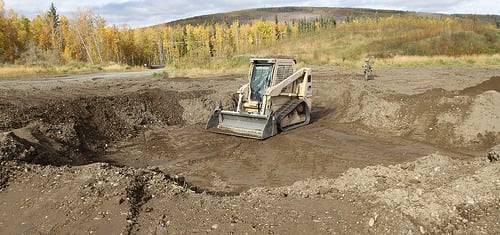
How much does it cost to level a yard?
On average, plan on spending anywhere from $50 to $150 per hour, depending on the contractor and what kind of equipment is needed. While the procedure is rather simple, the labor is what is going to cost the most. According to our research, a simple job will often be around $500 to $800, while a more complex job that takes a few days can be in the $2,500 to $5,500 range. These estimates should include the fill dirt, the professional labor and the equipment.
However, if heavy vegetation or a steeper than average slope exists, these average costs can go up. The same can be said about the soil. If the soil were rocky and hard to excavate, it could be much more than a rich soil that’s easy to dig.
As you can see, there are so many factors involved, and since every project can vary, it can be hard to pinpoint an exact cost.
One professional Angie’s List interviewed said he usually charges $1,000 to $6,000 for most residential jobs.
According to a discussion on DSLReports.com, forum members said this procedure can be performed for $5,000 to $20,000 depending on the size of the area that needs to be filled with dirt.
LawnSite.com shows the price for the job ranges anywhere from $14 to $30 per yard, but this estimate does not include the fill dirt that will be used to level the yard.
| Type of Job | Average Costs |
|---|---|
| Hiring a professional with heavy equipment | $75 to $175 per hour / $500 to $1,200 per day at a minimum. |
| Manual labor with a landscaping service | $35 to $75 per hour |
| DIY Rental | $100 to $250 for Bobcat-like tractor with attachment |
| Additional topsoil for filling | $8 to $20+ per cubic foot |
Leveling a yard overview
Before the grading begins, your contractor will be able to visit the location, take measurements and create a planning document, which he or she will give to the local government for permits, if necessary. They will also have the utility lines and any underground lines marked, usually by the city.
Once the procedure starts, all debris will be removed from the area, including any trees, vegetation and grass. A layer will then be stripped using a scraper that’s usually dragged by a tractor, and if any of the topsoil is usable, it will be set aside for the final stages.
If heavy equipment is required, many contractors will have an hourly minimum, ranging anywhere from two to eight hours.
What are the extra costs?
Planting grass or laying sod can be an additional expense if you need a professional to install it. Sod, on average, can cost $1 per square foot to have professionally installed.
In the initial quote, the fill dirt may not be included, only the leveling. The price for the dirt ranges from $8 to $20+ per cubic yard, depending on where you live. For every 1,000 square feet, you need about 10 cubic yards of soil. This soil will be needed if the current soil on your land is of poor quality or if a steep slope has to be filled.
When adding soil, contractors will add metal braces if the sloping is at risk of erosion. These braces can cost $10 to $20 per four-foot section.
In some circumstances, a French drain may be needed to take the water away from the foundation. These drains, once dug and buried, can cost $800 to $1,500.
Depending on where you live and how large the job is, a grading permit may be required, which can cost anywhere from $50 to $1,000, depending on the scope of the project. However, most jobs should be less than $400.
In some circumstances, a land survey may be needed to avoid crossing the neighbor’s property line. If this needs to be done, it can cost $250 to $500.
Tips to know
To prevent water from flowing back toward the foundation, the lawn should drop an inch at least every four feet.
How to level a yard
How can I save money?
One of the best ways to save money is to do the leveling yourself. This can help you remove costly labor costs from the bill. GardenWeb has a simple step by step guide instructing homeowners how to level a yard properly.
If possible, consider renting equipment locally. If you already have a tractor, a scraper attachment can cost $50 to $80 per day, whereas a small backhoe can cost $100 to $250 per day, depending on the size and where you live.
If hiring a professional, consider getting multiple quotes from contractors on HomeAdvisor.com. Here, you simply describe your job and contractors will get in touch to let you know what it may cost.
Fixr.com recommends creating a rain garden instead of re-sloping your yard. These gardens are designed to hold the water and reabsorb into the ground. If you were to consider building one, the materials would cost $3 to $5 per square feet, according to the website.


