How Much Does an Octopus Cost?
An octopus inhabits many parts of the ocean and parts of the coral reef. While some people tend to treat an octopus as a delicacy, others want them as a pet. With over 300 octopus species in existence, all of them are venomous, besides one group that includes the blue-ringed.
The cost of an octopus is going to depend on the species, where you live, age, quality and breeder you purchase the octopus from.

How much does an octopus cost?
An octopus, designed for an aquarium are generally smaller than those you would find in the ocean, and on average, a pet octopus can range from a few inches to a few feet. The larger they get, the more you are likely to pay. The average price for an octopus can range anywhere from $20 to as much as $1,000. Most purchases are going to fall in the $30 and $100 price range, however. The popular Atlantic pygmy octopus, for instance, retails for about $50 to $80.
A blue-ringed octopus, which are believed to be illegal to own; however, it’s debated as commercial importers are allowed to bring them to the United States if they have the proper collecting permits. If found, this species can cost a few hundred. This isn’t a choice for owners, though, since it carries a venom known to be very dangerous. With no antidote available, it could be a deadly situation.
For example, a farm-raised octopus Bimaculoide can cost anywhere from $25 to $50, while the eggs can cost $10 to $100.
Types of octopus
Atlantic Pygmy
This is the smallest species, weighing only an ounce and measuring as long as five inches. Compared to other species, a larger tank won’t be necessary due to its size, and it’s known to be very playful, intelligent and even able to solve problems. Able to change its color in any environment, some owners have claimed they tend to hide most of the day and are extremely picky eaters. If you were to choose this species, just make sure you have enough hiding spots in the aquarium to meet the need for privacy.
Californian Two-Spot
Often referred to as a “bimac,” this octopus can be as long as seven inches and its arms can extend close to 25 inches long. Due to its size, a larger tank — at least 50 gallons at a minimum — is highly recommended. This friendly species love to eat shrimp, crabs and scallops and is even known to play around with toy Lego blocks.
Caribbean Reef:
Found in the Florida Keys, this brownish, red or green octopus can grow up to 22 inches tall and will eat early in the morning, usually on crustaceans.
Common
The Octopus vulgaris, which is known as the “common octopus,” is commonly found in shallower tropical waters. This octopus can range anywhere from 25 to 36 inches in size and can use its specialized pigmented cells to match the colors of its surroundings, almost becoming invisible in a tank.
Red
This duller red octopus is home to the eastern Pacific Ocean. Known as one of the most common pet octopuses kept in an aquarium, it won’t require a heated tank like most other species as it prefers cooler water around 60 degrees Fahrenheit.
What are the extra costs?
Octopus require a lot of care when compared to most aquatic creatures that are raised at home. Many experts state that a bigger aquarium is required in order for the octopus to survive. It is suggested that the tank should be bigger than 70 gallons, which can start at $300 and go up from there. For most species, this water must be kept at about 70 degrees Fahrenheit. These tanks must be “octopus-proof” because many can crawl out and must contain salt water, which will be costlier to maintain when compared to a freshwater tank. Other accessories that should be included in the tank include sand, a pump, rocks, lighting, and filters.
The diet of an octopus relies on fresh food such as fresh fish, chopped seafood, crustaceans and shrimp. They tend to eat at least every other day, and octopus owners say it is wise to budget at least $100 per month for food alone as shrimp, crabs and scallops can get pretty expensive.
An octopus will need to be entertained and will love to play tug of war, sort through shells or even baby toys. Some owners are able to place a loosely closed jar in the tank and watch their octopus open it to access the items inside.
Since many local pet stores do not sell octopus, it is going to be in your best interest to find a breeder online. Because of this, most are going to charge a shipping fee, and this fee will greatly vary depending on the size and breeder. Most shipping fees will be between $30 to $50.
Tank testing equipment such as a hydrometer and test kits are highly recommended to test the salt concentration in the take to make the proper adjustments.
Tips to know
Octopus have a lifespan of anywhere from five months to as long as six years, depending on the species. Bimacs, for instance, have been found to live two years if their aquarium is set up properly. Dwarfs can live up to eight months, while larger common octopuses, as stated above, can live the longest, about three to five years.
If an octopus doesn’t like his or her environment, they can become stressed, leading to a refusal to eat or even eating their own arms.
As noted above in the aquarium tip, an octopus is known to be able to escape a tank if not secure. If able to escape, an octopus can survive for hours and even find other aquariums, if available, to hunt prey. Also, if the aquarium isn’t set up properly, an octopus may become ill, becoming white or lighter in color.
An octopus can bite; however, it will be done to see if you’re edible. Most people who have been bitten have compared it to a bee sting.
How can I save money?
Talk with a few breeders as well as check with some online via various forums such as Tonmo.com. This is a great place to get a jump start on everything you need to know about these pets.
How Much Does a BBB Membership Cost?
The Better Business Bureau, known as the BBB, is a type of accreditation from a corporation which enables businesses to use their logo, services, and access to their information. However, the only way to access this privilege is to pay monthly membership fees. The organization was formed to advance “marketplace trust” by holding its members accountable to trustworthy business practices.
The price for a BBB membership depends on the number of employees a company has and where your business is located. The BBB encourages you to contact the nearest BBB office in your area since the price for each geographical area varies. In order for a business to become accredited, a business must purchase a membership.
How much does a BBB membership cost?
On average, expect to pay anywhere from $30 to as much as $500+ per month to keep your membership active. This fee will not include the start-up costs or annual fees.
According to Louisville.BBB.org, the cost for a BBB membership in Louisville can be anywhere between $33 and $292 per month or $405 to $3,500 per year. The company’s number of employees can range anywhere from 1 to 1,500. In San Diego, the costs can be anywhere from $400 to $1,250 per year.
You can play around with this calculator to see what it may cost to join.
According to some members of The International Association of Certified Home Inspectors, most paid about $399 to $450 per year to keep their membership active.
CNN Money notes the fees will depend on the size of the business and costs can range from as little as a few hundred dollars to more than $10,000 a year.
BBB membership overview
In order to become accredited, your business must first fill out an application, provide trade/licenses references if your company requires them and then pay the membership dues. In order to be accepted, your company must have a privacy policy located on its website and must be in business for at least a year to be considered. Also, as touched upon below, a business must not have any outstanding complaints and most local offices will want to meet with you personally to get to know you personally and learn more about your business in person to make sure everything is correct. The entire process to become accredited will take about two to three weeks and will be reviewed by a local board of directors, made up of local business leaders.
In order to remain accredited, a business must have a B or higher rating.
With these funds, the BBB claims it’s used to fund the many services it provides to its customers and businesses, such as the ratings it gives to businesses to help consumers make a better choice.
What are the extra costs?
Companies that have more employees will be charged an additional $1.50 per additional employee that exceeds the number dictated by BBB.
New members will be charged a one-time enrollment fee that can cost up to $50. This cost can change depending on the location of the BBB office.
Optional fees may include purchasing a plaque for the office or special clickable seal which can be placed on a website.
Tips to know
Most will require a 12-month minimum commitment.
Not all companies will be accepted if they apply for a membership and companies that don’t operate with integrity won’t be able to stay active either. Businesses must abide by the BBB Standards of Trust, which include eight principals: build trust, advertise honestly, be truthful, be transparent, always honor promises, be responsibel, have a safeguard policy and embody integrity.
20/20 did an investigation on the BBB in the past, talking about its unethical business practices.
How can I save money?
While the BBB may make your business look accredited, it does not mean your business is going to gather instant success. Check with other organizations online to see what they can do for you. The high consensus online is that it really isn’t worth joining the organization unless you work with an older crowd who still uses the organization to find “reputable” companies. With so many free, credible review websites, such as Yelp, Angie’s List and HomeAdvisor, a business should invest its money elsewhere to see larger returns on its investments. However, all situations will be different, so it really comes down to your personal preference. Would this logo make you feel comfortable dealing with a company? Is it an ice breaker? If you feel it’s worth the investment because it may lead to a few new leads per year, then by all means, it may be worth it.
How Much Does a Sapphire Cost?
Sapphire, a gemstone commonly worn as jewelry, is found naturally by searching through certain sediments, rock formations, or it can be manufactured for industrial or decorative purposes in large crystal boules. Sapphires virtually come in every color under the rainbow, except for red. While a blue sapphire is simply called a sapphire, a sapphire of other colors will be referred to as a yellow sapphire, pink sapphire and so forth. The beautifying colors com from traces of iron, chromium and titanium.
The price of a sapphire depends on the quality and size. Lower grade sapphires are considered to be the cheapest form of the stone, while very fine unheated sapphires are considered to be the most expensive.

How much does a sapphire cost?
A sapphire can cost anywhere from $10 to as much as $20,500 per carat depending on the number of carats, the type, cut, color, hue, quality and who you purchase it from.
Most inexpensive sapphires, where lower grade sapphires are fashioned into ornamental gemstone carvings, can cost as little as $1 to $6 per carat, depending on the quality, but most will be priced by the piece, not by weight. Most pieces on the market will be about $10 to $25.
Sapphires cabochons, which will often be blue or green, will around $10 per carat, and these pieces will be shaped like a dome and won’t be transparent. Higher quality blue sapphires, however, can cost much more.
Star sapphires, which are also found as a cabochon, often come from Thailand, and will be diffusion treated with titanium to approve the “star effect.” These types of sapphires will cost about $10 to $25 per carat; however, larger sapphires can be costlier, especially if they weren’t treated.
Faceted sapphires, which are often under a half carat, can be $25 to $35 per carat, depending on the color and the size. These sapphires will usually be green in color but can be yellow and reddish orange as well.
Heated blue sapphires, depending on the hue and clarity, can cost as much as $300 to $600 per carat; again, this will all depend on the color selection and the number of carats.
The Gem Society says the closer the color is to blue, the better. The society also says many gems on the market are actually grayish and the darker sapphires are abundant, never reaching higher values, but this can be said for all darker gems.
MineralMiners.com, for instance, sells different types of sapphires with different weights and colors. They sell sapphires that weigh anywhere from 1.72 to 2.17 carats in size and costs range anywhere from $275 to $2,000.
The table below is what you would more than likely pay for an unheated sapphire, which is extremely rare to find at local jewelers. The costs of these unheated gems will depend on the size, cut, shape, colors and size. Gemselect.com says any fine unheated sapphire of any size will never be less than $1,000.
| Type of Sapphire | Price per Carat (depending on cut and quality) |
|---|---|
| Blue | - under 1 carat: $50 to $800 - 1 to 2 carats: $1,400 to $3,200 - 2 to 3 carats: $3,500 to $12,000 - over 3 carats: $7,500 to $33,000+ |
| Golden | - under 1 carat: $50 to $800 - 1 to 2 carats: $1,000 to $3,500 - 2 to 3 carats: $3,000 to $5,000 - over 3 carats: $4,500+ |
| Orange | - under 1 carat: $1,000 to $2,000 - 1 to 2 carats: $1,900 to $3,500 - 2 to 3 carats: $4,000 to $6,000 - over 3 carats: $4,500+ |
| PADPARADSCHA | - under 1 carat: $2,000 to $3,000 - 1 to 2 carats: $3,500 to $7,500 - 2 to 3 carats: $7,000 to $11,000 - over 3 carats: $10,500+ |
| Pink | - under 1 carat: $250 to $800 - 1 to 2 carats: $1,200 to $3,500 - 2 to 3 carats: $4,000 to $9,000 - over 3 carats: $9,000+ |
| Purple | $900 to $1,800 per carat |
| White | - under 1 carat: $50 to $800 - 1 to 2 carats: $500 to $5,500 - over 3 carats: $9,000+ |
What are the extra costs?
If you would like the sapphire set in a piece of jewelry, such as an engagement ring, the price will depend on the size and type of setting.
Tips to know
Sapphires will come in blue, with the highest being a princess blue, but the most prized color will be a royal blue. A blue sapphire can either be pure blue or it can have a tint of green or purple. By value, as stated above, the “purer” the blue is, the more valuable it will be. Aside from blue, sapphires can also come in other colors such as pink, yellow, green and yellow.
Most sapphires on the market will be heat treated, meaning the sapphires were heated under high temperatures for hours to enrich the color of the stone.
Where the sapphire originated from can affect the price of a sapphire. For example, a sapphire mined in Mogok or Burma will be more than one that was mined elsewhere.
Be on the lookout for an official rating from the GIA. VVS, VS and SI1 stones will have very few inclusions, and these inclusions won’t affect the brilliance of the tone. SI2 stones will have inclusions when observed under a microscope and will have a minor effect on the stone. I1, I2 and I3 ratings will have surface blemishes that are noticeable by the naked eye.
When purchasing a sapphire in person and online, always work with a reputable dealer. A national chain, for instance, is a good place to start, since they have to follow strict guidelines. If you do work with a local jeweler, be sure to ask for a certification from the GIA or an independent gemstone society to know they are qualified to sell.
How to tell if a sapphire is real
The first thing you’re going to want to look at are the flaws. Most real stones will have some sort of flaw and won’t be perfect 99 percent of the time. To see these flaws, you will need a jewelers loupe (magnifying glass) to see these inclusions.
Another thing to look out for is the reflected light and a lot of intersecting lines, similar to a spider web. If you notice this pattern, while under a microscope, it could mean the glass is holding it together.
Lastly, the easiest test is simply by breathing on it. Breathe on it for about one second, and if you see the fog evaporate fast, it’s real; if it takes longer than five seconds, there’s a good chance it’s a fake.
How Much Does Satellite Internet Cost?
Satellite internet is internet access provided through a satellite, just like the way you receive satellite television. This service is often provided to those who live in rural areas and aren’t able to connect to a high-speed Internet line.

How much does satellite internet cost?
On average, satellite internet is going to range anywhere from $40 to $135 per month depending on the download speeds, bandwidth and the company you choose. Refer to our table below to see what popular satellite Internet companies charge.
Speeds on the lower end, around 1 Mbps, are going to be around the $40 to $55 per month, while a higher speed, such as 15 Mbps, can be upwards of $70 to $110 per month.
For example, HughesNet.com offers three levels of internet packages. Their monthly fee ranges from $40 to $90 for internet service with speeds from 1 to 2 Mbps.
DirectTV also offers 512 Kbps to 2 Mbps satellite internet service with prices ranging from $40 to $70.
| Company | Download Speeds | Monthly Price |
|---|---|---|
| DishNet | 5-10 Mbps | $40 to $80 |
| exede (DirecTV) Internet | 12-25 Mbps | $50 to $150 |
| Frontier | 5-10 Mbps | $65 to $85 |
| HughesNet | 5-15 Mbps | $30 to $90 |
| WildBlue | up to 12 Mbps | $60 to $150 |
Satellite internet overview
Most satellite Internet companies will offer speeds between five to 12 Mbps. Typically, if the speeds are faster than five Mbps, you should start to notice a difference when compared to a dial-up modem. At 10 Mbps, this would be close to 175 times faster than dial-up.
Data allowance, like the speeds, will depend on the carrier. Data allowance, similar to a phone, caps you at a certain bandwidth amount. Once you hit this target, you will either be charged per gigabyte or the access will be cut off, depending on your preferences. Most companies will limit data to five to 100 gigabytes. While these limits don’t affect the average user, it could be a problem for those who watch a lot of Netflix or download movies. To put it in perspective, five gigabytes is equivalent to a two-hour movie in HD or listening to 90 hours of music.
Satellite Internet companies work with all 50 states.
What are the extra costs?
If you are a new customer, many companies will provide free installation; however, they may have certain restrictions, such as how many television they can hook up or where they can install your hookups. Typically, with a free installation, a technician will install and mount the satellite dish, run the cable hardware into your home and hook up a modem. Most companies will offer a 90-day warranty on their installation and products.
Some companies may require that you rent their modem. This modem can cost anywhere from $5 to $15 per month. Other companies may offer you the option of purchasing a modem or you can do it on your own. Usually, if you go this route, it should cost $150 to $350. For example, at the time of this writing, HughesNet offers the option of purchasing the equipment up front for $299, but if you lease, it will be $10 per month. Comparing the costs with other satellite Internet companies, the $10 per month seems to be the going rate when leasing equipment.
Activation fees may apply with some companies and can range anywhere from $10 to more than $150.
Early termination fees, if you were to cancel early, could apply, just like satellite TV. If you were to cancel early, you would be responsible for most of the months left on your contract.
Satellite Internet works just like DSL and cable connections. If you wanted to hook up more than one computer, a separate router would be required.
Tips to know
Most plans will require a 24-month commitment and will require you sign a contract. As stated in the “extra costs” section, if you were to cancel early, you would more than likely have to pay an early termination fee.
Just like satellite TV, bad weather can affect your Internet access since the dish needs a clear view of the sky.
Can you play games on satellite internet? According to Talia, the only games suitable for satellite internet are the strategy or role-playing games. It’s best to avoid any shooting or sports games due to the latency you may experience from the satellite.
How can I save money?
Satellite Internet will always be one of the worst values for Internet access. Unless you have no other high-speed Internet options, then it’s best to compare at least three providers before making a decision.
Most companies, such as DirecTV and Dish, offer package deals to those who combine their Internet with other services such as cable TV. See if it’s worth buying a package to bring the costs down.
How Much Does a Tuberculosis Test Cost?
A tuberculosis test, also known as a TB or PPD test, is a skin test that determines if someone has developed an immune response to a bacteria that causes tuberculosis. TB is a common disease that kills more than three million people worldwide each year and will often affect the lungs and almost any other organ in the body. People who have tuberculosis may experience symptoms similar to the flu, and some may not experience any symptoms at all.
How much does a tuberculosis test cost?
On average, a test can cost anywhere from $10 to $65 at a local doctor’s office, health department or a pharmacy such as CVS or Walgreens. These tests are commonly found at health departments, where anyone can get them for less than $25. If the test is performed at a doctor’s office, then an office visit fee may apply, which usually starts at $100.
The CVS Minute Clinic, for instance, charges $35 for the TB test and another $30 to read the test. Walgreens, on the other hand, charges $28 for the initial testing and $25 to read the results. At the moment, it doesn’t appear Rite Aid offers the tests at its locations.
For example, MuskegonHealth.net, which is the health department for Muskegon, Michigan, charges $18 for a TB test.
A “two-step” test, which is often required for those who work in a healthcare setting, will simply take the test twice. The test has to be done twice because, with some people, the first skin test can result in a false negative due to the immune system’s response to TB. If a second test is performed, it could allow the immune system to respond if the individual was previously exposed to TB. A two-step system, with the results, can cost $65 to $110.
A Quantiferon TB blood test, which won’t require a return visit, can cost $75 to $110. If you go this route, then the results can often be given to you over the phone or e-mailed to you.
Tuberculosis test overview
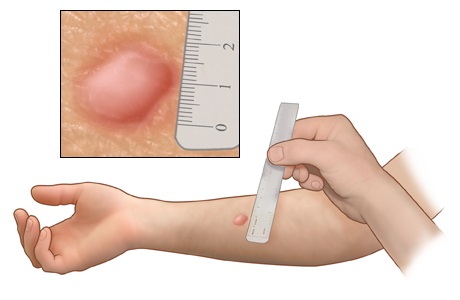
During the test, a small amount of the TB protein will be injected under the skin, usually on the inner forearm. After this injection, you will be asked to come back 48 to 72 hours later to see if the area is infected. The test Typically, if the skin is raised or thickened, this could mean an infection took place, but this will all depend on the size of the bump located on the arm. This is what a positive TB test will look like. The whole process takes less than five minutes. If it’s a two-step test, the process will be repeated.
Where can I get a TB test? These tests can be performed at any CVS Minute Clinic, Walgreens, the local health department, urgent care centers, labs or a local doctor’s office.
What are the extra costs?
As stated above, a visit to your doctor’s office will often incur an office visit fee, which is usually more than $100.
Some clinics may charge separately for the analysis/reading.
If positive, a doctor will want to run additional tests such as taking a chest x-ray and blood work. For instance, a blood test will be needed, and if the results are positive, then a chest x-ray will then be able to show the doctor if the disease is active. If confirmed with the x-ray, then a provider will want to discuss more testing and treatment options for the future.
Tips to know
Even though it’s on a decline in the United States, Tuberculosis is still the leading cause of death worldwide.
A negative test won’t always mean someone is free of tuberculosis.
How long is a TB test good for? Usually, a test is good for up to one year, while a chest x-ray will depend on the results. Most places, if they require this test, will accept results for up to two years, but all policies will vary.
As for side effects, the test isn’t known to make you sick; however, it can cause itchy skin or swelling.
Getting a TB skin test — does it hurt? According to those who have had the test done in the past, they note it as “slight pressure” from a needle when it’s injected under your skin, which will feel like a quick pinch. Since this needle is only going under a layer of skin, not the muscle, most won’t feel anything at all.
How can I save money?
Highly consider choosing a health clinic or the local health department as this tends to be the cheapest option. For those who meet certain income requirements, local health departments will be more than happy to administer the shots for free. According to most, this is the cheapest place to get a TB test.
Because TB tests are required by many employers, check with your HR department to see if the test is covered through your job.
If you have health insurance, see if they would cover the procedure.
Some colleges will have a health lab on site that may be able to offer its students a discounted rate.
How Much Does Obstructed Bowel Surgery for a Dog Cost?
Obstructed bowel surgery is performed when there is a blockage in the dog’s digestive tract. An obstruction in the digestive tract is generally caused by the dog or puppy swallowing an item that is not meant to be digested such as a toy. If left untreated, it can lead to dangerous circumstances and even death, and this is why it’s so important to contact a veterinarian immediately if you think your dog’s bowl is obstructed.

How much does obstructed bowel surgery for a dog cost?
Since it is essential that a dog is taken into the vet’s office right away, this is going to be a procedure that will have to be done immediately. The average cost for this surgery can cost anywhere from $900 to as much as $5,000, depending on how complicated the situation is. For example, a smaller item lodged in the intestinal tract, such as a rawhide bone, may be easier to remove, compared to a few squeaker toys, sock or tennis ball. A physical exam, regardless of what’s found, can cost $50 to $110 for just the visit.
If you are fast enough, a vet may be able to induce vomiting. If the dog is able to throw up the item before it enters the digestive tract, the fee can be considerably less – around the $150 to $500 mark. If surgery is required, however, it could be in the low thousands.
According to the website MedHelp.org, a member had stated that they had brought in their 14-year-old pit bull, and the whole surgery was close to $5,000, but when the additional treatments were considered, the total was closer to $6,000. The procedure took around an hour and they were able to pick up the dog within 24 hours.
Vetary.com notes the average cost of treatment can be anywhere from as little as $800 to more than $7,000.
Obstructed bowel surgery for a dog overview
Before surgery is performed, the vet will feel the abdomen to see if any foreign objects or pain is there. If the vet suspects an object is in the stomach, then the vet will take an ultrasound and/or abdominal radiograph to confirm their findings. He or she may also order a Barium series, which is able to show up white on the x-ray, indicating the obstruction and pinpoint the location.
If the dog does, indeed, have an obstruction, then the vet will offer a few treatment options. If the dog recently swallowed the object, then the vet may be able to induce vomiting, forcing the dog to throw up the object. Even if the dog were to throw up the object, the vet will still want to monitor the dog for the next 24 hours to make sure it’s able to eat and it has a normal bowel movement.
If the dog isn’t able to throw up the object, then an emergency surgery will be required since it can be life-threatening. For objects that may pass through the system, a vet may use fluid therapy to speed up the progress, watching the object with radiographs as it moves through the system. With larger objects, then a laparotomy will be required, a surgery that’s able to remove the object in the intestinal tract. During this surgery, the dog will be placed under a general anesthesia and the stomach and/or small intestines will be opened up to remove the foreign object. Once removed, the dog will be monitored for the next three to four days to watch the dog’s progress.
What are the extra costs?
Blood testing may be needed if the vet suspects an infection is present. Common blood work can cost $50 to $100.
X-rays may be needed to better see the obstruction before surgery. This will most likely be an extra cost, around $150
As noted above, an abdominal radiograph may be needed to watch the progress of the object as it works its way through the intestinal tract. An abdominal radiograph can cost about $150 to $200.
An ultrasound, if necessary, can cost another $250 to $350.
A follow-up appointment will be necessary to ensure that the dog is recovering properly. Dogs may need to stay in the hospital for up to five days after the surgery, leading to additional overnight fees.
Medication, before and after the procedure, can cost $10 to $30 for antibiotics.
Emergency visits to the vet are going to cost more than a scheduled surgery. Keep in mind that something as severe as a bowel obstruction may have to be taken care of as soon as possible.
Tips to know
Symptoms of intestinal obstruction in dogs will include vomiting, a loss of appetite, diarrhea, tarry stools, burping, lethargy, excessive drooling or refusing to lie down.
The minute you see your dog swallow something large or indigestible, it’s important to contact the vet immediately since they may be able to induce vomiting, saving you thousands of dollars. Vets will recommend you do this, even if you don’t see any symptoms.
How can I save money?
Emergency clinics are going to be more than your personal clinic. While you do not want to wait around to have this procedure done, check to see if you can get into your personal vet rather than the emergency vet to save at least 20 to 40%.
How Much Does Sand Cost?
Sand can be used in different ways and is one of the most used natural resources in the country. Sand is often used in construction as well as landscaping and can even be used in paint to produce a textured finish. The price of sand depends on the amount of sand, where you purchase it from, if delivery is required and your geographical location.

How much does sand cost?
On average, most bulk purchases are going to be sold per ton. On average, sand can cost anywhere from $6 to $13 per ton, minus the delivery fee. Smaller purchases in 25 to 50-pound bags, which can commonly be found at Home Depot or Lowe’s, can range anywhere from $5 to $18 per bag.
For example, Texas Industries sells a 50-pound bag of play sand for $9 to $19 and Lowe’s sells 1,000 pounds, which can cover nine cubic feet, for $22.
WesthookSandAndGravel.com sells different types of sand that range from mason, road, and cowbay sand. This sand has different uses such as in the road, on a golf course, as well as for landscaping purposes. This type of sand can cost $22 to $42 per ton.
For people who need sand for their aquarium will find live sand can cost anywhere from $35 to $55 per 20 pounds. Live sand is going to contain live marine bacteria and will provide the proper chemical balance for your fish tank.
| Type of Sand | Average Price |
|---|---|
| All Purpose Sand | $4 per 50-pound bag or about $6 to $10~ per ton (delivery extra) |
| Colored Sand for Sandbox | $25 per 20-pound bag |
| Masonry Sand | $25 per 1/2 cubic yard |
| Paver Sand | $4 per 0.5 cubic feet |
| Play Sand | $3 per 50-pounds |
| Polymeric Sand | $250 per 50 pounds |
| Pool Sand | $10 per 50-pounds |
| Ton of Sand | $25 per ton |
Buying sand
Sand purchased in bulk will be dropped off in a spot of your choice, usually laid on top of a tarp in the driveway. The most common sand local landscaping companies sell will be river sand, masonry sand, M-10 sand, play sand and arena sand, which is a mix of 90 percent sand and 10 percent clay. If purchased by the bag, a bag of sand can be purchased at any home improvement store, such as Home Depot and Lowe’s, or local retailers like Walmart.
One yard of sand will weigh close to 2,700 pounds, and every 1,000 pounds will be able to cover about nine cubic feet.
What are the extra costs?
The price for the sand usually does not include the delivery. A delivery price can range anywhere from $50 to $100 or more depending on how far the company has to travel, but this fee can be waived if a minimum is purchased.
Tips to know
If you want to have a bulk order delivered, most companies will have a minimum order you have to meet before they consider delivery.
A gallon of sand weighs 12.45 pounds and a cubic yard of sand weighs close to 3,000 pounds.
How can I save money?
Depending on the situation, it may be best to purchase sand by the bag rather than in bulk. Buying in bulk, as mentioned above, may require you to pay delivery fees, which could be as much as $150, depending on where you live. If you need the sand for a smaller playground, sandbox or a localized area, then bagged sand should do the trick. Now, if the sand is going to be used for larger playgrounds, a beach or a larger project, such as a volleyball court, then it may be wise to purchase the sand in bulk.
How Much Does a Can of Sardines Cost?
Sardines, small and oily, are saltwater fish rich in nutrients and you can find them almost in every grocery store packed in cans. Sardines can also be bought fresh and then used for grilling, pickling, and/or smoking. Sardines are very rich in omega 3, which is known to reduce the risk of heart conditions; they also contain fatty acids.

How much does a can of sardines cost?
Sardines are usually sold in cans, often come flavored with olive oil or with a tomato sauce, and are widely available in grocery stores. They can also be available in other varieties as well, as dictated in our table below. Some foreign brands may be hard to find and can only be purchased online. On average, sardines can cost anywhere from $1 to $4 per can, and this will depend on the brand, quantity and store you purchase it from.
King Oscar brisling sardines, a popular brand online, retails for about $3 to $4 per 3.75-ounce tin. Crown Prince sardines, a popular brand for those who like skinless and boneless sardines, will pay about $2 per 3.75-ounce box.
Wild Planet sardines, another popular brand, retails for about $3 per 4.375-ounce container. Season sardines, yet another brand, retails for about $3 to $4 per 4.375-ounce can.
A cheaper alternative, such as the Chicken of the Sea or Bumblebee brand, can cost less than $1 per can.
| Type of Sardine | Cost |
|---|---|
| Fresh (not canned) | $20 per 12 |
| Frozen | $5 to $8 per pound |
| Gluten Free | $2~ per 3.75-ounce can |
| Live | $10 to $15 per five pounds |
| Packed with flavors | $2~ per 3.75-ounce can |
| Skinless and boneless | $2 to $3~ per 3.75-ounce can |
| Smoked | $2 to $3~ per 3.75-ounce can |
Sardines nutrition

How to eat sardines
Sardines can be eaten roasted, broiled, grilled or even straight from the can fresh.
Straight from the can.
On a cracker or a tortilla chip.
Mix with a blend of onions.
Create a “tuna-like” salad, mixing mayonnaise, chopped pickles and celery.
Put them inside a taco or sprinkle with lemon juice or olive oil.
Mix with chopped tomatoes, oregano and rosemary.
What are the extra costs?
Sardines that are packed with extra ingredients such as mustard and olive oil are going to cost more than the standard sardine that is soaked in water. Expect to pay an additional $2 to $3 more for a can of sardines with ingredients.
Tips to know:
Dr. Axe always recommends purchasing fresh sardines over farm raised because farms often inject their fish with antibiotics and pesticides.
For those who don’t like to eat sardines on their own, consider mixing in some vegetables with it. Common vegetables that have been found to be used in the Philippines with sardines include patola and upo. On top of vegetables, consider mixing them with noodles as well. Sardines mixed with noodles are known to be a delicacy around the globe. For those who want sardines for the health benefit, but don’t like the flavors as much, consider mixing it into a soup. There are many different soup recipes available that not only taste good but hide the sardine flavor well.
Wendy Myers at Liveto110.com says the best sardines usually come from Spain and Portugal.
Store sardines in a cool and dry place, like the kitchen cabinets, and pay close attention to the “sell by date” to keep the flavor fresh.
What do sardines taste like? Depending on how they are consumed, sardines are known to be dense, oily and rich. Their tastes, if cooked properly, will be tender and not that fishy.
How can I save money?
Purchasing in bulk can often bring the costs down per can.
How Much Does Salmon Cost?
Salmon, which belongs to the trout family, is prized for its taste as well as the health benefits.
Salmon are anadromous, which means they are born in fresh water; they then migrate to the ocean and return to freshwater to reproduce. Salmon can be purchased live or the meat can be bought fresh or frozen.

How much does salmon cost?
The price of salmon depends on the seller, the time of year, how it’s processed as well as the type of salmon that you purchase. On average, salmon can cost anywhere from $4 frozen to as much $25 per pound for fresh fillets. Wild salmon is going to cost the most. For example, Coho or Sockeye Salmon is going to cost more than an Alaskan Salmon. Certain times can affect the pricing as well. For instance, Pacific salmon, which is highly preferred by most, can be in season during the months of May and June. However, if the salmon is farm raised, it will never be in season.
Fresh whole salmon can cost $17 to $25, depending on the type of salmon. For example, whole wild caught Alaskan King salmon can retail for about $20 per pound whole, while Copper River Sockeye salmon can retail closer to $16 per pound whole. White King salmon can be in the $20 per pound range as well.
Salmon filets such as a Copper River king, Alaskan king, and Columbia River king can sell for anywhere from $7 to $24 per pound depending on the type of salmon. These fillets, often referred to steaks as well, will be prepped and ready to be thrown on the grill or frying pan.
A wholesale club, such as Costco, can have filets of Salmon already prepped. For something such as this, it could retail for $7 to $13 per pound. Keep in mind that this fish won’t be as fresh as one that you could find in a local fish market.
Smoked salmon that is processed in a box can retail for $18 to as much as $38 for a 16-ounce box. For example, the SeaBear Smoked Salmon retails for $34 to $38.
Canned salmon can cost $1.50 to $2 per seven-ounce container.
| Type of Salmon | Cost (per pound) |
|---|---|
| Fresh Whole Northwest King Salmon | $9 to $17 |
| Fresh Northwest King Salmon Steaks/Fillets | $15 to $22 |
| Fresh Alaskan King Salmon Steaks/Fillets | $20 to $30 |
| Fresh Whole Alaskan King Salmon | $19 to $28 |
| Fresh Copper River King Salmon | $14 to $21 |
| Fresh Whole Alaskan Sockeye Salmon | $14 to $21 |
Salmon overview
Salmon is high in Omega-3 fatty acids, high in protein and amino acid. It’s also low in sodium and a very good source of Vitamin B6, Phosphorus and Vitamin B12. One pound of raw salmon will have 944 calories, 62 grams of fat, 250 milligrams of cholesterol, 268 milligrams of sodium, 1,647 milligrams of potassium, 0 grams of total carbohydrates and 92 grams of protein.
A salmon fillet, if purchased online, will often weigh four to six ounces.
What are the extra costs?
Online fish markets may charge an additional fee for shipping since it has to arrive on your doorsteps within 24 to 48 hours on average. These shipping fees may be waived if you were to meet their minimum spend.
Tips to know
How much salmon per person? As a general rule of thumb, serve about six to eight ounces for every person eating. For an appetizer, it should be about two to three ounces. Also, before committing to these numbers, be sure every guest enjoys salmon before prepping and cooking for everyone.
The NASDAQ Salmon Index reported that salmon prices have soared more than 50 percent in 2016 due to a spread of parasites, which nibble on the fish’s blood and tissues.
How can I save money?
Purchasing salmon at local fish markets is going to taste a lot better than a salmon filet at your local grocery store. It is best to compare quality rather than the price tag.
How Much Does an Obituary in the Newspaper Cost?
An obituary, also known as a death notice or obituary notice, is a brief notice of someone’s death that is placed in a local newspaper. The obituary will usually include a small picture, a short biography, as well as other snippets such as who they left behind, when and where the funeral is going to be held, and other important information. The cost of an obituary is going to depend on the newspaper it’s publicized in, the amount of wording and how long it’s going to be publicized.

How much does an obituary in the newspaper cost?
On average, an obituary can run anywhere from $0 to as much as $600 depending on the features that will be placed in the ad.
A smaller hometown newspaper may place the ad for free as a common courtesy. If the smaller newspaper does charge a fee, it will most likely be less than $50.
Larger, metropolitan newspapers can charge anywhere from $55 to $220. Some newspapers may also charge per inch. For example, The Seattle Times charges $88 to $100 per inch. Major town newspapers such as San Francisco and New York City are going to charge a lot more than a metropolitan newspaper in Iowa.
Obituary overview
An obituary can either be written up by a family member or someone at the funeral home or newspaper can assist you. There are many examples of obituaries online that you can use to write one. Most newspapers will have links on their website where you can submit a death notice. If the newspaper does charge, at this time, you will submit your payment by credit card. While some newspaper companies manage its own obituary section, some publications do outsource their obituary services to third-party websites such as Legacy.com.
Once the obituary is submitted, the newspaper will give a date on when it will be published. Generally, it will be published the next day. This should give sufficient enough time to alert family members and friends in the area about the funeral arrangements.
What are the extra costs?
Premium days such as a Sunday may yield a higher price tag. Generally, the weekdays are going to be cheaper than a Sunday.
Pictures and longer biographies can cost more. Basic obituaries will only include a simple biography. For example, if you choose to add a picture, the price may rise. On average, most newspapers will charge $100 to $150 or more for a picture to be added.
Some newspapers may charge an additional fee for an online or expedited listing.
Newspapers can also include small card printouts that you can hand out to family and friends as well as to those at the funeral home. These newspapers can also create memorabilia such as the obituary in a special picture frame, etc.
To have an obituary professionally written by someone else besides yourself or the funeral home, these copywriters can charge upwards of $100+ to create something that is truly memorable.
Funeral homes will be more than happy to submit obituaries on your behalf. Some may do it as a courtesy as part of your funeral payment, while others may charge an additional fee to do so.
Tips to know
If you haven’t written you obituary yet, refer to the newspaper guidelines as most have certain formats you need to follow in order to have it accepted. Also, keep in mind that most newspapers will edit your obit for spelling and grammar.
It’s also important to know important deadline dates, the pricing policy and how long it will run. All newspapers will have its own rules.
How can I save money?
Consider keeping the obituary simple. It is ideal to use the funeral home to list the funeral date free of charge on their website. Also, consider smaller, hometown newspapers in the area rather than the larger ones.
Ask the newspapers if they do obituaries for free. If they do, while it may be simple, it is still a way to get the word out free of charge.
Obituaries are not completely necessary. Word of mouth will naturally spread among people the deceased knew.