
How Much Does a Capybara Cost?
A capybara is native to the Venezuela and Columbia areas and is currently one of the largest rodents in the world. Capybaras have larger shaped bodies with short heads and reddish type fur. They have no tail and can weigh up to 250 pounds. Capybaras tend to hang out in groups of 10 to 20 and can be found in tropical forest type atmospheres.

How much does a capybara cost?
The cost of a Capybara can range from $400 to $1,100 per animal. The cost will depend on the breeder, the quality, age and geographical location. Since the capybara is considered to be an exotic animal, make sure that you check with your local city and state laws to ensure that something such as this would be legal. Even it’s legal, there may be certain laws set in place. For example, in Oregon, all exotic animals must receive an import permit from the Department of Agriculture. Most states will require you to hold a permit to own one as well.
Purchasing one from a foreign country, such as South America, could increase the price tag to as high as $3,000 to more than $8,000.
Because this animal can be hard to find, be prepared to be on a waiting list if you’re interested in one.
ExoticAnimalsForSale.net, an online classified website that specializes in exotic animals, have listings that range anywhere from as little as $1,000 to close to $1,500 per pair.
Melly over at gianthamster.com said she was able to get hers for $300, plus flight and travel crate fees.
What is going to be included in the adoption fee?
Reputable breeders should include a vet checkup/medical certification, health guarantee, up to date vaccinations and a travel crate if it’s going to be shipped via an airline. Some breeders may also include starter supplies such as food or toys.
Depending on the age, some breeders may have bottle trained the baby, allowing an easy transition for the new owner.
What are the extra costs?
Recuring costs, like any other animal, need to be factored in. This will include food, supplies, shelter and the necessary vet visits. These animals tend to want to be outdoors, so you may want to plan on building a fenced in part with a heated shelter, dirt area, hay rack and a lot of toys.
Fresh fruits, grass and vegetables are all part of a Capybara’s diet and will be recommended on a daily basis. They also eat other foods such as hay. You will want to supplement their diet with goat’s milk while they are younger and a low-protein pelleted food as they grow old. Capybara owners often feed them corn on the cob husks, lettuce, apples, potatoes, carrots and oats. The average capybara will eat up to 10 pounds of food per day, so plan on budgeting at least $50 to $100 per month at a minimum.
Not all breeders ship, so if you have to travel to the seller’s location, then you will want to factor in the lodging and gas expenses.
A four-foot tall fence, at a minimum, is highly recommended to make sure your capybara doesn’t escape. This has to be sturdy since they can weigh more than 100 pounds and can easily knock it over. Repairing, replacing or building a new fence, depending on the lot size, can be well into the thousands.
Since the animal loves water, some sort of wading pool is necessary to offer it the opportunity to cool off during the warmer months and keep clean. Some owners have been known to dig a new pond, while others allow their pet to use the swimming pool.
Many owners often buy in pairs since this animal tends to hang around herds in the wild and each one relies on each other as an alarm for one another.
Tips to know:
These animals can grow up to 1.5 feet tall and can weigh as much as 100 pounds. They are currently the largest rodents in the world and are closely related to guinea pigs.
The capybara is known to eat only grass and aquatic plants, making their diets rather easy when compared to other exotic animals. Most like to graze in the grass, so it’s essential you have an are where it can graze.
A capybara loves to hang around the water. In fact, these animals can go underwater for as long as five minutes.
The animals are also highly sociable.
Finding a capybara is extremely rare; in fact, petcapybara.com says there are only a few breeders in the United States that have breeding pairs.
Be sure to rodent proof your home in advanced, because like rabbits. they love to chew on cords.
Since they are such large animals, they will need a lot of room to roam. If you don’t have more than a half acre of grass, then it’s highly advised you don’t adopt one.
They are well known to mark their territory by leaving their urine as a “social courtesy,” similar to leaving a business card behind.
Because aggression can often be seen with a capybara, understand that they don’t interact well with humans and can often stress out quite a bit.
They have large front teeth and will never stop growing. To keep them worn down, they will chew on bark or food.
Some videos show that a capybara can get along with other domesticated animals like a cat. Known as a gentle giant, they can get along as long as the other animal isn’t aggressive.
Do they make good pets?
Since they are semi-aquatic, they will need water and mud to survive. They will use the water to use the bathroom and the mud to cool down and protect themselves from sunburn. As mentioned above, owners should have an adequate amount of water available. If house trained, remember that these animals can grow up to 100 pounds or more and will require some sort of water to use the bathroom. This means instead of a litter pan, you may need to dedicate a bathtub, which can mean a lot of messes and unnecessary cleanups every day.
Capybaras are extremely sociable and will require some sort of companionship. If left alone at any time of the day, they will have separation anxiety. It’s either best to stay nearby all day or have a small group.
While they are considered intelligent, they still chew on wires, carpet, blankets curtains and many other household items. They can develop good manners over time if disciplined properly, but when compared to other animals, communicating can be hard.
They can bit, especially if they are on the defensive side. They do worry about strangers but will warm up to you as they see you more and more. They won’t be fans of enthusiastic children.
While they don’t dig, they can squeeze through the smallest cracks possible. They can also push their weight against uneven or poorly built fences.
How can I save money?
Try to find an owner who is looking to sell an older pet. This may allow you to get your pet for less money and may include supplies and accessories.
How Much Does a Capuchin Monkey Cost?
A capuchin monkey is native to Central and South America, and they can also be found in countries such as Argentina. Out of all the New World monkeys, the Capuchin is one of the most intelligent.
They are known as the ringtail monkey because of the habit of curling the tip of their tail. They are known to be very social and have a very strong sense of smell.

How much does a capuchin monkey cost?
There are a few different breeds of that include the Black Caps, Tufted, and those that have a black and white colored coat. The price will depend on the breeder, the age of the monkey, the colors and quality. On average, the cost of this type of monkey can anywhere from $3,700 to as much as $11,000. Some on the market will solely be available for breeders, while some may be available as a household pet. Do keep in mind that most states don’t allow these monkeys as domestic pets, and it’s best to check with your local and state laws to ensure that you know what the rules are. Don’t purchase a monkey until you’re familiar with the local laws.
A male blackcap Capuchin, for example, can cost $4,000 to $6,200, while a male tufted Capuchin can cost $4,900 to $6,500. A black and white, white-faced monkey can cost $7,600 to $9,200. A white-headed capuchin monkey can cost $8,500 to $11,500.
A female blackcap Capuchin can cost $6,200 to $8,000, while a female tufted Capuchin can cost $6,200 to $8,200. A black and white with a white face can cost $8,200 to $11,200.
One of the rarest forms — a purebred that has a red cinnamon tint — can cost $9,000 to $12,500.
ExoticAnimalsForSale.net, an online classified website that sells exotic animals, has a few listings at the time of this writing for about $5,500 to $9,000.
gkadventure.wordpress.com says they can start at $4,500.
What is going to be included in the adoption fee?
Reputable breeders will include a full veterinary checkup, health guarantee and up to date vaccinations. They should also include their TB and fecal exam. Some breeders may also include a bottle, formula, diapers and a carrier if it’s going to be shipped. Upon adoption, the monkey may or may not be diaper trained, depending on the age and training it has gone through.
Many breeders will include the necessary supplies that include a baby bottle, carrier, as well as diapers designed for a monkey.
What are the extra costs?
Exotic monkey dealers are quite hard to find in your local area, and because of this, shipping charges may be applied. These monkeys are generally shipped via a specialized carrier, and fees can range anywhere from $400 to $1,000. Refer to this Uship page to see what private shippers were charging.
Recurring costs such as vet checkups, exams, and vaccinations will need to be factored in, as well as supplies such as a cage, food and diapers. Remember, these monkeys will require diapers the rest of their lives, so it’s best to budget as you would a newborn child. As for food, these monkeys will commonly feed on berries, insects, lizards, seeds and rodents, but the diet will be primarily 65 percent fruit. A varied diet should be considered to avoid a loss of appetite and to prevent boredom. Common foods will include fruits, vegetables, canned monkey food, biscuits and vitamin mineral powders. Like any other pet, they will need a health exam once a year.
The cage should be as big as possible to get a natural surrounding. If possible, this enclosure should be heated and secured enough so it can’t escape. The cage should be equipped with branches, tree trunks, swings, tires, a nest box, mirrors, ladders, toys and wood chips as a flooring. The costs will all depend on the size and which materials are being used.
These monkeys are very social creatures and are often in groups as large as 10 to 20, lead by a dominant or alpha male. Because of this, most breeders often have more than one just for the social interaction.
Tips to know:
From head to the body, these monkeys can average 12 to 22 inches and can weigh four to 15 pounds. Females will usually be a bit smaller than the males.
These monkeys can grow up to two feet tall and can weigh up to nine to 11 pounds.
The average lifespan of one can be anywhere from 25 to 45 years.
Before you even consider purchasing a monkey, educate yourself by talking with other primate workers to see what kind of work goes into the process of raising them.
By law, any seller who sells a monkey must have a USDA license. Always make sure you see this before you even consider adopting one.
It’s highly recommended you purchase your baby from the breeder directly so you can get as much information as possible. This can come in handy if the monkey gets sick in the future.
Any breeder will answer any questions you may have and will ask you questions as well. If a breeder doesn’t ask you questions or doesn’t seem to be honest, it may be best to find someone else.
How can I save money?
One of the best ways to save money is to purchase a monkey from a previous owner. Some pet owners need to get rid of their pets for different reasons and may be willing to sell a monkey for much cheaper and may include all the supplies needed as well.
How Much Do Capers Cost?
A caper is the pickled bud of the caper bush, also known as the Capparis Spinsoa. They are picked from a bush resembling a shrub, long before the bud even begins to form as a flower. Once picked, they will be dried out and brined or packed in a jar with salt. Oftentimes, it will mature to the size of an olive and will either be sold as a caper berry or it can be eaten like a pickle.
The caper is an edible bud that can be used in various recipes, commonly used as a seasoning or garnish and is a dark olive green color, no bigger than a pit of an olive.

How much do capers cost?
On average, capers are going to come in 4, 16, or 32-ounce bottles. The cost can vary anywhere from $3 to $10 per bottle, depending on the size. Since capers can’t be harvested by a machine, each one has to be picked by hand, sorted by size and brined, leading to a higher price than most jarred ingredients.
For example, a 32-ounce bottle of Bel Aria Nonpariel Capers can cost $9 to $12, while a 16-ounce bottle can cost $6 to $9.
Organic capers soaked in sea salt can cost $5 to $13 per 3-ounce jar.
TraderJoes365.blogspot.com says the price is $2.69. The blog also mentions they taste great in omelets and on top of salmon.
Capers overview
What exactly are capers? Capers are small pea-sized green things, similar to an olive, that have a salty and vinegary taste to them. They are commonly found in Mediterranean dishes such as chicken piccata or spaghetti puttanesca and are known to offer a pungent, vinegary taste to anything its added to. People often add these items to any dish they want to add a saltier flavor to.
Capers can often be purchased at any grocery store, such as Walmart, or online via gourmet grocery stores or even Amazon. In most stores, look for it in the Italian food section or next to the olives and pickles, usually in a glass jar.
Capers are generally sun-dried and pickled in vinegar and salt. Some are flavored, while others are not.
What are the extra costs?
Shipping costs may incur if purchased online. Many retailers require a certain amount to be spent until free shipping is applied.
Seasoned capers, which have additional flavors, will cost more than plain capers. The price difference may only be anywhere from $2 to $5 extra.
Tips to know:
Always make sure that you rinse and clean capers straight from the jar. This allows the capers to lose the excess salt from sitting in the jar. It’s recommended that you wash under warm water for at least 30 seconds to wash away the excess salt and brine.
For those who are on a sodium restrictive diet, it is best to avoid this type of snack.
Capers usually go great with foods such as salads, sauces, seafood, and pasta. They can also be consumed raw straight from the jar. There are many great recipes online, including the ever-popular, scalloppine. Since capers have so many uses, refer to this chowhound.com forum thread or this Huffington Post article for more ideas on what you can do with them. Most people find that once opened, they only use a fraction of the jar and don’t want to waste what’s left over.
If you’re going to store capers, make sure that you have the right part of the plant. Many people tend to get confused with the buds of the plant which look like the capers. When storing, make sure that it’s stored in an airtight container. It can be kept in a room temperature area for up to six months.
To get the most out of the capers in terms of flavor, try adding them at the end of the cooking process.
Capers purchased online and in the grocery store are usually imported from countries such as France.
The smallest size will be referred to as non pareil capers and this will be the most desired for recipes.
Are capers good for you?
Capers can be healthy for you if you want to increase your fiber intake, but due to the packaging process, the sodium content is a bit on the high side and should be avoided by those who either have high blood pressure or are at risk of heart disease.
Naturally, these buds are low in calories. About three tablespoons will equal 10 to 15 calories, according to the United States Department of Agriculture National Nutrient Database for Standard Reference.
Three tablespoons offer close to one gram of fiber, and according to dietary guidelines, adults need 14 grams for every 1,000 calories.
On the downside, since capers are often stored in a brine, the sodium intake can be close to 250 milligrams per tablespoon. While sodium is required in your diet to help maintain fluid balance around in and around your cells, too much can often wreak havoc on your system, leading to high blood pressure and increasing your chances of heart disease. If possible, avoid more than 2,300 milligrams of sodium per day.
How can I save money?
Consider purchasing in bulk if you are going to use them in more than one meal. Bulk purchases are going to be a lot less per jar than buying individual jars.
Organic jars are going to cost more than the non-organic. While there isn’t much of a difference, this comes down to a personal preference.
How Much Does It Cost to Paint a House?
| Need a pro near you? Get multiple quotes for free online. Get your quote now >> |
Whether your home is is need of a new paint job or you want to change its curb appeal, there’s one thing a homeowner can’t argue: painting the exterior of any home is going to take some work.

How much does it cost to paint a house?
For those who plan on doing it yourself, paint usually costs $25 to $50 per gallon. If you use about 10 gallons of paint, which can cover around 1,500 square feet, it will cost anywhere for $150 to $400 for the paint alone. This won’t include the necessary supplies such as the rollers, ladder, scraper, a tarp and power washer to prep the surface. Home Depot exterior paint, for example, can $25 to $50 per gallon.
If you decide to hire a contractor, you will find that most will charge by the size of the home and will price by the square feet. This isn’t the only factor that affects the price, however. As noted below, several other factors go into the quote such as the height of the home, if any obstacles are in the way, the type of surface and geographical location. On average, a one-story house that is around 1,500 to 2,000 square feet can cost a $1,400 to $3,200, while a home that is 2,000 to 3,500 square feet can cost anywhere from $3,700 to $6,500.
Typically, a painter is going to be around 70 to 80 percent labor costs, and less than 15 percent will be for supplies.
| Simple Job | In the Middle | Premium | |
|---|---|---|---|
| Less than 1,500 square feet | $1,500 to $4,500 | $3,000 to $6,500 | $4,000 to $11,000 |
| 1,500 to 2,500 square feet | $3,500 to $8,000 | $5,000 to $12,000 | $10,000 to $19,000 |
| 2,500 to 3,500 square feet | $7,000 to $14,000 | $7,000 to $20,000 | $15,000 to $32,000 |
| 3,500+ square feet | $12,000 to $40,000 | $18,000 to $50,000 | $30,000 to $60,000 |
Factors that affect the price:
The type of paint
Common paint types can include latex and stain, and each paint can affect the price depending on the brand and quality. Higher quality paints will be more expensive, but with this investment, you will get a nicer looking paint that can last much longer than its inexpensive competitors. A higher quality also means fewer coats and less time.
The height of the house
The taller the home is, the more it’s going to cost.
Type of material that is being painted on
Materials can range from wood, aluminum siding, masonry, etc.
How many different colors?
The more colors you need to use, the more you can pay.
Access
How easy is it to access the house? Is the foundation steep? Are there obstacles around the home such as power lines? The more complex the layout is, the more it can cost.
Fixtures
Do any fixtures have to be removed from around the house such as awnings or lights?
The coats
Applying more than one coat can increase the cost by more than 30 percent.
Average costs
Some material will cost more (or less) when painting an exterior, and depending on your home’s surface, we put together a list of the most common materials a home has, along with the price range of most jobs.
| Type | The Process | Cost (per square foot) |
|---|---|---|
| Concrete | Concrete will have to be prepared before all paint jobs, and in some cases, previous finishes may have to be removed so that it doesn't chip away with the new layer of paint. | $2 to $4 |
| Metal Siding | Aluminum and galvanized steel siding will depend on some factors. This will include if there's any damage such as rust and the old finish has to be removed. | $1.50 to $3 |
| Stucco | Stucco can be time intensive since it will require caulking, cleaning and filling in the cracks. | $2 to $3 |
| Vinyl Siding | Much like an interior paint job, vinyl siding can be repainted over relatively easy. The finishing, however, can be more extensive. | $2.50 to $4 |
| Wood Siding | Wood siding can either be painted or stained. The condition of the wood can greatly affect the cost. | $3 to $5 |
Process
Before offering a quote, a painter will visually inspect the area they will paint and provide an estimate free of charge. Most professional painters will require a primer and at least two coats of paint.
Before the paint job starts, the painters will power wash the areas that need to be painted to remove any dirt, moss and debris. All rotted board will be replaced and any residue will be scraped away to create a smooth service. Any areas that need to be caulked will be fixed as well.
Depending on the company, they may include a limited warranty that lasts a few years.
What are the extra costs to paint a house?
Rotted wood is a common problem for homes that need to be painted. While some painters may include this in a quote, some may charge extra to fix these boards.
Changing the paint color from dark to light may require extra coats, and because of this, additional charges can apply with the materials.
Premium paint, if you decide to upgrade, will cost more than the standard paint.
Painters will usually only quote the exterior paint of the home and won’t include any add-ons. This could include the doors ($100), fascia ($759), gutters ($200 to $1,000), shutters ($200 to $400), window sashes ($100 to $200) and/or porches ($500 to more than $3,000). This price range will all depend on how much needs to be done.
If you’re doing the job on your own, you will want to budget for the following supplies: brushes, rollers, a sprayer, buckets, drop cloths/tarps, pans, caulk, painter’s tape, sandpaper, scrapers and a ladder and/or scaffolding for larger jobs. The cost of investing in these supplies should be less than $300.
If the home was built prior to 1978, professional painters will need to check for lead. Lead tests will commonly cost about $30 to $50.
Dirtier homes that require more prep work can incur additional charges.
Tips to know:
If you live in a homeowner’s association, be sure to check the bylaws. Many associations will approve only certain paint colors.
If you live in a historical district, be sure to check with your local city to see what the rules are when it comes to repainting a home.
Hand brushing is going to be a lot more than spray brushing. The problem with spray brushing is that it’s fast and the quality isn’t as good. With a hand painting job, the coat will be thicker, and the paint tends to last longer.
Experts recommend painting your home every seven years.
What’s the difference between interior and exterior paint? All paint will be made of solvent, additives, pigments and resin, and both interior and exterior paint will have similar solvents and pigments. The real difference between the two will be in the resin and additives. Since exterior paints need to hold up to the outdoor elements, this type of paint will have flexible resins, which allow the paint to look good as the surface expands and contracts. It will also have additives that prevents it from mildew and fading. Exterior paint shouldn’t be used indoors because it can release volatile organic compounds while curing and can scuff much easier than an interior paint.
How can I save money?
Get at least three to five quotes. Many painting contractors will come to your home to offer free quotes. If you don’t have the time to research painters, consider getting multiple quotes for free from HomeAdvisor.com.
Try to talk with the painters in the off-season. Since most tend to call painters during the busier months, you may be able to find a deal in the late fall.
While it will be more up front, invest in a higher quality paint to make sure it lasts longer.
How Much Does It Cost to Paint a Motorcycle?
For some bike owners, painting your motorcycle may be an option if you want to add a personalized touch, replace the color altogether or touch it up to make it look new again.

How much does it cost to paint a motorcycle?
On average, the cost to paint a motorcycle will depend on the bike, the type of paint job, the quality of the parts being painted, if there is damage, the complexity and the professional doing the job. For a regular paint job, the costs will usually be within the $500 to $3,000 or more; however, the sky is the limit if you want personal touches from a reputable painter. This will all be dependent on the volume of work that needs to be done. Understand that painting a motorcycle is only a part of the process as most of the work goes into sanding the old paint off the tiny body parts and prepping the bodywork. Also, keep in mind factory-based finishes will always be cheaper than a custom job.
A simple one-tone job can be in the $500 to $800 range, while a two-tone job can be double this. Add in graphics and/or custom airbrush work and the costs can double yet again.
One member on Reddit claimed he paid $600 to get his fairings primed and painted with factory paint. This also included some body work and Suzuki paint.
True Kustom lists prices on its website and says a standard custom job can cost $1,800 for a softtail style bike and $3,000 for baggers bikes. This job will include a base color change, adding flames and/or graphics.
Some people opt to have just the gas tank painted, and this can commonly be done for $350 to close to $800 or more.
Painting a motorcycle overview
A painter can quote you in two ways: either by the whole bike or by the parts. If by the parts, the motorcycle will have its tank, side panels, front and/or rear fender painted. While not uncommon, some motorcycle owners often have certain parts painted because it either worn out or the designed needs to be altered.
The average motorcycle painting process will require disassembling the parts down to the bare frame, followed by stripping the paint from any surface. Once stripped, any repairs will be made, if any are noticed. This could include rust, dings, chips or dents. Next, all parts will be primed, dried, and once dried, the parts will be painted. If any additional colors, graphics or details need to be added, this will be done shortly after the paint dried.
What are the extra costs?
Prior body damage, such as scrapes, chips, dings and cracks, can add to the cost if it needs to be fixed.
Some shops will charge an additional $300 to $1,000 to dis-assemble and re-assemble the bike.
Airbrush work may be available at some shops and can either be charged by the job or by the hour. Most custom graphics will start at $250 and go up from there. True Kustom, the company we mentioned above, for example, said a basic skull on one side of the tank could cost $500.
Freight charges can apply to those who want to ship their bike to the shop.
Removing powder coating, due to the time it takes, can increase the labor cost by up to 30 percent.
Most shops will want at least one to two weeks to paint and up to 10 weeks if it needs to cure, but if you want to expedite the process, some shops may be willing to at a fee.
Replacing or repainting emblems to look like new again can be an additional cost.
Hand buffing, instead of using a machine, can be done at some shops for a fee.
Basic motorcycle paint kits
How can I save money?
Ask around and talk to a few shops in your area to see what they can do for you. If you’re on a strict budget, let them know what you can afford and most should be able to work with you as long as it’s within a reasonable range.
If you have the time, painting a bike isn’t as hard as you think. If you’re tight on a budget, it is doable and most supplies can be purchased for less than $150. This will depend on the bike you have and the design you want. For example, a Harley Davidson will be much more than a Suzuki bike.
Some shops may offer a discount if you were to disassemble the parts and bring them into the shop.
How Much Does Paintless Dent Removal Cost?
Paintless dent removal, commonly referred to as PDR, is the process of removing any car dents without damaging or adding any paint. Compared to a body shop, PDR is very low cost, it’s time efficient, the original paint remainds and the body panels will remain intact.

How much does paintless dent removal cost?
The cost of paintless dent removal will depend on the size of the dent, the number of dents, where the dent is located, the type of car and the professional doing the job. Overall, be prepared to spend anywhere from as little as $40 to as much as $125 for a one-inch dent. This price will, of course, increase as the dent gets bigger. For every additional half inch, plan on adding another $10 to $40. Multiple dents in the same area, however, can significantly lower the price per dent.
Dent Works, a paintless dent repair company located in Austin, Texas, lists a handful of before and after pictures, along with what they charged the customer. For instance, a dent around the wheel well of a Mazda 3 was $200 to $250, while a smaller dent on the hood of a Toyota Tacoma cost $175 to $200.
We talked to a few body shops and we were able to come up with a decent average throughout the United States. To get an estimate, measure your dent’s diameter and refer to the chart below. This will be the cost “per dent,” but some shops may offer significant discounts for every additional dent, sometimes as much as 50 percent off.
| Size of Dent (in diameter) | Price Range |
|---|---|
| 0.5" | $100 |
| 1" | $150 |
| 2" | $225 |
| 3" | $250 |
| 4" | $325 |
| 5" | $350 |
| 6" | $400 |
| 7" | $450 |
| 8" | $475 |
| 9" | $575 |
| 10" | $600 |
| 11" | $650 |
| 12" | $700 |
| 13" | $775 |
| 14" | $825 |
| 15" | $850 |
| 16" | $900 |
| 17" | $1,000 |
| 18" | $1,100 |
| 19" | $1,150 |
| 20" | $1.200 |
Paintless dent removal overview
There are three common options when choosing a type of business to repair your dents: a dealership, larger franchise such as MAACO or a smaller mom and pop shop. Other companies you may hear about include the Ding Doctor, Ding King and Dent Wizard.
During the process, a trained technician will use a variety of specifically designed tools to access the dent from the back of the car’s panel. Slowly, push by push, the panel will be reshaped to its original form, making it look new again. If it’s done properly, no one will ever know the area even had a dent. The process will use no chemicals, paint or a filler, similar to other door dent removal methods.
Depending on the degree of difficulty, most jobs can be done in 30 minutes to four hours.
A reputable shop should include a lifetime warranty, effectively guaranteeing the dent will never come back.
What are the extra costs?
Some factors, as stated by Excel Dent Removal, may increase the pricing. These factors often include the material the car is made of. For example, double metal, laminated glass, high strength steel and deep dents may have a 25 to 35 percent markup.
Tips to know
PDR won’t harm your vehicle’s factory finish and because of this, it will help retain your vehicle’s value. Sometimes, using traditional methods may harm your vehicle, ultimately hurting the value.
Most plastic components and bumpers may not be able to be fixed with PDR.
If the panel isn’t easily accessible, this technique may not work.
While rare, some damage may occur during the process.
How can I save money?
Consider checking with your car insurance company before getting a dent fixed as this is often covered by the insurance industry. Even though the dent looks small, the overall bill can be higher than you expect. If you want to play it safe, get a quote ahead of time to see what you will have to pay.
With any car repair, it doesn’t hurt to get a few quotes online or in person. Most reputable shops will be more than happy to offer a quote for free.
Repair kits that can be used at home can cost anywhere from $22 to $250.
Most companies will offer discounts to those who have more than one dent.
Going with this option is much cheaper than the traditional body shop options, which can be up to 75 percent more. It can also save you time since the work can be done in less than three hours when compared to a body shop that may take days.
How Much Does a Palm Tree Cost?
Palm trees are in a family of plants known as Arecaceae, a family which consists of many plants and shrubs. Palm trees usually grow in hot climates but are capable of growing in other types of climates as well.

How much does a palm tree cost?
The cost of a palm tree will really depend on the type of palm tree you’re purchasing, the size and the nursery you’re purchasing it from.
On average, a 3-gallon palm tree is going to cost anywhere from $15 to $45. A 7-gallon will cost anywhere from $50 to $70. A palm tree, which can be four to six feet, can cost $145 to $325. A tree close to 10 feet can cost $250 to $575. Larger trees taller than 11 feet can cost anywhere from $500 to more than $2,000.
Refer to our chart below for the most popular palm trees, along with the average costs of each one that we found at nurseries located throughout the United States.
| Type | Description | Price Range |
|---|---|---|
| Areca Palm | Reaching heights of 20 feet, it will be wider at the top and up to 10 feet in diameter. | - $30 for 5 gallon |
| Bottle Palm | Considered to be a dwarf palm and caps out at 10 feet in height. | - $60 for small - $250 for medium - $880 for large |
| Canary Island | A very large palm that can grow up to 70 feet tall and 25 feet wide. | - $15 for 12 inches - $40 for 24 inches - $100 for 36 inches - $175 for 48 inches - $275 for 72 inches |
| Dwarf Date | Native to Asia, the Dwarf Date can grow up to 12 feet tall and isn't commonly found in the United States. | - $15 for 8 inches - $22 for 16 inches - $55 for 36 inches |
| Dwarf Palmetter | Capping out at 12 feet tall, it has a rich green leaf and is one of the most cold tolerant palm trees on the market. | - $15 for 8 inches - $90 for 24 inches - $200 for 36 inches |
| European Fan | Native to Europe, this palm tree is very cold tolerant and is known for its green to silvery colored leaves. It can grow up to 10 feet tall. | - $13 for 12 inches '- $70 for 36 inches - $200 for 60 inches |
| Foxtail | Grows up to 60 feet tall, 12 feet wide and is drought tolerant. Easy to grow and will require full sun. | - $65 for 6.5 gallon |
| Lady Palm | Dark glossy leaves perfect for indoor settings. This tree can grow up to 14 feet tall. | - $45 for 12 inches - $80 for 36 inches - $120 for 60 inches |
| Mediterranean Fan Palm | Shaped like a triangle and can grow about 24 inches wide and up to 15 feet tall. It will be slower growing than most. | - $50 for 3 gallon |
| Mexican Fan | These commonly planted palm trees can grow as high as 100 feet tall and will have a trunk that reaches about 12 inches diameter. | - $40 for 24 inches - $85 for 48 inches - $120 for 60 inches - $200 for 72 inches |
| Needle Palm | One of the most cold tolerant palm in the world, this tree can withstand temperatures well below zero. This palm has a needly-like trunk and bristles all around. It grows up to 10 feet tall. | - $35 for 12 inches - $225 for 36 inches - $525 for 60 inches |
| Phoenix Palm | A genus of palm tree that can grow up to 75 feet. | - $50 for 3 gallon |
| Pigmy Date Palm | Known as a "miniature date palm" or "Robellini," the pigmy palm matures at 12 feet. | - $35 for 7 gallon - $70 for 15 gallon - $100 for 18 inches - $200 for 24 inches |
| Pindo | This very drought tolerant palm can grow up to 20 feet tall and is known for its large cluster of orange fruits. | - $13 for 12 inches - $40 for 24 inches - $175 for 60 inches - $300 for 72 inches |
| Pineapple Palm | A robust palm that looks like a pineapple, hence, the name. They grow slowly, forming a large trunk with fronds rising from the ground. | - $30 for 3 gallon |
| Queen Palm | One of the most popular palm trees found in most yards, this tree requires very little maintenance and grow as tall as 50 feet. | |
| Rhapis | With a bamboo-like appearance, these trees can make a great alternative to shrubs or a bush. | - $50 for 3 gallon |
| Sabal | Growing from the ground, these palms will be very hardy and can be very slow to grow. | - $20 for 24 inches |
| Sago | One of the slowest growing trees that grows symmetrically. It can take over 100 years to reach 20 feet in height. | - $20 for 12 inches - $104 for 24 inches - $200 for 36 inches older than 7 years old. |
| Saw Palmetto | Estimated to have been around for 700 years, this palm tree caps out at about 15 feet. | - $30 for 8 inches - $105 for 14 inches - $225 for 26 inches |
| Silver Saw | Tends to be a very rare tree on the market. This cold hardy palm is slow growing and often grows in containers. | - $30 for 8 inches - $105 for 16 inches - $225 for 26 inches |
| Sylvester Palm | Reaching as high as 40 feet, this palm is known for its silvery green leaves. | - $15 for 12 inches - $40 for 24 inches - $175 for 48 inches - $300 for 72 inches |
| Windmill | Considered one of the only palms that can grow in colder climates, this tree can grow up to 30 feet tall. | - $15 for 12 inches - $42 for 24 inches - $250 for 60 inches - $600 for 60 inches and five foot wide trunk |
What are the extra costs?
Palm trees, depending on the variety, will need to be trimmed at least twice a year. As they grow taller, you will more than likely need a professional to do the job since it can dangerous to do it on your own. Plan on budgeting at least $60 to more than $150 per tree to have it trimmed properly.
Some nurseries will charge a delivery fee if you don’t meet the minimum spending requirement.
Fertilizers are highly recommended to make they grow at a healthy rate. Palm tree outdoor fertilizers can cost anywhere from $10 to $22 per pack.
If you need to have the palm tree planted, landscaping companies will charge per tree. This is going to depend on the size, the setup of your yard, and how far they have to travel.
Tips to know
Carefully choose a location where you want to palm tree as you don’t want to plant it too close to a fence line, house or even power lines.
Very few species enjoy the partial shade, so it’s always best to consider a location that gets full sun.
During the first few months of planting your palm tree, it’s recommended you water the roots at least daily to ensure the soil is well saturated around the base of the tree. As the tree matures, a few waterings per month will be sufficient enough.
How can I save money?
Keep your eyes peeled for special discounts and/or sales. Many big name nurseries will commonly hold sales or even offer some sort of coupon on their official website.
How Much Does Palm Tree Trimming Cost?
| Need a pro near you? Get multiple quotes for free online. Get your quote now >> |
Palm tree trimming is required to guarantee the tree retains its color and continues to be attractive. Trimming the tree will also maintain its size so that it is more manageable, preventing it from overgrowing.
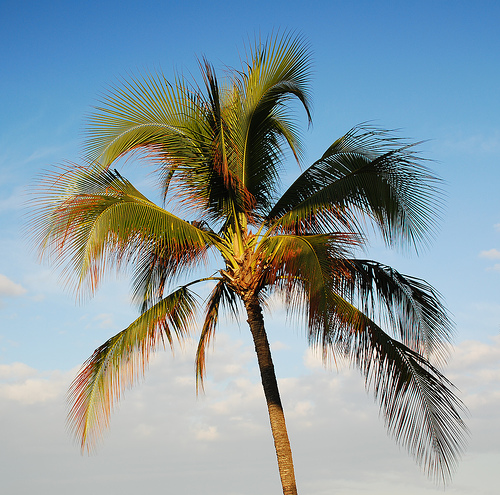
How much does it cost to trim palm trees?
The cost trimming a palm tree will come down to your geographical location, the contractor/landscaper performing the job, the type of palm tree, the size of the palm tree and the number of palm trees that need to be trimmed. On average, however, most homeowners pay $35 to $125 per tree.
Forum members on City Data stated that the “norm” is usually between $40 to $80 per tree.
The Las Vegas Sun claims trimming a palm tree can be as little as $20 to more than $150 per tree.
What are the extra costs?
Skinning can often be done California and Mexican Bark trees for about $8 to $12 per foot.
Some landscapers who have to travel outside of their radius may add a mileage surcharge.
Tips to know
Most landscaping services will remove the brown, yellow and any broken fronds, along with any flower and fruit stalks. These stalks will be removed because they use this energy to create newer fronds and because it can pose a safety hazard for those who walk underneath the tree. If the green leaves are removed, only those that droop at an angle parallel line to the ground will be trimmed.
For taller trees, landscapers will use either a ladder, specialized climbing gear or a cherry picker if it’s able to access the tree.
Due to dangers of the job, always make sure the landscaper has some sort of liability to protect you in the case of an accident since homeowners will be considered liable if something were to happen on your property. Most landscapers will carry a one million dollar liability policy. Always make sure the company’s license is valid by checking your state’s official database.
Colder weather and freezes can usually mean more fronds for your tree. Pay close attention to the fronds to see how they have fallen by the summer. If they have fallen slightly, then it may make sense to hire a trimmer. If you wait too long, the fronds can open up, spreading seedlings everywhere, which can create a large mess.
Understand that palm trees will get its nutrients from the leaves on the trees. If too many are removed at once, the growth will slow down and the tree may become susceptible to disease. As palm trees grow, a new frond will grow as another one dies, so it’s important to watch out how often you trim. Experts will only recommend trimming only when necessary and when doing so, only remove fronds yellow or brown in color. Fronds with this color can often house insects and other rodents.
While climbing spikes were used in the past, any reputable landscaper will avoid using them today because of the damage these boots can do to the tree. These boots are also known to transfer diseases from tree to another.
The crown should never be cut off as it will not grow back, ultimately killing the tree.
If possible, try to hire a landscaper with a certificate or some sort of qualification, such as a Certified Arborist.
Before hiring a service, always ask how they will trim your tree. You will want to avoid companies who over prune the tops or shape it in unnatural ways. A reputable company will show you pictures of jobs they have done in the past.
How can I save money?
For smaller trees, you may want to consider doing the job yourself as there are tools for rent or for sale that can help you save on labor costs.
The more trees that are trimmed in one session, the more you will save per tree.
Get multiple quotes delivered to your email for free by using online comparison websites like Home Advisor.
If your city has a bulk trash pickup option, consider having the landscapers place your fronds on the side of the road for pickup. This could help save on disposal fees.
How Much Does a Pancreas Transplant Cost?
A pancreas transplant is a surgical procedure performed to implant a healthy pancreas into a person in need, most often performed with someone who has diabetes or someone who has severe kidney disease. In some cases, a kidney transplant may be carried out at the same time. This healthy pancreas usually comes from a person who has recently died or can be a partial pancreas from a living donor.

How much does a pancreas transplant cost?
The cost of a pancreas transplant, including all the preliminary testing, will vary on the geographical location and the hospital performing the transplant. The total costs can be as high as $175,000 to more than $300,000 without health insurance. A transplant will be covered by a health insurance policy, but some may have restrictions such as using their preferred transplant center.
Transplant Living notes, after all of the testing, surgery and recovery process, the average cost for a pancreas transplant can be $289,400.
What is going to be included?
The costs mentioned above will include the pre-transplant testing, the testing, surgery, fees for recovery for the donor, the follow-up care and additional hospital stays if complications were to occur. Also, depending on the hospital’s billing policy, it may also include the anesthesiologist, radiologist, surgeon and physician fee.
Pancreas transplant overview
Before the surgery is even considered, a doctor will run a string of tests to make sure this is your only option. If so, you will be referred to a transplant center and added to a national waiting list. According to the National Kidney Foundation, the average patient can wait up to 400 days.
During the procedure, you will be put under a general anesthetic and a small incision will be made in your stomach. The donor pancreas and the donor kidney, if you’re having a kidney transplanted at the same time, will be placed inside and attached to the blood vessels and bowel. Right away, the new pancreas will start to produce insulin and the old pancreas will be left in its original form to continue to produce the important digestive juices after the transplant is complete.
The surgery will take up to six hours and can take up to 14 days to recover. Patients may need to stay at the hospital for up to three weeks to monitor their recovery. Most patients can resume regular activities after two to three months. Depending on the progress, the surgeon team will be able to offer guidance on how long it will take since each procedure will be vastly different
What are the extra costs?
All the fees noted in the inclusions may be billed separately. Since each hospital will have its own billing policy, it’s important to get an itemized bill ahead of time to know what you’re going to be charged for.
Anti-rejection drugs, after the transplant was performed, can easily cost $2,500 per month. You will need to take these medications, known as immunosuppressants, for the rest of your life. Failing to take this medicine will allow your body to recognize your new pancreas as a foreign object and it will be being to attack it, something known as rejection.
After the procedure, patients will have to continue follow-up appointments to monitor the progress.
Food, airline tickets and lodging need to be considered if you have to travel to the hospital. This can be fairly common with transplants since the donor could live away from your primary residence.
Tips to know
After a pancreas transplant, 97 percent will live at least a year, while close to 90 percent will live at least five years. Those who have had both a kidney and pancreas transplant at the same time found that after one year, it was still working and 75 percent were still working after five years.
Since this transplant is considered a risky procedure, complications may include a rejection from the body since the immune system will recognize it as a foreign body; blood clots forming in the blood vessels; inflammation after the transplantation; or side effects of the medication of the procedure such a high blood pressure or osteoporosis.
Can you live without a pancreas?
The pancreas will have two functions: it will secrete insulin, which will help control your sugar levels, and it will also help digest enzymes and hormones. These functions can be replaced with insulin injections and oral pancreatic enzymes with meals.
While it’s rare, some surgeries may remove the pancreas completely and will only be done for those who have a pancreas that isn’t working 100 percent. Usually, those who have type 1 diabetes will have a pancreas that stops producing insulin but will continue to create digestive enzymes. With cystic fibrosis or chronic pancreatitis, however, the production of both insulin and digestive enzymes can be impaired.
How can I save money?
Most insurance companies will cover the cost of a pancreas transplant as long as it’s deemed medically necessary. Medicare says the procedure will be covered if it’s done at the same time as a kidney transplant or after a kidney transplant. In rare cases, however, it may be covered if you don’t need the kidney transplant.
Some hospitals may offer low or free housing options for families who meet income requirements.
If you’re comfortable, investigate clinical trials to see if you can become eligible for one. If you’re accepted, you may pay a lower cost or nothing at all.
Becuase of the high costs, most hospitals will have financial counselors readily available to help you explore options on ways to pay for your transplant.
Paying in cash or via a credit card can lead to a higher discount if you were to haggle with the hospital. While the main surgery bills could be hard to pay in cash, this could be done with the smaller bills such as the anesthesiologist and/or surgeon fee.
How Much Does a Panda Dog Cost?
A panda dog is any breed of toy dog whose hair has been dyed so that the color of its fur resembles that of a panda bear. This type of dog has taken Japan by storm and its origins can’t be more fascinating.
The panda dog started in 2005 when an abandoned dog by the name of Colombo was adopted by Kensuke Hirakawa, a former beautician and pet store owner, who decided to beautify Colombo. He used puppy safe hair dye to make the dog look like a panda bear. This trend caught on quickly and has spread all over since then. The price of a panda dog depends on the breed of dog that you have dyed, the breeder and age.
With all of this said, there is no such thing as a “panda dog.”

How much does a Panda dog cost?
Since the panda dog design can be applied to almost all toy or any dogs with longer “poofy” fur, the price for panda dogs usually is based on the breed. One of the most popular breed that you can purchase is the Maltese, which can cost anywhere from $500 to $900.
Another type of dog that can be turned into a panda dog is the poodle, which can cost an average of $500 to $1,300.
Because of its uncanny resemblance to the panda bear, the chow chow and Tibetan mastiff, which is commonly used to turn into a panda dog in China, is one of the most famous dogs turned into a panda dog. Chow chows can be purchased for $650 to $975, depending on the purity of the breed, breeder and geographical location. A Tibetan mastiff, depending on the quality, could cost upwards of $2,500 per puppy.
According to the website PandaDog.org, the cost can range anywhere from $600 to as much as $1,300. As stated above, the Panda dog really isn’t a real dog, but rather it’s more of a novelty where pet owners will dye their dog’s coat.
Panda dog overview
Depending on the seller, they may sell the dogs with the look already. If the design of the “panda” isn’t included, a specialized breeder/person can dye the dog for an additional fee.
The process will involve washing your dog 24 hours before the dye is applied. Once the dog is washed, the dog’s coat will be laced with Vaseline in areas that shouldn’t be dyed. Once done, the dye will be applied in shapes, usually a larger oval, on the areas you want to have colored. The dye will be left to dried, and most dogs will have to wear a cone to prevent them from licking the dyed areas. As the dye dried, the coat will be washed and process will be complete.
Purchasing this type of dog, regardless of the breed, from a breeder should come with all the necessary medical paperwork, registration, a health guarantee and up to date vaccinations. If the dog is registered with any organization, this would be included as well.
What are the extra costs?
When you buy a dog that doesn’t have a panda design on them yet, you can buy a dog safe hair dye to color the dog’s fur and turn it into a panda dog. The hair dye can be purchased for $20 to $40 per bottle. If you want a professional to apply the panda look, you will have to bring them to a dog salon. Here, the services can range from $80 to $350 depending on the size of the dog and the service providing the dye.
Tips to know
As with any dyes, some can contain toxic chemicals and can cause irritation if exposed to your dog’s skin or eyes. Some dogs may also show an allergic reaction, pain or severe itching. If your dog has any sensitive or damaged skin, it’s highly advisable you avoid using dye.
To some dogs, the process of having their fur dyed can be troublesome, and in fact, some may growl or become overwhelmed, leading to a lot of stress for the dog. If your dog doesn’t like baths or any sort of washes, this process won’t be meant for your dog.
How can I save money?
Turning your dog into a panda dog is not always necessary. Try to appreciate the look of your dog as they have natural charms that will please you even without the additional layer of design painted onto them.


