
How Much Does a License Plate Cost?
Part of owning a vehicle is the paying for the registration. Each car on the road must be registered with the Department of Motor Vehicles, better known as the DMV. This registration will link your car to you through your license plate. All a police officer would have to do is look at your license plate or your car’s VIN (vehicle identification number) to find out who owns the vehicle. All registrations can be done through your local Secretary of State’s office.
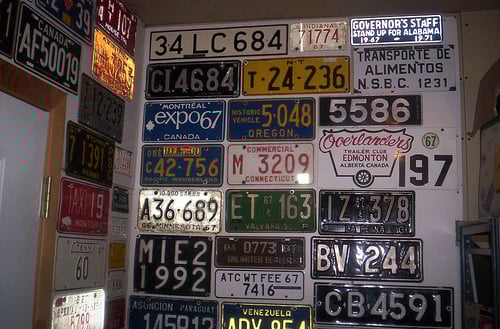
How much does a license plate cost?
The first time you register your car, whether it is a new car or used car, the price will be higher. The price of registration will vary depending on your state, the vehicle type, vehicle price, registration period and type of license plate you want. Some states will have a flat fee while other states will charge you based on your car’s value. People who live in Minnesota may pay as little as $4.50 while citizens of Vermont may pay up to $212+. For a complete list of state-by-state fees, visit DMVAnswers.com. Refer to the chart below for the average cost in your state. Each state will have its own formula, and to give you a better idea, refer to the table below to see what you may pay in the state you reside in.
Once you have obtained a license plate, you will need to renew the plate annually. Each year you will need to purchase new license plate tabs, a sticker that proves you have registered for the current year. Without these tabs, police officers can ticket you. The price of this is very similar to the cost of initial registration; however, many times it is cheaper since the fees and taxes for renewals are lower in most states.
| State | Fees |
|---|---|
| Alabama | $23 |
| Alaska | $100 per 2 years |
| Arizona | $8 + assessed value of 60% of MSRP (this is reduced by 16.25% each year) every one or two years. |
| Arkansas | $17 (3,000 pounds or less) / $25 (3,000 to 4,500 pounds / $30 (4,500+ pounds) |
| California | $46 + additional fees |
| Colorado | Based on year, weight and taxable value |
| Connecticut | $80 per 2 years |
| Delaware | $72 (3,499 pounds or less) / $115 (3,500 to 4,999 pounds) / $155 (5,000+ pounds) |
| Florida | $225 + $14.50 (2,500 pounds or less) / $22.50 (2,500 to 3,500 pounds) / $32.50 (3,500+ pounds) |
| Georgia | $20 |
| Hawaii | $45 + $0.0075 to $0.0125 per pound |
| Idaho | $69 (1-2 years old) / $52 (3-6 years old) / $45 (7+ years old) |
| Illinois | $101 |
| Indiana | $21.35 |
| Iowa | Computed by vehicle weight and list prices. $0.40 per 100 pounds plus .50% to 1% list price |
| Kansas | $35 (less than 4,500 pounds) / $45 (greater than 4,500 pounds) |
| Kentucky | $21 |
| Louisiana | $20 minimum (0.1% of selling price) |
| Maine | $35 |
| Maryland | $135 (less than 3,700 pounds) / $187 (greater than 3,700 pounds) |
| Massachusetts | $60 per 2 years |
| Michigan | $30 to $140 (depends on price of vehicle) |
| Minnesota | based on value of vehicle |
| Mississippi | $14 |
| Missouri | $18.25 to $51.25 (based on horsepower) |
| Montana | $217 (less than 4 years old) / $87 (5-10 years old) / $28 (11+ years old) |
| Nebraska | $15 |
| Nevada | $33 |
| New Hampshire | $31.20 to $55.20 (depends on weight) |
| New Jersey | $35.50 to $84 (based on weight and age of vehicle) |
| New Mexico | $27 to $62 |
| New York | $26 to $139 (depends on weight) |
| North Carolina | $28 |
| North Dakota | $49 to $274 (depends on weight and year) |
| Ohio | $34.50 |
| Oklahoma | $21 to $91 (depends on how many years you registered) |
| Oregon | $86 per 2 years |
| Pennsylvania | $36 |
| Rhode Island | Based on vehicle weight |
| South Carolina | $24 for under 64 years old / $20 for people older than 65 years old |
| South Dakota | $31.50 to $180 depending on weight and age |
| Tennessee | $24 |
| Texas | $50.75 (less than 6,100 pounds) / $54 (greater than 6,100 pounds) |
| Utah | $43 (less than 12,000 pounds) / $69.50 (12,000 to $14,000 pounds) |
| Vermont | $70 for gas / $27 for diesel / $122 for other |
| Virginia | $40.75 (less than 4,000 pounds) / $45.75 (greater than 4,000 pounds) |
| Washington | depend on vehicle type, where you live, weight of car and plate type |
| West Virginia | $30 |
| Wisconsin | $60 |
| Wyoming | $15 |
License plate overview
The first time you register, you will receive a paper registration (which you should always keep in your glove box) as well as the actual license plate. Depending on the state, some allow you to register for years at a time.
With each renewal, you will receive a new paper registration with the current year, as well as a new sticker you place on your license plate. This renewal can often be done online, in person or by mail. This will depend on the state. States will commonly send you a reminder 30 to 60 days prior to your license plate expiring.
What are the extra costs?
If you license plate or tab is lost or stolen, there will usually be replacement fees.
If you would like to purchase a personalized license plate, the fees can be $5-$50 extra. These will also take much longer to receive, so planning ahead is important.
Specialty or customized plates will be an additional cost. For example, in Arizona, you can choose from various designs such as an American flag, clouds, PBS or the Arizona Cardinals football team.
Some states may require additional testing such as a smog test. You may need this test done in order to get your license plate.
How Much Do Basketball Uniforms Cost?
In order to form any kind of basketball team, whether it is for a recreational league or a school league, it is necessary to have matching uniforms. There are many different options and materials when it comes to choosing basketball uniforms. It is best to first decide on a budget, and then research the best quality you can get for that price.

How much do basketball uniforms cost?
The cheapest option for uniforms is to simply have matching t-shirts made and have everyone wear matching shorts. The price to get a t-shirt made with a specific design at a local print shop will be anywhere from $10-$30. This price depends on whether the shirt will be screen printed or embroidered, whether it is one color or multiple colors, and whether it has writing on one side or on the front and back. Because most basketball uniforms require a jersey number, front and back printing will usually be necessary.
Ordering full basketball uniforms that have been pre-designed from a company such as GTM Sportswear will cost anywhere from $25-$60 per uniform. For school teams, it is usually best to have a home (white or lighter colored) and away (darker colored) uniform. With an estimated 12 people on a team, and a home and away uniform for each player, the total cost can be $600-$1440. Many companies have uniforms which are reversible, resulting in only one uniform needing to be purchased. These are usually between $40-$60, which translates to a total cost of $480-$720 for a team of 12 people.
Ordering custom-made uniforms with your own design and logo from a company such as Allen Sportswear can cost between $60-$100 per uniform. Therefore, ordering home and away custom uniforms for a team of 12 people will cost between $1440-$2400.
What is going to be included in the estimates?
If ordering custom made t-shirts from a print shop, the only thing included will be the t-shirts and the printing. Some companies also have a satisfaction guarantee, meaning that if something happens to the shirt or you are unsatisfied in any way, they will remake the order for you.
If ordering uniforms from a uniform company, the jersey, shorts, and printing/embroidery will all be included. The shipping is also sometimes offered for free.
What are the extra costs?
Embroidery is more expensive than screen printing, so choosing embroidery will make your cost on the higher end of the spectrum.
Many teams also like to have matching warm-up pants or shooting shirts; these will cost about $20-$50 extra per player.
Some schools also like their players to have matching shoes. For information on team shoes, visit Eastbay.
For a customized design, many shops can work up a design for you for a nominal fee.
Tips to know:
When ordering jerseys, always make sure that you have the sizes of each member on the team. It’s best to let each member see a sizing chart so that they can get an appropriate size.
When considering a design for the uniform, be sure to talk with more than just the embroidery shop. There are a lot of talented graphic design artists online that can design a logo for as little as $30.
Order jerseys well ahead of time as most shops are going to take a few weeks to get the jersey ordered. It’s wise to ensure that the appropriate amount of time is given so that can be delivered on time.
How can I save money?
If you are purchasing uniforms for a school team and you are on a strict budget, reversible uniforms are the cheapest way to go. However, many players complain that they hold sweat and become heavy, weighing them down on the court.
Many companies offer discounts such as free shooting shirts with a purchase of an entire teams’ uniforms or free away uniforms with the purchase of home uniforms. Other companies offer loyal customer rewards programs. Shop around and research each company before deciding.
How Much Does it Cost to Declaw a Cat?
Declawing your cat has become a very controversial subject. While the cat’s claws can cause a lot of damage to your home, some believe that the declawing process is cruel and unnecessary. Other people believe that getting your cat declawed is not that big of a deal – it will only cause the cat a few days of discomfort and will make the relationship with your pet much less stressed.
How much does it cost to declaw a cat?
The cost of cat declawing varies depending on what type of procedure you choose, geographical location, the number of claws being declawed, the cat’s weight and vet office. Overall, the price could be as little as $40 or as much as $400.
Laser declawing tends to be on the higher end, costing anywhere from $250 to as much as $400.
If you only want the front two claws declawed, it’s best to cut that budget in half. Those who want all four claws will be within that $40 to $400 range.
Most veterinarians will also want to have an exam before the procedure to check for any other health problems as well as a few weeks after the procedure to ensure proper healing. These appointments will cost $25-$50 each.
The Central North Animal Hospital, located in Mount Prospect, Illinois, charges $85 to $220 for two paws or $120 to $270 for four paws.
Type of cat declawing procedures
Clippers
Known as the fastest way to remove claws, the clippers will clip off the toes and bones of the cat. Afterward, the incision will be sewn shut. In rare circumstances, the claw can potentially grow back. This can cost $100 to $200.
Laser
As a newer form of technology, this is the most preferred method today. With next to no pain and very little bleeding, claws can be removed with the heat of a laser. The claws won’t be able to grow back. This can cost $250 to $450.
Scapel
Removes the bone where the claw grows from. As a difficult procedure, this can be a tad higher. There are no chances for the claw to grow back. This can cost $200 to $300
Cat declawing overview
The most basic, cheapest, and fastest type of declawing, which is also the most controversial and most painful, is the Resco clipper method. During this procedure, the third bone above the claw is cut, removing the ability for the nail to regrow. This surgery will require two nights in the hospital as well as bandages and antibiotics to prevent infection . This should all be included in the price.
A more difficult, and therefore slightly more expensive option is the disarticulation method. Instead of simply cutting through the bone, the veterinarian is much more careful to cut and remove the ligaments that connect the bone, therefore removing the bone in its entirety. This is slightly less painful for the cat, but it will still cause a lot of discomfort in the few days following the surgery. Two nights in the hospital, bandages, and antibiotics will also be included in this method.
The most expensive type of declawing is the laser method. Instead of using a scalpel to cut through the ligaments and remove the third bone such as in the disarticulation method, a laser is used. This results in virtually no bleeding, which ceases the need for bandages in most cases, less pain. The equipment is quite expensive, however, and will, therefore, cost you much more for the procedure.
The least invasive procedure that can be performed is the tendonectomy. This involves cutting the tendon which enables the cat to extend its claws. With this procedure, the cat’s claws are still completely intact, but the cat is unable to use them to scratch.
The recovery period will depend on the cat’s age. Kittens can recover quickly, while an adult cat can be more than a week.
What are the extra costs?
Before the procedure, some vets may want to perform a routine exam. These exams can cost about $40 to $75.
Cats are much more likely to develop arthritis after being declawed. Arthritis treatment usually requires medication and frequent check-ups, resulting in a much higher cost.
If an infection does occur after surgery, the treatment can be costly.
Before the surgery begins, a blood test may be required. The typical blood test can cost $25.
Anesthesia may be required depending on the cat and the vet’s office performing the procedure. Anesthesia can be considered an additional expense.
After the surgery, most veterinarians will prescribe painkillers to ensure that the cat heals properly.
If the cat has to stay additional nights, overnight fees can range anywhere from $60 to $150 per night.
While optional, cat litter for declawed cats may be recommended for the first few months. This can cost about $15 to $30 for a large eight-pound container.
Questions to ask:
What kind of procedure is going to be used? Many vets may use a newer technique that involves a laser.
What are the complications in regards to this surgery? Can anything arise after the procedure has been performed?
If there are any complications that do occur, what are the additional expenses that I should know about?
Tips to know:
As a complex procedure, you will want to make sure that you’re working with the most experienced vet. Try to find a vet that is not only experienced but someone who has done hundreds of procedures.
Weigh the pros and cons of both procedures. The older way of clipping can cause more pain, while the newer way of a laser can cost less. While a laser is more, your cat will thank you for it later.
WebMD.com notes there are few reasons to declaw a cat. This can include removing the claws if there is a tumor or if the cat’s immune system is suppressed.
Can you declaw an older cat? Older cats have a longer recovery period, so most vets recommend you declaw your cats between three months to three years old.
Declawing a cat isn’t illegal in the United States; however, it is illegal in the following countries: Austria, Wales, Italy, Scotland, England, Switzerland, Norway, Sweden and more.
Alternatives to declawing a cat
These are soft nail caps that go on top of the cat’s nails. These caps will be hollow inside and will fit over your cat’s nail securely using a non-toxic adhesive. These caps will stay on for up to six weeks and will fall off with the natural growth. Some cats, in the beginning, may aggressively groom them, causing them to fall off quicker.
Scratching posts
Cats will always naturally want to scratch, and a scratching post allows them to do just this. This will deter them from scratching your furniture or carpet. If choosing a scratching post, make sure it’s tall enough to allow your cat to fully extend, and choose a location where they may want to mark their territory. The best material, according to declawing.com, is sisal fabric.
Double sided tape
This is a sticky tape on both sides that can be applied to anything you don’t want the cat to scratch.
This feline facial pheromone is a simple odor placed on items you don’t want your cat to scratch. If you ever watch a cat, you will notice they rub their cheeks on items around the house. The purpose of this is to mark their territory and claim it as “theirs.” This spray will calm your cat and deter them from scratching unnecessary things.
Pros of declawing a cat
Vets justify it when a cat can’t be trained to refrain from using its claws inappropriately. When other options, such as scratching posts and nail tips fail, vets may justify it if the owners want to send the cat back to the shelter. This becomes “claw or life.”
If the claw area is affected, declawing may be an option to stop the infection from spreading.
Cons of declawing a cat
Cat owners need to understand a cat is losing its knuckle, and this would be similar to a human losing his or her fingertip. Bones left after the procedure may cause chronic pain or even infection.
If a cat loses its claws, they may resort to biting more than they should.
The surgery can be painful since the surgeon has to remove both the bones and tissue. Complications may also arise after the surgery such as infections or even seeing the claw areas grown back.
How can I save money?
There are alternatives to declawing that are not only more humane but also less expensive. Consider alternatives such as Soft Paws. A pack of Soft Paws retails for $18 to $25.
Simply trimming your cat’s nails with nail trimmers on a regular basis can decrease the damage made by the claws and can be much cheaper.
Comparison shop with various clinics. Some clinics will post their prices on the website while others will give a price over the phone. Consider talking with 3 clinics before making a decision.
If you have more than one cat, ask the vet to see if you can get a “group” discount. Since it’s not uncommon for pet owners to have two cats declawed at once, you can potentially save 20 percent.
There are other ways to prevent your cat from scratching. If you feel that this is the only way, don’t do it. Consider healthier alternatives such as using nail caps, scratching posts and clip the nails on a daily basis.
How Much Does a Knee Replacement Cost?
According to the American Academy of Orthopaedic Surgeons, “If your knee is severely damaged by arthritis or injury, it may be hard for you to perform simple activities such as walking or climbing stairs. If medications, changing your activity level, and using walking supports are no longer helpful, you may want to consider a total knee replacement surgery.”
Because knee replacement is a major surgery, and since artificial joints need to be replaced in 10-15 years, it is usually avoided until there are no other options. Most patients who receive a total knee replacement are between the ages 65-70.
How much does knee replacement surgery cost?
The cost of a knee replacement will vary substantially, depending on a number of factors. These factors may include the number of days spent in the hospital, the surgical approach, the complexity of the surgery, time spent in the operating room and geographical location. A total knee replacement can be around $50,000, whereas a partial knee replacement, often referred to as a PKR, will cost about 10 to 25 percent less. This is the average fee for those who don’t have a health insurance policy.
A patient who is equipped with medical insurance such as Medicare will have the majority of the costs covered. However, even insured patients will have to pay some out-of-pocket expenses. This includes the deductible, co-pay, or coinsurance. The average knee replacement cost to an insured patient will be around $4,000. Be sure to check with your health insurance provider to get a better idea of what the insurance is going to cover.
Overseas surgeries can cost significantly less. For example, this surgery could cost anywhere from $7,000 to $12,000 in a country such as India. In a country such as Thailand, the surgery could cost anywhere from $11,000 to $16,000. Keep in mind that if you do choose this route, be sure to do your homework on the doctors and hospitals before exploring any opportunities.
| Country | Price |
|---|---|
| United States | $40,000 to $80,000 |
| Singapore | $15,000 to $24,000 |
| Mexico | $12,000 to $16,000 |
| Costa Rica | $10,000 to $15,000 |
| Thailand | $10,000 to $18,000 |
| Taiwan | $7,000 to $12,000 |
| India | $6,000 to $13,000 |
*The fees noted above don’t include any sort of health insurance plan. Remember, having this type of surgery overseas can pose a health danger. Always do your due diligence before proceeding.
Knee replacement overviwe
Before the surgery, the surgeon will examine and test your knee to determine exactly how much of the joint will be replaced.
During the surgery, which is under a general anesthesia, the surgeon will replace all damaged joints and cartilage with pieces made of plastic or metal. Making a slight incision, the surgeon will be able to move the kneecap, removing all of the damaged surfaces of the joint. Once the damaged surface has been removed, a measurement will be made that fits the new knee. The whole process shouldn’t take any longer than 2 to 3 hours.
After the surgery, hospitalization for a few days will be necessary. During this time the patient will undergo in-patient therapy to get used to the new knee joint.
It can take up to three to six months to fully recover from a knee replacement. This will depend on your condition before the surgery, if any medical problems existed and your expectations.
Types of knee replacements
Total knee replacement
This operation involves replacing the joint surfaces using your femur bone. This procedure may also involve replacing the under-surface of your kneecap. The new parts will be cemented in place, and if the surgeon doesn’t use cement, the surface of the component facing the bone will be textured to encourage new bone growth. Another common technique used with a total knee replacement is by using a mobile plastic bearing, a part that isn’t firmly fixed to the metal parts. A plastic bearing may help reduce the wear on your new joints.
Partial knee replacement
The knee is made up of three compartments: the inner (medial), the outer (lateral) and the kneecap (patellofemoral). If arthritis was known to only affect a part of your knee, a surgeon may want to place one side of your knee, which is commonly the inner side. This process will use a small incision when compared to a total knee replacement. This process will be recommended for those who still have strong ligaments in the knees. On the downside, it has been shown that one in 10 who do receive a partial knee replacement will need further surgery within 10 years.
Kneecap replacement
It is possible to replace just the under-surface of the kneecap if it is affected by arthritis. Known as patellofemoral replacement or patellofemoral joint arthroplasty, this operation is ideal for those with osteoarthritis and is best for those whose arthritis isn’t spreading. This process has a speedier recovery time and the operation isn’t as major.
Complex
A complex knee replacement is designed for those who are either losing bone or have a deformity in the knee. This type of knee replacement will be securely fixed into the bone cavity, and these components will interlock into the center of the knee to form a hinge to offer stability. If the damaged bone is present, pieces of metal may be used to make up for it. This operation is commonly done on those who are having a second or third joint replacement on the same knee.
What are the extra costs?
Many patients require more physical therapy after leaving the hospital. While this may also be covered by insurance, a deductible or co-pay will still be charged. The average physical therapy session will be $75 to $150. This will start 24 hours after surgery.
There may be a few minor changes that will need to be made to your home, such as ramps, safety bars, raised toilet seat, etc. These adjustments may also be covered by some types of insurance but not all.
Temporary use of a wheelchair may cost extra. You may also need to purchase a knee brace of some kind to offer more stability.
Knee implants may have to be replaced every 15 to 20 years. Be sure to talk to your surgeon to get a better idea of how long it can last.
Tips to know:
When looking for a plastic surgeon, it’s always best to look for one that has been certified by the American Board of Orthopedic Surgery. It also doesn’t hurt to look into their experience.
Complications of a knee replacement are very rare. In fact, less than three percent of patients notice any side effects.
Alternatives to knee replacement surgery
Losing weight can help take force off your kneecaps. Shedding more than 10 to 15 pounds can lead to big improvements in your comfort levels.
Working with a physical therapist can help design a plan to deal with your pain. They will be able to recommend exercises or even use ultrasound imaging to increase your blood flow.
Knee injections that contain hyaluronic acid can help lubricate the knee and act as a shock absorber. These injections can help improve your knee mobility and reduce the pain.
Cortisone shots or medication may help control the pain. Cortisone, a form of steroids, can naturally mimic the occurring hormones in your body. These shots can work with the area that’s inflamed.
Prolotherapy can be injected in te ligaments to increase the blood flow and supply of nutrients. This solution will stimulate the tissue to help repair and four to six sessions are often required to see desirable results.
Acupuncture is a Chinese method that uses sharp and thin needles to impact the nerves and change the flow of energy.
An experimental treatment, such as stem cells, could help regenerate cartilage tissue in the knee.
How can I save money?
Many hospitals will offer discounts to patients without insurance, but these are usually not advertised freely – you must ask about them.
Most hospitals offer even greater discounts to patients who are about to pay cash at the time of surgery. Even if you don’t have the cash, most hospitals can set up payment plans depending on your annual income.
Medical travel is becoming more and more popular as medical care gets more expensive in the United States. Medical travel is when a patient travels to another country to have a necessary surgery because medical care in other countries is so much cheaper. For example, the average cost of a knee replacement in India is $6,000. Services, such as the Medical Tourism Company, can assist you in finding a surgeon overseas that best fits your needs.
If you don’t have any health insurance, consider picking up an individual policy through services such as eHealthInsurance.com. Most insurance plans — including Medicare and Medicaid — cover this procedure. Generally, it will include the evaluation, the pre-surgery appointments, surgery, postoperative hospitalization, home safety equipment and physical therapy appointments. Since all health insurance companies will vary, it’s best to talk with your insurance company to know what’s going to be covered.
How Much Does Community College Cost?
According to BrainTrack.com, community college is defined as “A two-year, public college that provides associate’s degrees and also prepares students who will transfer to a four-year school. They typically have relatively low admissions requirements, low tuition and reside in populated areas, making college education accessible to many.” To compare the cost of community college with that of a state university, also see “How Much Does College Cost?”
How much does community college cost?
Community college can cost as little as $20 per credit hour or as much as $200 per credit hour. Since most classes are three credits, and most colleges consider 15 credits full time, this results in a per-semester price of about $300-$3000. This translates to a cost of $600-$6000 per year if attending both fall and winter semesters full time. The cost will depend on your residency status, the school and if any grants will be included. Refer to our chart below for a sample of random community colleges in the United States
For example, Oakland Community College located in Oakland, Michigan, is around $60 per credit hour, while non-residents will be charged $112 per credit hour. Those that reside outside of the state will be charged $158 per hour.
Another community college, such as the Chandler-Gilbert Community College, located in Arizona runs around $75 per credit hour, while an out of county student will be charged upwards of $300 per credit hour.
Portland Community College located in Oregon charges its residents $79 per credit hour while a non-resident will be charged around $200 per hour.
| Community College | Per Credit Hour |
|---|---|
| Blue Ridge Community and Technical College | $161 (in-district) / $291 (out-of-district) |
| Butler Community College | $67 (in-district) / $138 (out-of-district) |
| Calhoun Community College | $113 (in-district) / $226 (out-of-district) |
| Cankdeska Cikana Community College | $125 (in-district) / $300 (out-of-district) |
| Cossatot Community College | $68.50 (in-district) / $179.50 (out-of-district) |
| Delaware Technical Community College | $139.75 (in-district) / $349.50 (out-of-district) |
| El Paso Community College | $94 (in-district) / $200 (out-of-district) |
| Faulkner State Community College | $144 (in-district) / $259 (out-of-district) |
| Hinds Community College | $110 (in-district) / $220 (out-of-district) |
| Holmes Community College | $110 (in-district) / $110 (out-of-district) |
| Lord Fairfax Community College | $175 (in-district) / $372 (out-of-district) |
| Massasoit Community College | $24 (in-district) / $230 (out-of-district) |
| Mesalands Community College | $55 (in-district) / $99 (out-of-district) |
| Metropolitan Community College | $59 (in-district) / $88.50 (out-of-district) |
| Moberly Area Community College | $86 (in-district) / $141-$194 (out-of-district) |
| Northwest Mississippi Community College | $120 (in-district) / $220 (out-of-district) |
| Pearl River Community College | $125 (in-district) / $225 (out-of-district) |
| Richmond Community College | $76 (in-district) / $268 (out-of-district) |
| Riverland Community College | $162.95 (in-district) / $183.57 (out-of-district) |
| Southark CommunityCollege | $83 (in-district) / $96 (out-of-district) |
| SouthwesternCommunity College | $79 (in-district) / $271 (out-of-district) |
| State Fair CommunityCollege | $100 (in-district) / $210 (out-of-district) |
| Tidewater Community College | $139 (in-district) / $316 (out-of-district) |
| Walla Walla Community College | $119 (in-district) / $137 (out-of-district) |
| Wallace Community College | $117 (in-district) / $234 (out-of-district) |
| Waubonsee Community College | $110 (in-district) / $283 (out-of-district) |
Note: International students may have to pay more than out-of-state. Fees are accurate as of November 2016.
What are the extra costs?
If the class also has a lab, the lab fees and time should be covered by the cost of the class itself. When signing for a class, it will note if there are any type of labs that will have to be covered.
All colleges have some type of application or processing fee – this is usually $25-$75.
If you choose a payment plan with some courses, a payment plan premium fee may apply.
The cost of books and manuals for each class will cost extra. See “How Much Do Textbooks Cost”
If you live out of state, or in some cases out of the county, the cost per credit hour will be higher.
Additional books will be required for each and every class. CDs or computer-related coursework may also be required. The prices for books will greatly vary depending on the class.
For community colleges that offer housing on campus, housing and food will cost extra. Keep in mind that many community colleges don’t offer room and board.
Late registration fees may apply.
Late payment fees may apply.
Tips to know
When choosing a community college, be sure to the college is accredited by the American Association of Community Colleges.
How can I save money?
For information on how to obtain a student loan or government grants used for college, visit the US Department of Education.
Search for scholarships. Even if you’re a returning parent coming back to college, there is a scholarship out there for everyone.
If planning on attending a four-year university after community college, be sure to take the exact classes that are going to transfer over to the university. There are some classes that won’t transfer to the school. If you’re unsure of what courses are going to transfer, it’s always best to meet with a school advisor.
How Much Does Baby Food Cost?
Once a baby begins to eat solids (“solids” refers to baby food and cereal, not actual table food) the cost of food can start to affect your monthly grocery bill.
Usually, this takes place between four to six months old, and babies will begin eating simple rice cereal and then will progress to a mix of baby food and cereal; eventually, they will be able to eat all baby food and will no longer need formula or cereal. This transition usually takes place when they are between 12 to 15 months old. Refer to our chart below to see what your baby can eat at their age.

How much is the cost of baby food?
On average, baby food is going to cost the average family anywhere from $45 to as much as $115 per month when using solid foods.
A box of Gerber Infant Cereal , for example, will cost about $3 for a 16-ounce box. This box can last up to a month at first, but it will gradually only last about once per week as your child grows.
Gerber baby food, such as pureed bananas, apples, green beans, peas, etc., usually come in two-packs and will cost between $1-$1.50 per pack. Children 6 months – 12 months will usually consume 2-4 containers of baby food per day. (An example would be a fruit for breakfast, a vegetable for lunch, and one of each at dinner.) With this in mind, you will spend between $37.50-$75 per month on baby food.
Companies, such as Gerber, make many kinds of healthy snacks for babies such as fruit puffs or fruit melts. These help the baby learn how to consume solid food in their mouths without choking. Snacks like these can cost $2-$4 and will last about a week or two.
For the first year, baby formula can run anywhere from $45 to $100 per month depending on the brand that is purchased. See: “How much does baby formula cost?” There are two types of formula: powder and liquid.
Mint.com broke down the costs of purchasing it at the store and making the food on your own. Store-bought organic food would cost about $0.69 per serving while making it organically can cost $0.38.
| Brand | Price Range |
|---|---|
| Beech-Nut Organic Baby Food | $1.50 per jar |
| Ellas Kitchen Baby Food | $1.50 to $2 per pouch |
| Gerber Baby Food | $1 to $1.50 per jar |
| Goya Baby Food | $1 per 4-ounce jar |
| Heinz Baby Food | $4 to $6 per packet |
| Holle Baby Food | $10 to $14 for 250g |
| Nestle Baby Food | $4 to $6 per 14 ounces |
| Sprout Organic Baby Food | $10 per 5 pack |
Common baby food flavors
Apple and banana
Apple and blueberry
Apple and cherry
Apple and chicken
Apple, pear and banana
Apples
Apricot
Banana and mixed berry
Banana and strawberry
Bananas
Beef and beef broth
Chicken and chicken broth
Chicken rice
Chicken, vegetables and stars
Corn and sweet potato
Green beans
Macaroni and beef
Mango
Mixed vegetables
Oatmeal, pear and cinnamon
Peaches
Pear and blueberry
Pear and pineapple
Pear and raspberry
Pears
Squash
Seet carrots
Sweet corn
Sweet peas
Sweet potatoes
Turkey and turkey broth
Turkey rice dinner
What are the extra costs?
If you choose to buy only organic food, plan on spending between $20 and $40 extra per month. One jar of organic baby food can cost upwards of $1 to $2 per jar.
Some babies need specific types of foods as a result of allergies. Soy products, for example, can be quite a bit more expensive.
If you want to make your own baby food, there are baby food makers on the market that cost anywhere from $60 to $150+.
Introducing solid foods to baby chart

How can I save money?
Almost all stores, such as Meijer, have their baby food on sale every few weeks. It is best to stock up on baby food when it is at its cheapest. This could save you about $10 per month.
Some people choose to make their own baby food by pureeing fresh fruits and vegetables. This may be less expensive, but it is also much more work. The storing and preserving of the food is the hardest part.
Consider buying store brand baby food rather than the name brand. Be sure to compare the ingredients as you’ll find that many of the store brands are highly comparable.
A common question online is: Can you buy baby formula with food stamps? The answer is yes. SNAP allows you to buy formula, cereals, juice and baby food.
Look for baby food coupons. These coupons can be found in the local newspaper or via a simple search online.
How Much Does the Average Wedding Dress Cost?
One of the most important decisions the bride-to-be will have to make is which dress to choose.

How much does the average wedding dress cost?
There are so many factors that affect the pricing of a wedding dress (see our factors below). Simple dresses can be as little as $100 to as much as $10,000 for a name brand extravagant dress.
A machine-made dress that can be found at local retailers will usually cost $100 to $600. Usually made of a synthetic fabric, there isn’t much in terms of detail.
A wedding dress that is made from a natural fabric can cost anywhere from $1,600 to as much as $5,000. This type of dress will include minimal hand detailing and can be customized to size.
There are many dresses that can be found for $100-$500 for those who may be on a budget. David’s Bridal, for example, has hundreds of dresses in stock which are priced $500 or less. These dresses will be machine-made and will come in sizes ranging from a size 4 to size 16. Dresses that are under the $500 mark are considered to be on the lower end.
Dresses made by famous designers, such as Alfred Angelo, can cost between $500 and $3,000 depending on the intricacy of the design and the popularity of the style. These dresses are made specifically for the person purchasing them and come with many options such as size, length, and zip- or lace-up backs. Mid-range dresses are going to cost anywhere from $500 to $2,500.
Dresses can also be handmade by a personal designer. This is the best way to get the perfect fit since the designer will take all your measurements, not just your waistline. Hand-made dresses also ensure the highest quality embroidery and decorations chosen by the bride herself. Dresses such as these will usually cost $4,000-$6,000. Websites, such as DressFinder.com, can help you search for a personal dress designer.
According to a forum thread on the website WeddingBee.com, members claimed that wedding dress prices ranged anywhere from $200 to as much as $2,600 for their dress.
Fox Business states the average wedding dress is $1,100, according to experts.
| Designer | Price Average |
|---|---|
| Alfred Angelo | $150 to $2,000 |
| Allure | $600 to $5,000 |
| Alvina Valenta | $350 to $3,800 |
| Anne Barge | $600 to $4,400 |
| Badgley Mischka | $200 to $3,500 |
| Bliss | $2,200 to $4,300 |
| Camille La Vie | $600 to $1,300 |
| David's Bridal | $100 to $1,500 |
| Dennis Basso | $3,000 to $8,500 |
| Emma | $800 to $3,600 |
| Eve of Milady | $175 to $3,500 |
| Galia Lahav | $1,500 to $8,500 |
| Galina | $150 to $1,300 |
| Hayley Paige | $500 to $3,700 |
| Inbal Dror | $600 to $8,500 |
| Ines di Santo | $600 to $8,000 |
| J'aton | $900 to $11,000 |
| J Crew | $300 to $2,100 |
| Jenny Packham | $500 to $5,000 |
| Kenneth Pool | $650 to $3,200 |
| Kenneth Winston | $300 to $2,200 |
| Lazaro | $400 to $4,000 |
| Leanne Marshall | $800 to $2,000 |
| Maggie Sottero | 500 to $3,000 |
| Martina Liana | $200 to $3,300 |
| Mikaella | $200 to $2,500 |
| Mori Lee | $200 to $1,800 |
| Oleg Cassini | $500 to $1,700 |
| Paloma Blanca | $100 to $3,400 |
| Pnina Tornai | $500 to $8,500 |
| Priscilla of Boston | $400 to $6,000 |
| Pronovias | $300 to $6,700 |
| Realtree | $100 to $650 |
| Reem Acra | $1,200 to $10,000 |
| Rivini | $250 to $7,000 |
| Sherri Hill | $500 to $1,300 |
| Steven Khalil | $300 to $8,500 |
| Sue Wong | $400 to $1,500 |
| Tara Keely | $300 to $2,000 |
| Theia | $600 to $1,700 |
| Vera Wang | $300 to $10,000 |
| Watters | $200 to $3,000 |
Factors that affect the price
The dress style
Styles can commonly include the following types: beach-type, chic, modern, classic, elegant, luxurious or dramatic.
The dress color
Colors may include ivory, white or a diamond white.
The dress length
Dress lengths can be as high as the knee or along the floor.
The fabric
Common fabrics include charmeuse, lace, net, organza, satin, silk, taffeta and tulle.
The train
If a train is included, the type can add to the cost. Common types include a cathedral, chapel, court and short.
Sleeves
Some dresses may have sleeves, while others may not. Sleeves may be considered a cap, sleeveless, spaghetti strap or tank straps.
The back
How is the back designed? Common designs may include a corset, button loop, zipper or inner corset.
Details
The more details that go into the dress, the more it can cost. Details may include beading, belts, bows, draping, floral, lace, pleats, ruffles, and sashes.
Wedding dress overview
In addition to the actual dress, many stores have a satisfaction guarantee, meaning that if something happens to the dress or you are unsatisfied in any way, they will do their best to fix the problem. Most dress stores would prefer to uphold a good reputation and will do what they can to help you.
Usually included in the price of a dress is a heavy carrying bag to protect the dress from weather and other unforeseen accidents.
Most wedding dress boutiques will include an assistant that will recommend dresses as well as assist you with trying them on. Measurements will also be taken once a dress is picked out so that it can be ordered.
Bridal dresses can be found at designer stores, national chain bridal chains, trunk shoes, department stores and via online retailers.
What are the extra costs?
Unless you purchase a dress from a personal designer, you will probably need some type of alterations done to the dress in order for it to fit you perfectly. Wedding dress alterations can run anywhere from $50-$300 depending on the amount of work needed.
If you choose a dress that is meant to be full below the waist, an extra piece can be purchased to add to the body of the dress. This piece can cost $30-$100.
Some stores charge extra for plus sizes, which usually start at size 16.
Rush fees can apply to those that need to dress fast. It’s essential to have the dress ordered well ahead of the wedding to avoid this issue.
Well-known designers can cost a lot more than a local designer. If the designer is in demand, their prices can be a lot higher.
Additional accessories may be required such as a slip and headpiece to match. Each item will widely vary depending on the quality.
Tips to know:
Be sure to write down your budget. Dresses are going to greatly vary in terms of pricing. As mentioned above, these dresses can range anywhere from $50 to as much as $10,000+
Ask your officiant in regards to the dress code. Some churches may have a dress code that the bride shall adhere to.
The best time to dress shop is during the weekdays. Consider setting up an appointment Monday through Thursday in the afternoon.
Always try to shop with more than one dress boutique. Most will recommend that two to three shops are considered before making a decision.
How can I save money?
Because wedding dresses are usually only worn once, many people choose to sell their dresses when they are finished with them. Websites, such as recyclebride.com, offer gently used dresses for discounted prices. There are also many local stores that sell pre-owned dresses if you do not want to buy a dress online. Don’t forget to check out websites like eBay as well. You would be amazed at the deals that can be found here too.
Some stores may offer deals if you purchase all of your dresses for your wedding party from them. Check with your local store for more information.
Consider buying floor models through various stores. This alone can help save more than 75% on purchases.
For those on an extreme budget but want to buy new, LightInTheBox.com is an amazing place that has wedding dresses for less than $150.
Renting a dress may be an option for those who don’t want to keep their dress after the wedding.
How Much Do Traveler’s Checks Cost?
Although the wide use of debit cards and ATMs have made the use of traveler’s checks decline, they are still quite popular for those who do a lot of traveling abroad. According to the Federal Reserve data, about $3.3 billion in nonbank traveler’s checks were in circulation, down from $9.2 billion in 1997.
Traveler’s checks are safer than carrying cash because they require identification before they can be cashed or used as payment. While ATMs may be more convenient since they are faster and are usually in service 24 hours a day, the fees of an ATM can be more expensive than the fees of a traveler’s check.
How much do traveler’s checks cost?
Traveler’s checks can be purchased through companies, such as American Express and Visa, or they can be purchased at your personal bank. Most banks charge 1-3% for each check you purchase.
Because traveler’s checks can be used as cash, you usually purchase them in different denominations. For example, if you wish to carry $500, it would be best to carry separate traveler’s checks in $100, $50, $20, or $10 amounts that add to a total of $500. No matter how you split up the amounts, however, the charge for $500 worth of traveler’s checks will be between $5-$10.
For example, Wells Fargo offers traveler’s cheques through American Express. They will charge based on a number of checks required. Additional fees, such as an express delivery fee, can apply if they are required within 24 to 48 hours.
Traveler’s checks overview
To put it in simple terms: A traveler’s check is a form of monopoly money the whole world agreed to accept.
To redeem these checks while traveling, you will need to find a local bank, American Express office or a larger shop/hotel that’s able to convert your check to local currency.
Traveler’s checks are refundable if they are lost or stolen. Be sure to read the fine print before purchasing one as all carriers are going to vary.
Checks will never expire and can be used at any time.
Countries will be able to exchange them for the local currency.
Common denominations range from $25 to $100.
Where to buy traveler’s checks
AAA Office
American Express
Local bank
Mastercard
Visa
What are the extra costs?
While some companies offer free replacement services in case of lost or stolen checks, others charge for this type of “insurance.” This insurance charge can be anything from $10 to $50 or a percentage of your total amount in checks. Some companies return this as a deposit if the service is not needed.
Express delivery fees can apply with various banks. For example, American Express charges $20 to ship overnight.
Tips to know:
If a traveler’s check is lost or stolen, most issuers will replace it free of charge. This is a big advantage over having cash.
Get checks issued in dollar amounts rather than to a specific currency. This way, you can use them in various countries while traveling.
Always get checks that are less than $100 to play it on the safe side. Consider getting checks that range anywhere from $20 to $100.
Get checks that are branded with major names such as American Express, Visa and MasterCard. This will ensure you that it’s going to be accepted everywhere.
Prior to traveling, check the country’s exchange rate to see how much money you will need.
Some vacation destinations may have no banks, and even if they do, the rates may be too high. Research your destination to see where you will be able to exchange these checks for a fair rate.
Do traveler’s checks expire? No. These checks will not lose its value or expire.
How can I save money?
Many banks, especially credit unions, now offer free traveler’s checks for its members. There may be some regulation as to what type of account you have, but this is not always the case. Check with your bank to see what their traveler’s check policy is.
If you are going to be traveling often, switching to a bank that offers this service for free may be your best option.
Consider sticking to your ATM card. Traveler’s checks are slowly becoming a thing of the past. While many companies will still accept them, most will accept your credit card with a Visa logo on it.
Always try to exchange your check at a local bank to get the best exchange rate. Hotels and stores will often offer the worst exchange rate.
How Much Does an Oil Change Cost?
Being consistent with regularly scheduled maintenance, such as tune-ups and oil changes, is a great way to extend the life of your vehicle. The cost and slight inconvenience of an oil change is a very small price to pay compared to the car trouble you could have if you neglect this service.

How much does an oil change cost?
The cost of oil change can vary from $20 to as much as $80. This range in price depends on the year, make and model of your car and which type of oil you choose.
For example, Uncle Ed’s Oil Shoppe offers a basic oil change for $40, a high-mileage oil change for $58, and a diesel oil change for $70. This is one of the more expensive oil shops around. Maximum or synthetic oil changes can cost $35 to $55.
Another company, such as BrakesPlus, charges $26.99 for a standard oil change.
A dealership could charge anywhere from $30 to $60 for a basic oil change.
Because most people get a basic oil change, which includes regular, not a synthetic oil, the average cost of an oil change is about $30.
Because you are supposed to get an oil change every three months or 3000 miles, whichever comes first, you should get approximately four oil changes per year. This translates to a cost of about $120 per year.
Those who want to do it on their own will pay about $5 to $10 per quart of oil. Depending on the amount needed, most DIY jobs will be less than $20.
| Company Names | Oil Change Prices |
|---|---|
| Average Car Dealership | $20 to $60 |
| Firestone | $20 to $25 |
| Jiffy Lube | $30 to $40 |
| Midas | $30 to $40 |
| Mobil | $25 to $30 |
| Pennzoil | $20 to $30 |
| Pep Boys | $35 to $40 |
| Sears | $26 to $30 |
| Shell | $27 to $35 |
| Quick Lube | $20 to $25 |
| Valvoline | $30 to $45 |
| Walmart | $18 to $25 |
* The price estimates above are for a basic oil change only. If you want to have a premium, synthetic or diesel oil change, the prices can be 20 to 50 percent higher on average.
Oil change overview
The final cost will include the oil, labor, shop fees, oil filter, additional parts and disposing of the older oil.
Shops will commonly offer three oil options: conventional, high mileage and synthetic. Conventional oil offers protection against deposit buildup and wear protection, while a high mileage oil is designed for cars that have more than 75,000 miles. This type of oil addresses the needs of these high-mileage engines. Synthetic oil can help prolong your engine’s life and helps it perform better at all temperatures.
Most oil changes include up to 6 quarts of oil and a new basic oil filter.
Most garages also check tire pressure and add air if needed.
Some mechanics also check the other fluids in your car to let you know if there are any other services you need.
Some shops may also perform a complimentary auto inspection. This will include checking the following: fluid levels, filters, car’s battery, wiper blades, steering system and lighting systems.
Most changes will take less than 30 minutes.
What are the extra costs?
If your car needs a more complex filter than the basic one, which many foreign and new cars do, the filter will cost between $5 and $20 more.
If you need more than the allotted 6 quarts of oil, you will be charged $3-$10 per extra quart, depending on the type of oil you have chosen.
Additional repairs may be done if the mechanic spots other issues. This could include the patching of tires, tire balancing, radiator flush and more. For example, some may recommend a tire rotation, which can be an additional $15 to $35.
Tips to know:
An oil change is recommended every 3,000 miles, but some newer cars recommend this service every 7,000.
Always look for a coupon because they are out there. Even if you don’t find one for the company that you’re heading to, ask if they will accept competitor coupons. Companies, such as Valvoline, commonly have $5 off their services.
Common fixes that a mechanic will bring up to you include an oil filter, air filter, transmission flush and engine coolant flush. While these things need to be changed often, be sure to know when they should be changed.
Get the price up front. Oil change companies commonly can scam people with their tricky pricing. It doesn’t hurt to ask what the fixed price is going to be before they start their work. Also, ask them what’s going to be included with the oil change. Some companies set themselves above the rest by doing additional things such as window washing and more.
How can I save money?
Most oil shops offer coupons and savings in the paper or through their websites. Many oil change companies may also give coupons if you sign up for their e-mail newsletter. Since an oil change has wide profit margins, many dealerships are willing to do anything to get you through the door.
Many garages have a loyal customer program, such as a free oil change after ten oil changes.
Some mechanics will tell you many other things that you need to have done to your car and try to sell you other services while you are getting your oil changed. Make sure these are legitimate needs before paying for them.
Consider changing the oil yourself. The job isn’t the hardest thing to do but may require a few hours of your time. Visit various resources on the web that show you how to change your oil.
How Much Does a Gym Membership Cost?
Joining a gym or health club can be a great way for you to get and stay in shape. A gym membership has many perks that a home gym cannot offer; however, it can also be much more expensive.

How much does a gym membership cost?
Most gyms offer monthly memberships for between $20-$50 per month. This gym membership cost depends on the quality of the club, the types of amenities offered, as well as the cost of living in your area. Refer to the table below for common gym membership costs in your area. Aside from the monthly dues, a one-time initiation fee may apply at most gyms. Depending on the promotional period and gym, this can be as little as nothing to as much as $200.
According to this FatWallet thread, the average gym membership cost can range anywhere from $17 to $60. For example, a user in Pennsylvania paid $35 for a monthly membership, while a user in New York paid $50 as a monthly fee.
Many members on this Reddit thread paid anywhere from as little as $10 per month to more than $125.
| The Gym | Price Per Month |
|---|---|
| Anytime Fitness Membership Cost | $35 to $55 |
| 24 Hour Fitness Membership Cost | $49.99 |
| David Barton Gym Membership Cost | $100 |
| Equinox Membership Cost | $150 |
| Gold's Gym Cost | $29.95 |
| LA Fitness Membership Cost | $29.95 |
| Lifetime Fitness Membership Cost | $69 (single) to $129 (double) |
| Planet Fitness Membership Cost | $10 |
| Snap Fitness Cost | $29.95 |
| YMCA Membership Cost | $50 |
** This won’t include the extras, enrollment fees or any other additional fees.
Gym membership overview
The amenities included in your gym membership will vary from gym to gym. Usually, the more amenities offered, the more expensive the membership will be.
Some things that your gym may offer, other than the obvious workout area, may include a swimming pool, sauna, steam room, basketball court, racquetball courts, rock climbing wall, personal trainers, group exercise classes, child care (sometimes free, sometimes extra), cafe and 24-hour availability.
Many gym memberships come with one complimentary session with a personal trainer to get you started.
Other gym memberships may also include discounts to merchants outside of the gym. This can include various grocery stores or even discounts on your health insurance.
What are the extra costs?
Most gyms charge some type of application fee upon joining. This can be waived during some promotional periods, but most of the time, it will be less than $75.
Additional sessions with a personal trainer will cost extra per hour. This can be upwards of $75, depending on the personal trainer.
Some facilities charge an extra fee for child care.
Additional classes and events may be an additional fee depending on the type of class that is taken. These classes can include yoga, cardio or strength training. Every gym will have their own policy.
Ending a contract early can result in an early termination fee depending on the club. These fees can start at $50 and go up from there.
Suspending or holding your membership can cost $10 per month at most gyms.
Tips to know
Some gyms require you to sign a contract for a specific amount of time while other gyms do not.
Choose a gym that’s close to either your work or home. You don’t want to drive 45 minutes to get to your gym because this can get old fairly fast.
Even if the gym is opened 24 hours, it doesn’t mean everything inside the gym is. If you’re interested in classes, these will often be held 8 a.m. until 8 p.m. The same can be said about childcare.
Questions to ask:
What kind of contract is required? If so, how long do I need to sign a contract for?
Can I try the gym out for free? What are the restrictions?
What type of equipment is here? How old is it?
What are the hours? How secure is the building? What is parking like? Is it safe?
What are additional services that cost extra outside of the membership?
How can I save money?
Joining a community center such as the YMCA will usually be cheaper, but the facility may not offer as much as a health club like Gold’s Gym.
Consider going to a gym that doesn’t require a contract. That way, you’ll be able to break free anytime just in case.
Many larger employers have fitness programs that the employees can take advantage of. Check with your local HR department to see if there’s anything that you can take advantage of.
Check with your local health insurance provider. Many offer discounts with local gym chains. Just show your health insurance card and you’ll be able to save some money.
Gyms will love to advertise their services through the local newspaper. This is your chance to look for coupons to take advantage of.
Consider paying in full as many gyms will give a great discount instead of those that pay month to month.
Adding more family members to the membership can bring the cost down. Many gyms have group plans that allow family members to take full advantage of the gym.
Check the local high school to see what their restrictions are when using their gym. You may find that you can use the gym during certain hours for nothing.
Costco often has discount cards for gyms like 24 Hour Fitness. If you have a membership at Costco, look at the discounted gift card board for more information.
If you’re going to college, there’s a good chance the gym on campus will be available for free.
Explore the non-traditional gyms such as a hotel. Some hotel chains will actually allow you to work out for a nominal fee.
If you feel you won’t use the gym at once, see if it’s cheaper to pay each time you visit.
Consider negotiating a gym contract to bring down the costs.
Does your city have a local recreation center? If so, you may be able to work out here for a lower cost, especially if you’re a resident of the city.
How to exercise for free:
Jog around the local track at your high school. If you don’t have this track available, you may want to try to make it a habit of jogging around the neighborhood.
If possible, try to bike to your work or even the local stores.
Consider purchasing DVDs or a guide. Purchase a set of weights and work out in the comfort of your own home.
Download a phone app, and start a fitness guide that you can follow on a daily basis.
While the upfront investment isn’t free, consider investing in at-home gym equipment. If you’re frugal enough, a simple at-home gym can cost as little as $500.


